Enterprise-grade display architectures manufactured under strict ISO9001 and IATF16949 quality standards.

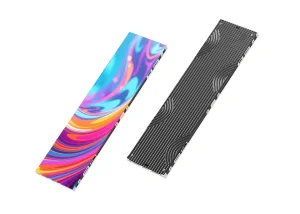
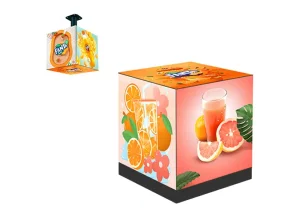
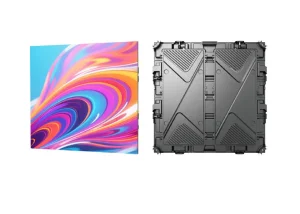
Quantifiable quality benchmarks for high-density, integrated LED display hardware.
The global commercial display sector is undergoing a structural transition. Legacy LCD video walls, once dominated by thin-bezel multi-tiling systems, are rapidly being replaced by monolithic All-in-One (AIO) Direct-View LED (dvLED) displays. The impetus for this engineering shift stems from fundamental limits in LCD technology: optical seam interruption, non-uniform luminance degradation over time, and strict sizing constraints.
Global corporate enterprises, smart city authorities, higher education campuses, and broadcast media houses are demanding unified visual communications platforms. As an authoritative All in one LED Display Supplier, we evaluate market procurement requirements through a triple-axis matrix: technical simplicity, operational redundancy, and minimal total cost of ownership (TCO).
Enterprise procurement teams are migrating away from fragmented AV components toward integrated AIO LED ecosystems due to five strategic catalysts:
Evaluating COB, MicroLED, GOB, and SMD paradigms for enterprise all-in-one visual applications.
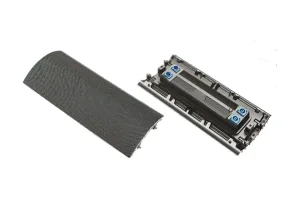
Direct bonding of bare LED micro-chips onto the PCB substrate, sealed with epoxy resin coating. COB provides IP65 front-surface protection, zero pixel collision loss, superior thermal dissipation, and ultra-high contrast ratios up to 20,000:1.
An intermediate technology applying a high-transparency protective epoxy gel over standard SMD (Surface Mount Device) arrays. Enhances impact resistance, dust protection, and moisture barrier integrity for high-traffic public installations.
Direct independent power supply to Red, Green, and Blue LED chips. By supplying precise current (2.8V for Red, 3.8V for Blue/Green), thermal dissipation is reduced by 30%, extending diode lifespan while decreasing operational operating costs.
| Specification Parameter | Traditional SMD Display | GOB Enhanced Display | Flip-Chip COB (AIO Standard) |
|---|---|---|---|
| Pixel Pitch Range (mm) | P1.5 - P10.0 | P1.2 - P2.5 | P0.4 - P1.5 (Fine Pitch) |
| Surface Protection Grade | IP30 (Fragile) | IP54 (Moisture/Dust resistant) | IP65 (Anti-collision, Anti-static, Waterproof) |
| Contrast Ratio | 3,000:1 - 5,000:1 | 5,000:1 | 15,000:1 - 20,000:1 (Deep Black Matrix) |
| Failure Rate (PPM) | < 30 - 50 PPM | < 15 - 20 PPM | < 5 PPM (Industry leading reliability) |
| Moire Pattern Susceptibility | High (Requires specialized optical filters) | Moderate | Extremely Low (Matte optical coating diffusion) |
Deploying specialized All-in-One LED displays across distinct high-impact commercial environments requires tailored engineering configurations. Below is an evaluation of tier-one deployment scenarios engineered by verified factory suppliers.
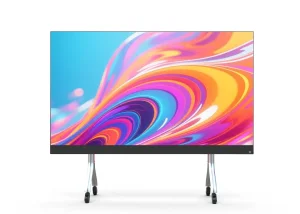
Modern meeting spaces demand frictionless collaboration. All-in-One COB fine-pitch displays (P0.93 to P1.25) integrate internal audio processing, stereo soundbars, 4K multi-window content splitting, and wireless screen transmission compatible with Windows, macOS, Android, and iOS. By incorporating capacitive or infrared touch overlays, AIO terminals double as interactive digital whiteboards for real-time executive decision-making.
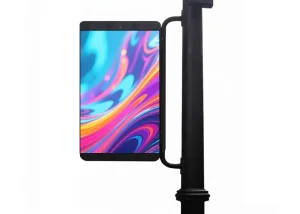
Smart urbanization requires interconnected digital endpoints. Outdoor integrated light pole screens serve as decentralized information nodes within smart city architectures. Engineered with high-brightness LED modules (up to 7,500 nits), real-time light sensor dimming, 5G micro-base station housing, and environmental sensors (AQI, temperature, traffic flow), these systems are controlled via cloud-native cluster management software with automated error detection.
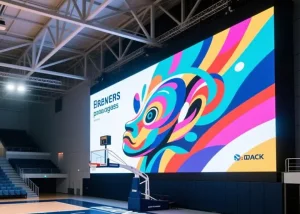
High-impact digital advertising relies on optical immersion. Advanced outdoor LED displays featuring 90° smooth seamless corner splicing, high grayscale levels (16-bit to 18-bit), and ultra-high refresh rates (up to 7680Hz) enable realistic, glasses-free 3D visual effects. Energy-saving driver ICs mitigate heat buildup, preventing thermal degradation of outdoor LED structural elements under continuous direct solar radiation.
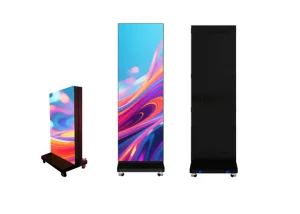
Retail environments demand agile digital signage. Modular tri-fold and standalone movable LED poster screens deliver flexible visual communication assets. Equipped with plug-and-play USB loading, 4G remote cloud synchronization, and ultra-thin profiles, retail operators can change promotional campaigns across distributed global networks simultaneously.
Sourcing high-density dvLED hardware directly from primary manufacturing facilities requires rigorous technical due diligence. Enterprise procurement officers should evaluate potential suppliers using the following critical metrics:
Verify whether the manufacturer maintains fully automated Surface Mount Technology (SMT) lines equipped with high-precision Yamaha or Panasonic chip shooters. Precision placement tolerances (< ±0.02mm) are essential for mounting micro-LED dies without optical spacing variances that cause vertical or horizontal calibration banding.
Reliable tier-one suppliers execute multi-stage quality control routines before shipping, including:
Direct supply contracts must mandate full international compliance documentation. Essential certifications include CE (EMC Class B for commercial/residential deployment), FCC Part 15, RoHS hazardous substance compliance, UL/ETL electrical safety standard fulfillment, and CB scheme electrical safety reports.
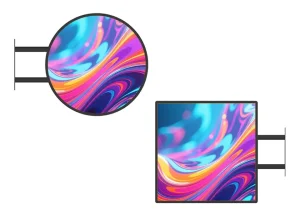
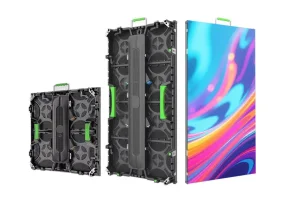
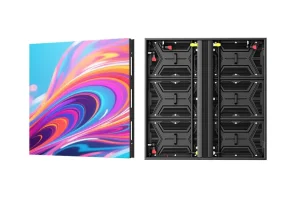
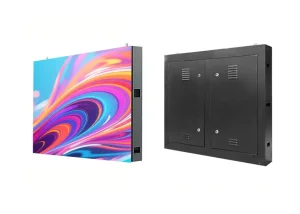
Specialized signage, poster, and outdoor structural LED solutions for enterprise deployment.
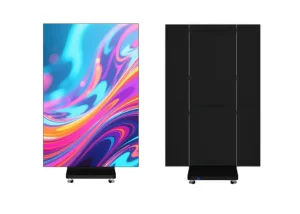

As the commercial display sector matures, next-generation engineering breakthroughs will reshape the capabilities of All-in-One LED platforms:
The reduction of sub-100μm MicroLED chip costs through laser mass-transfer processes will allow pixel pitch dimensions to scale down to P0.4 and P0.2. This will enable true 8K resolution displays in sub-110-inch standard form factors with dynamic range performance rivaling organic OLED displays, without burn-in risks.
Next-generation All-in-One systems incorporate localized NPU (Neural Processing Unit) microprocessors directly on the receiver card. These chips perform real-time pixel-by-pixel luminance uniformity calibration, AI upscaling of sub-HD video feeds, dynamic contrast enhancement, and predictive maintenance logging that alerts engineers to voltage irregularities before panel failure occurs.
Replacing traditional die-cast aluminum cabinets with carbon-fiber reinforced polymer frames will reduce overall wall-loading weight by up to 45%. This advancement will eliminate structural wall reinforcement requirements in older commercial build-outs, significantly expanding retrofit installation possibilities.
Technical guidance for enterprise buyers, system integrators, and AV procurement specialists.