Next-Generation Commercial DOOH & High-Brightness Industrial Visual Engineering Whitepaper
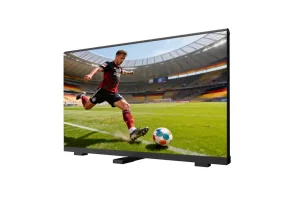
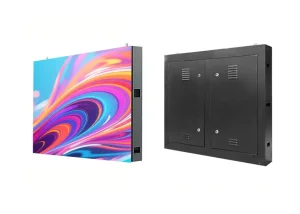
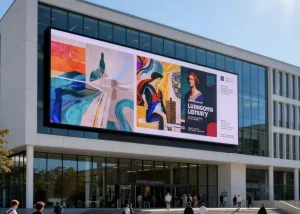
Explore our flagship high-reliability outdoor display series engineered for commercial billboards, 3D anamorphic displays, and stadium perimeter applications.
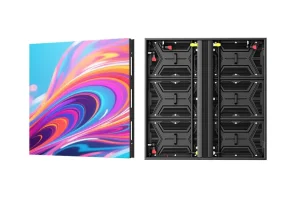
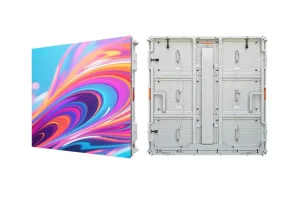
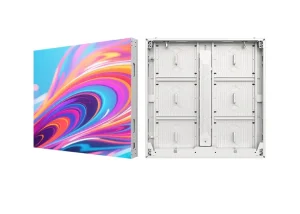
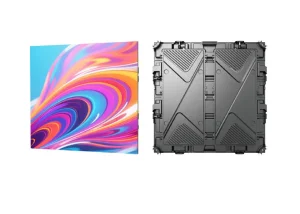
An authoritative evaluation of how Digital-Out-of-Home (DOOH) networks, smart city infrastructures, and high-impact visual media are reshaping worldwide procurement requirements.
Global Digital Out-of-Home (DOOH) media spending is experiencing a compound annual growth rate (CAGR) exceeding 13.5%. Commercial operators are replacing legacy static vinyl billboards with high-refresh rate, energy-efficient fixed LED screens capable of programmatically switching advertisements based on audience demographics, weather conditions, and peak traffic hours.
The architectural shift toward seamless right-angle and curved corner installations has unlocked glasses-free 3D advertising. These high-visibility landmark screens demand precise module alignment, custom aluminum cabinet engineering, and ultra-high brightness exceeding 8,500 nits to maintain depth illusion under high ambient sunlight.
Municipal governments and transportation authorities are standardizing fixed LED display structures for traffic management, public safety alerts, and intermodal transport hubs. These deployments mandate strict thermal dissipation parameters, IP66 egress ratings, and continuous operational lifespans exceeding 100,000 hours.
Understanding the core hardware components that ensure zero-downtime performance in extreme weather environments—from coastal humidity to desert heat.
Information Gain Engineering Note: Unlike traditional Common Anode driving technology which applies a uniform voltage (typically 5V) to Red, Green, and Blue LED chips—wasting excess voltage as heat—our advanced Common Cathode Architecture supplies independent precise voltages (2.8V for Red, 3.8V for Green/Blue). This lowers thermal output by up to 15°C and cuts total electricity consumption by 35% to 45%.
| Technical Feature | Standard Market Specification | JINGRUNS Industrial Engineering Grade | Operational Buyer Benefit |
|---|---|---|---|
| Driving Architecture | Common Anode Constant Current | Energy-Saving Common Cathode (R: 2.8V, GB: 3.8V) | Reduces annual utility costs by $1,200+ per 50m² board |
| Cabinet Material | Traditional Iron / Steel Frame | Die-Cast / Extruded Aluminum Heat-Dissipating Alloy | Prevents thermal contraction rust; reduces weight by 40% |
| Ingress Protection | IP65 Front / IP54 Rear | Fully Encapsulated IP66 Front & Rear Module Gaskets | Withstands typhoon-grade rains and salty coastal air |
| Brightness Calibration | 5,000 – 6,000 Nits | 7,500 – 10,000 Nits Sun-Cutting Optical Diodes | Guarantees crystal-clear visual contrast under direct midday sun |
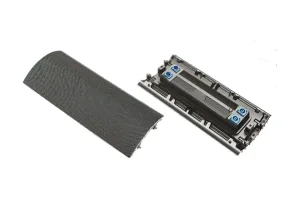
| Maintenance Mechanism | Rear Access Only (Requires Walkway) | Dual Front & Rear Vacuum Suction Module Removal | Eliminates need for costly rear maintenance gantry structures |
How localized industrial cluster synergies in Bao'an, Shenzhen enable enterprise-grade quality control, rapid turnaround times, and structural cost optimizations.
By operating high-speed Yamaha and Fuji Surface Mount Technology (SMT) lines in-house, Shenzhen factories eliminate third-party processing markups and retain absolute control over solder paste thickness, LED die placement precision, and thermal reflow profile curves.
Being positioned at the core of the global electronics capital allows direct strategic sourcing of Nationstar Gold Wire LED lamps, NovaStar/Colorlight control systems, and MeanWell power supplies within a 15km radius. This localized supply chain minimizes component lead times to under 7 days.
Quality reliability isn't accidental. Every fixed outdoor module undergoes a 24-hour unpowered thermal shock test, followed by a continuous 48-hour video burn-in period and high-pressure waterproof jet spraying before final container loading.
Tailoring cabinet design, structural load dynamics, and pixel densities for specialized commercial environments across the globe.
Installed on high-speed thoroughfares where long viewing distances require wide viewing angles (160° Horizontal / 140° Vertical) and high pixel pitches (P6.67, P8, P10). Equipped with light sensors that dynamically scale brightness down at night to eliminate driver glare and conform to municipal environmental noise and light pollution codes.
Architectural integration requiring custom cabinet depth profiles (under 80mm) and ultra-lightweight aluminum structures to minimize deadweight loads on glass curtain walls. Frequently deployed with P3.91 to P4.81 pixel pitches for close-range pedestrian engagement in high-footfall shopping precincts.
Engineered with soft rubber module masks and top protective cushions to shield athletes from impact injuries while safeguarding display diodes. Feature 7680Hz refresh rates to prevent scanlines during high-definition 4K TV broadcast camera slow-motion playbacks.
Where the commercial display industry is heading: Mini-LED, IoT intelligent monitoring, and carbon-neutral display solutions.
Transitioning from traditional Surface Mounted Diodes (SMD) to Chip-on-Board (COB) packaging for outdoor fixed displays. COB eliminates wire bonding vulnerabilities, offering near-indestructible impact protection, IP68 waterproofing, and sub-P1.8 pixel pitch clarity for premium outdoor locations.
Modern fixed screens are integrated with cloud-based IoT monitoring controllers that report individual module voltages, ambient temperature spikes, humidity levels, and pixel failure alerts in real time via 5G networks—enabling proactive maintenance before screen outages occur.
Combining ultra-low-consumption common cathode LED panels directly with localized solar grid storage systems. This hybrid power setup allows remote off-grid billboards along highways to operate continuously with minimal grid dependence.
Evaluating vendor proposals goes far beyond initial purchase price. Use this engineering framework to compute Total Cost of Ownership (TCO) over a 5-to-10 year operational lifecycle.
When acquiring large-scale outdoor displays, CAPEX (Capital Expenditure) accounts for only 40% of lifetime investment. OPEX (Operational Expenditure)—primarily energy consumption and thermal cooling—dominates the remaining 60%.
TCO Formula = Initial Cabinet CAPEX + Logistics/Import Duties + Installation Structure + [Annual Power Consumption (kWh) × Utility Rate × Years] + Maintenance Reserve
By opting for a high-efficiency Common Cathode solution with high-efficiency power supplies (89%+ conversion factor), procurement managers routinely save 2.5 times the initial cost difference in electricity bills within 36 months of continuous operation.
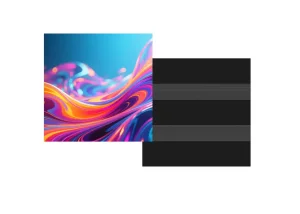
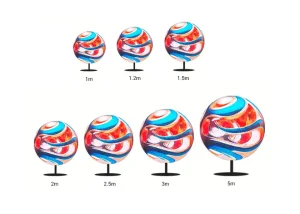
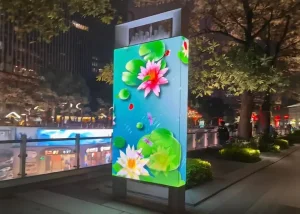
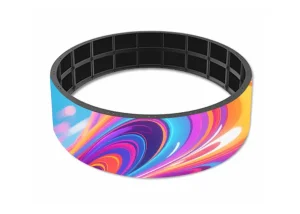
Comprehensive indoor, transparent, spherical, and rental display series tailored for complete project integration.
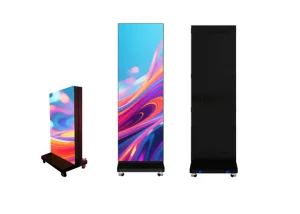
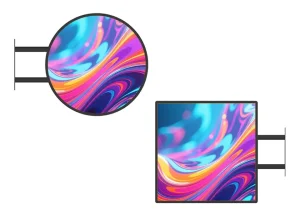

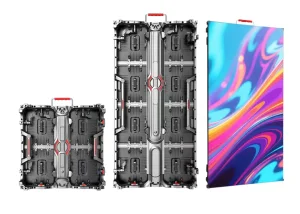
Detailed answers to technical, logistical, and maintenance inquiries from engineering firms, DOOH media owners, and procurement specialists.
The baseline formula for optimal viewing distance is Optimal Viewing Distance (in meters) = Pixel Pitch (in mm) × 1.5 to 2.0. For instance, a P4 outdoor screen becomes visually seamless at approximately 6 meters, whereas a highway billboard with a P10 screen is designed for viewing distances beyond 15–20 meters. If your location targets both pedestrian traffic and vehicle traffic, a P5.33 or P6.67 common cathode panel offers the best balance of image resolution and cost efficiency.
The first digit represents solid particle protection (6 means totally dust-tight). The second digit represents liquid ingress protection. IP65 protects against standard water jets. IP66 protects against high-pressure, heavy sea waves and intense rainstorms. IP67 protects against temporary submersion. For fixed outdoor screens, IP66 complete module potting with silicone rubber gaskets guarantees long-term protection against severe storms without needing external glass protection.
Traditional rear maintenance requires creating a 80cm to 100cm wide cat-walk space behind the screen, which adds massive structural steel weight and occupies valuable real estate. Front-service modules use specialized magnetic or vacuum extraction tools to remove individual LED modules from the front in less than 15 seconds, allowing displays to be mounted directly flat against building walls.
Standard industrial procurement should include a 3-year to 5-year full component warranty. Furthermore, a minimum 3% to 5% spare parts package (including spare LED modules, power supplies, receiving cards, and ribbon cables from the exact same batch code) must be shipped with the order to ensure perfect color calibration matching during future replacements.
Operating a screen at 100% full brightness 24/7 accelerates LED diode light decay (lumen degradation) and generates unnecessary heat. By installing an integrated multi-stage optical sensor, the display controller automatically adjusts output brightness—delivering 8,000+ nits at noon for crisp visibility, and reducing to 1,200 nits at midnight. This extends LED lifespan past 100,000 hours and satisfies light pollution regulations.