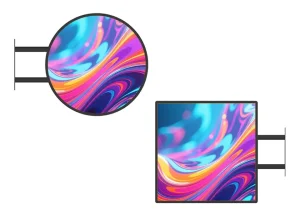
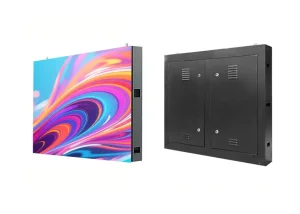
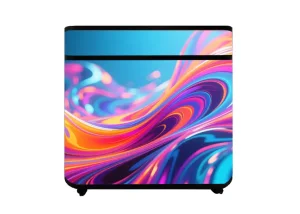
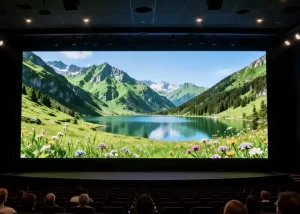
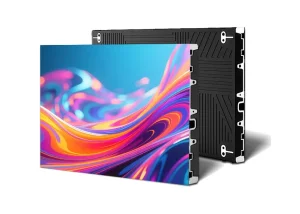
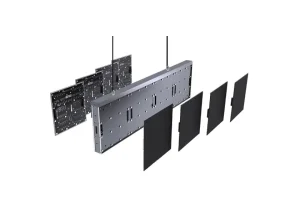
Explore our modular, high-refresh rate indoor/outdoor rental LED displays direct from our Shenzhen production facility.
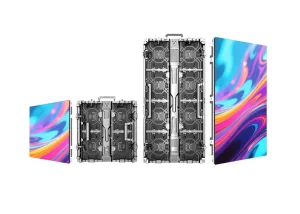
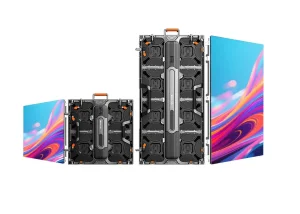
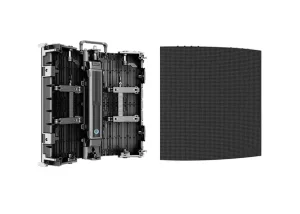
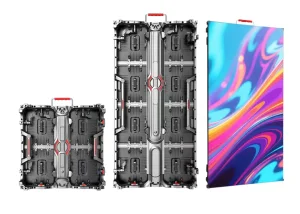
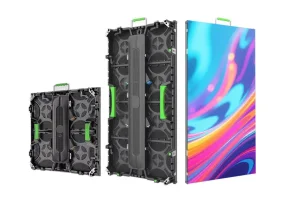
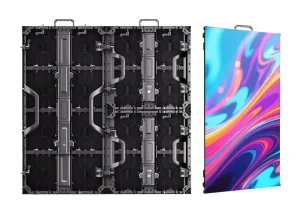
A comprehensive analysis of component architecture, structural tolerances, and electro-optical performance metrics defining modern stage and event display systems.
In the high-stakes environment of live event production, concert touring, corporate expos, and temporary broadcasts, the requirements placed on video display systems extend far beyond basic image reproduction. Rental LED screen systems represent a highly specialized segment of the optoelectronics manufacturing industry. Unlike fixed indoor or permanent outdoor billboards, rental display panels are subjected to continuous mechanical stress, rapid assembly and teardown cycles, frequent transit vibrations, and varying ambient climate dynamics. Consequently, selecting qualified Rental LED Screen Manufacturers & Factories requires a granular understanding of component selection, mechanical precision engineering, and thermal management architectures.
Modern rental panels utilize high-precision die-cast aluminum or magnesium alloy cabinets. Machined using multi-axis CNC tooling, cabinet tolerance is maintained within ≤0.1mm, ensuring zero-gap visual seams during large-scale video wall deployment.
Integrating advanced driver ICs (such as Macroblock MBI5253/MBI5359 series) enables ultra-high refresh rates ranging from 3,840Hz to 7,680Hz. This eliminates scan lines, black artifacts, and moiré effects during broadcast camera recording.
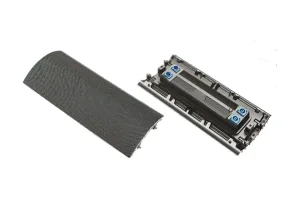
Advanced rental cabinets replace internal cable ribbon wiring with direct pin-header HUB board interconnections. Dual power supply redundancy and magnetic fast-swap module retention allow sub-10-second maintenance cycles per module panel.
| Performance Metric | Indoor Rental LED (P1.9 - P2.6) | Outdoor Rental LED (P2.9 - P4.81) | XR Stage Rental (P1.5 - P2.5) |
|---|---|---|---|
| Pixel Pitch Range | 1.95mm / 2.5mm / 2.604mm | 2.976mm / 3.91mm / 4.81mm | 1.56mm / 1.95mm / 2.31mm |
| Calibrated Brightness | 800 – 1,200 nits | 4,500 – 6,000 nits | 1,200 – 1,500 nits (Deep Black) |
| Refresh Rate (Hz) | 3,840Hz – 7,680Hz | 3,840Hz – 7,680Hz | 7,680Hz + Genlock Support |
| IP Ingress Rating | IP30 Front / IP30 Rear | IP65 Front / IP54 Rear | IP40 Front / IP30 Rear |
| Greyscale Depth | 14-bit – 16-bit processing | 14-bit – 16-bit processing | 16-bit – 22-bit Bit-Depth Extension |
| Cabinet Mechanical Weight | 6.5 kg – 7.5 kg / panel (500x500mm) | 7.5 kg – 8.2 kg / panel (500x500mm) | 7.0 kg – 8.0 kg / panel (500x500mm) |
Why Shenzhen serves as the epicenter of global optoelectronic manufacturing, offering unparalleled supply chain efficiency, automated SMT quality control, and direct cost optimization.
China produces over 85% of the world’s LED video displays, with Shenzhen's Bao'an and Fuhai industrial clusters hosting the densest ecosystem of component suppliers, SMD lamp packagers, driver IC foundries, and die-casting facilities. Procurement directly from an OEM/ODM Rental LED Screen Factory provides international AV integrators and event rental equipment owners with distinct competitive advantages in cost structure, technological customization, and quality control.
State-of-the-art Shenzhen factories utilize high-speed Yamaha and Panasonic SMT placement machines capable of mounting up to 100,000 components per hour. Automated Optical Inspection (AOI) scans 100% of printed circuit board assemblies (PCBAs) to catch soldering defects, polarity reversals, and cold solder joints before module encapsulation.
Top-tier manufacturers execute rigorous multi-stage burn-in aging procedures. LED modules undergo 24 hours of continuous module-level lighting tests followed by 72 hours of assembled cabinet white-balance, red, green, blue, and dynamic video pattern stress testing under elevated temperature conditions.
Breakthrough innovations reshaping event production, XR virtual filmmaking, and ultra-high-definition stage visual effects.
Chip-on-Board (COB) technology encapsulates raw LED chips directly onto the substrate with epoxy resin. This delivers 10x greater impact resistance (collision-proof) compared to traditional Surface Mount Devices (SMD), making fine-pitch rental screens (P1.2 - P1.8) practical for rugged field touring.
Extended Reality (XR) studios require rental displays featuring high frame rates (120fps/240fps), camera tracking system integration, low latency (<1 frame), and wide color gamut spectrums (DCI-P3 > 98%). Specialized rental panels are engineered specifically to act as dynamic camera backdrops.
To create immersive 3D visual environments, modern rental cabinets feature high-precision angle adjusters (-10° concave to +15° convex). Quick-lock systems allow operators to construct smooth wave structures, cylindrical screens, and seamless right-angle 90° corner displays.
Analyzing the operational demands and performance prerequisites across major international rental and event sectors.
Concert touring demands rapid deployment under strict rigging safety margins. Hanging bars must support up to 20 cabinet vertical drops without mechanical failure. Outdoor festival screens necessitate IP65 waterproof capabilities, wind-load certified frame structures, and high brightness (>5,500 nits) to counteract direct sunlight glare.
Corporate events require high-resolution displays (P1.95 to P2.5) capable of displaying crisp text, CAD drawings, and fine financial data graphics. Quiet fanless power supplies, matte black LED masks with anti-glare treatment, and high contrast ratios (10,000:1) are essential to prevent viewer fatigue in indoor convention centers.
Television studios utilize modular LED video walls as dynamic backdrops. Displays must feature 16-bit color depth at low brightness levels to avoid color clipping under studio lighting. Synchronization via Genlock guarantees zero flicker or tearing between the LED control system and broadcast studio cameras.
Churches and houses of worship are increasingly transitioning from traditional projection systems to modular rental-style LED displays due to higher contrast, longer operational lifespans (100,000 hours), and superior performance in high ambient light environments without dimming sanctuary lights.
Key technical criteria, structural safety certifications, and total cost of ownership considerations for AV equipment leasing firms and event production houses.
Purchasing a fleet of rental LED screens is a strategic capital expenditure (CapEx). Equipment buyers must look beyond initial cabinet price tags to evaluate total cost of ownership (TCO), operational efficiency during field assembly, spare parts interchangeability, and factory warranty backing.
Labor costs represent a major operational expense for AV rental companies. Cabinets equipped with one-man fast-lock mechanisms, auto-positioning dowel pins, and corner protection bumpers drastically reduce setup times and prevent LED edge damage during handling.
Selecting common cathode driver architecture optimizes power distribution by supplying separate, precise voltages to Red, Green, and Blue LED chips. This reduces operational heat generation by up to 30% and lowers total power consumption by 30%-40% compared to traditional common anode screens.
Professional factories maintain single-bin LED chip inventory control for large purchase orders. This guarantees uniform color temperature, brightness uniformity across panels, and provides matching spare module batches for future fleet expansion.
Expert engineering answers addressing the technical and commercial queries of international rental LED screen buyers.
The decision depends primarily on viewing distance and budget. P2.604mm provides optimal viewing from 2.5 meters away, making it ideal for indoor corporate events, trade shows, and intimate stage sets. P3.91mm is more cost-effective for larger stages and auditoriums where the nearest audience member is at least 4 meters away. Many rental companies standardize on P2.6 for indoor and P3.91 for outdoor fleets.
A 7680Hz refresh rate means the display redraws the image 7,680 times per second. When high-definition cameras capture live events, lower refresh rates (e.g., 1920Hz) cause dark rolling scan bands, flicker, and color distortion. 7680Hz ensures perfectly smooth visual capture under high camera shutter speeds, which is mandatory for televised concerts, sports, and virtual production.
Front-access panels utilize magnetic module retention allowed to be extracted from the front using a vacuum suction tool, crucial when displays are mounted flush against walls or recessed framing. Rear-access panels use manual quick-turn latches for fast rear servicing when backstage space is available. Dual-maintenance panels offer both capabilities for maximum field adaptability.
Direct sourcing from a Shenzhen OEM manufacturer removes regional distributor markups (typically 30%-50%), grants access to custom hardware branding, allows selection of specific LED lamp brands (Nationstar, Kinglight), driver ICs (Macroblock, Chipone), and guarantees direct engineering support and spare batch matching.
Outdoor rental displays must feature at least IP65 protection on the front face to withstand heavy driving rain and dust ingress, and at least IP54 (preferably IP65) on the rear enclosure. Encapsulated power supplies, silicone module seals, and waterproof power/data connectors (Neutrik IP65 series) are required for reliable operation in stormy conditions.
Quality rental LED displays engineered with premium LED lamps and proper thermal dissipation have a rated lifespan of 100,000 hours (to 50% initial brightness). With regular maintenance, careful flight case transport, and proper power management, a rental fleet typically yields a 5 to 7 year active operational service life in rental fleets.
Explore our specialized fine-pitch COB, outdoor commercial, and custom creative LED display series.