Choosing the 2026 Best Indoor LED Video Wall for Your Business? Start with the room, not the screen. Measure the viewing distance, ambient light, wall space, and typical content. A bright lobby with glass walls has different needs from a dim conference room. So does a control room showing fine text all day.
Grand View Research valued the global LED display market at approximately $7.49 billion in 2023 and projected an 8.2% compound annual growth rate from 2024 to 2030. That figure covers LED displays broadly; it is not an indoor-wall forecast. AVIXA’s 2024 Industry Outlook and Trends Analysis also estimated global audiovisual industry revenue at about $325 billion for 2024. These reports show a growing market, but growth alone cannot tell you which display fits your business.
AVIXA market-intelligence expert Sean Wargo’s work points buyers toward a useful question: what business outcome must the technology support? Treat that as a buying principle, not a verified verbatim quotation. An Indoor Led Video Wall should make information clear at the distance people actually stand, while fitting the room’s brightness, service access, and budget. Check pixel pitch, brightness control, refresh behavior, warranty terms, and the supplier’s maintenance plan. Look closely at real content, not only showroom demo footage. It may reveal an awkward gap between a polished specification sheet and daily use. That gap matters. A good choice is not always the sharpest or largest wall; it is the one your team can operate reliably.
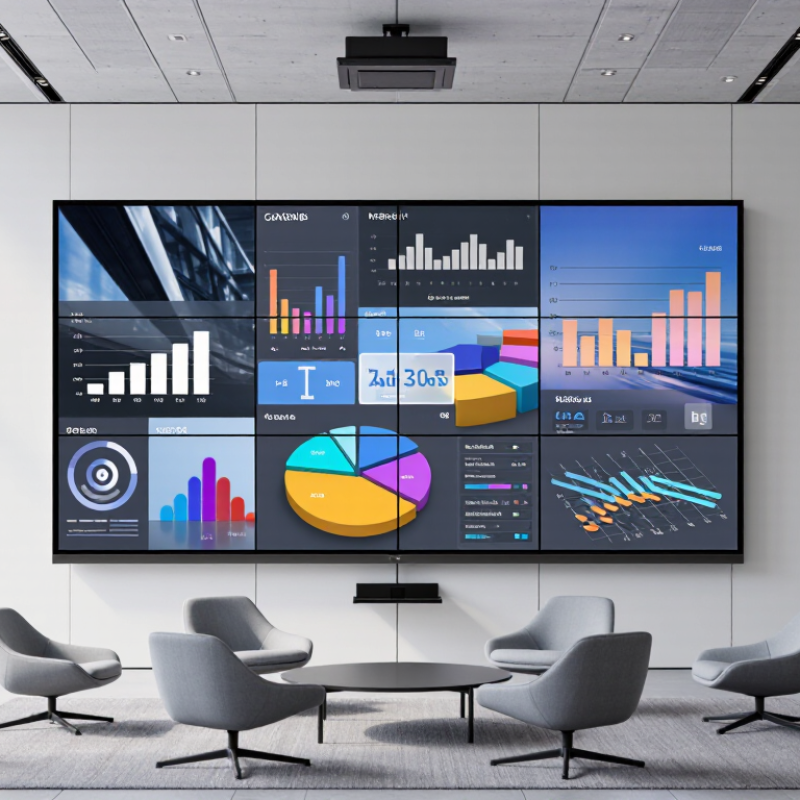
An indoor LED video wall is a large display built from smaller panels, or cabinets, joined into one continuous canvas. Each pixel contains light-emitting diodes, so the screen produces its own image rather than relying on a projector and reflective surface. A typical signal path runs from a computer or media player to a video processor, then to the display’s control system and panels. The processor scales and maps the image across the wall. When set up well, a close-up product demo can look crisp; poor pixel-pitch selection can make text appear grainy. That part is easy to underestimate.
The market is expanding, but growth alone does not guarantee a good installation. Grand View Research reported that the global digital signage market was valued at $28.83 billion in 2023 and projected an 8.1% compound annual growth rate from 2024 to 2030. This broader category includes more than LED walls, so treat the figure as market context, not a forecast for one display type. Brightness, viewing distance, ambient light, and service access all affect the right design.
Tips
Measure the nearest viewing position before choosing pixel pitch. Check the wall in the room’s actual lighting, not only in a showroom. Ask how failed modules can be replaced. Small details matter. I would also leave room in the budget for calibration; installations can look uneven at first, and that deserves a careful second look.
2026 Best Indoor LED Video Wall for Your Business?
Key Display Features That Shape Image Quality
A sharp wall starts with pixel pitch: smaller spacing keeps text and product edges clear at close range. For a reception area, stand several metres back and inspect fine lettering before choosing. Brightness matters too, but excessive output can wash out skin tones in a dim meeting room. Check the display under the lighting it will actually face. Uniformity matters. Dark corners are hard to ignore.
Color depth and calibration shape whether gradients look smooth or show visible bands. ITU-R Recommendation BT.2020 defines 10- and 12-bit video signal formats; 10-bit provides over one billion possible RGB code combinations. That does not guarantee accurate color, though. Ask for measured grayscale and color-uniformity results across the full screen, not just a showroom demo. Refresh rate also deserves scrutiny: a high specification alone cannot prevent camera banding or motion artifacts.
Tips: Compare the wall at your real viewing distance, with your usual content and room lights on. Save a calibration report after installation. Small differences between panels can still show up later, and honestly, they are easy to overlook during a quick sales demo.
Key Display Features That Shape Image Quality
Smaller pixel pitch places more pixels in each square meter, allowing finer detail at closer viewing distances. Pixel density is calculated as 1 ÷ (pixel pitch in meters)² and rounded to the nearest whole pixel. It is a useful comparison, but image quality also depends on factors such as brightness, contrast, calibration, and viewing conditions.
For an indoor LED wall, match pixel pitch to the closest viewer, not just the room’s total area. As a practical starting point, divide viewing distance in millimeters by 1,000 to estimate a suitable pitch in millimeters; then test real content from the nearest seat. A 1.5 mm pitch may suit a close-viewed reception area, while a larger pitch can work in a distant lobby. Measure the room. Check sightlines around pillars and glass, too. AVIXA’s 2024 Industry Outlook and Trends Analysis forecasts global professional audiovisual revenue will reach $325 billion by 2028. That points to continued investment, but it does not make every display suitable for every business.
Brightness should suit ambient light, not overpower it. A sunlit storefront needs more output than a dim conference room, yet excessive brightness can tire viewers. Check refresh rate and grayscale performance if the wall will show camera footage or fine text. Ask for a demonstration with your own slides, skin tones, and moving images. No guesswork. Also compare power consumption, front or rear service access, and spare-module availability. A narrow corridor may need a slim installation, while a busy control room benefits from easy maintenance. A specification sheet can still fool you; viewing distance and lighting assumptions are often missing. Recheck them with an installer before choosing.
2026 Best Indoor LED Video Wall for Your Business?
Indoor LED wall costs depend less on the screen’s headline size than on pixel pitch, cabinet design, and installation access. Fine-pitch SMD panels, such as P1.2, suit close viewing in boardrooms but usually cost more per square metre. COB panels offer a smooth, protected surface, though repairs may require specialist work. Larger-pitch SMD walls can be a more economical fit for lobbies viewed from several metres away. Not the full story. Ask suppliers to separate panel, control system, mounting, commissioning, and spare-module costs; otherwise, quotes are difficult to compare.
Lifespan claims need careful reading. The U.S. Department of Energy’s report, “LED Luminaire Lifetime: Recommendations for Testing and Reporting,” explains why lumen-maintenance measures such as L70 matter. But an LED package’s rated life does not guarantee the same life for a complete video wall. Power supplies, fans, operating temperature, and daily brightness settings also affect service life. A bright wall above a sunlit reception desk may age differently from one used gently in a meeting room. I would treat any single lifespan figure as a planning estimate, not a promise.
Tips: Measure viewing distance before choosing pixel pitch. Request a written warranty, brightness specification, and replacement-module price. Measure twice. Include access for maintenance in the design; a low upfront quote can become awkward when technicians cannot reach the rear.
Before selecting an indoor LED video wall, measure the room, ceiling height, and audience distance. A bright lobby may need more brightness than a dim meeting room, but higher output can increase heat and power use. There is no perfect pixel pitch for every space. Choose one based on typical viewing distance, not just the sharpest image on a specification sheet. Measure twice.
Plan installation around the building, not only the display. Confirm wall support, ventilation gaps, cable routes, and access to power before delivery. Leave enough room behind or beside the panels for service work. Tight access can turn a simple module replacement into a costly interruption. Test the full system with real content, including text and video, before opening day.
During operation, set a consistent brightness schedule and check for uneven color or dark modules. Keep vents clear and record repairs, settings, and service dates. Dust may collect near air inlets, especially in busy spaces. Cleaning methods depend on the screen’s construction, so follow the installer’s care instructions rather than applying liquids directly. Even a good maintenance plan can miss small changes; periodic visual checks by staff help catch them early.
Match pixel pitch to viewing distance. Fine text in a boardroom usually needs tighter spacing than a lobby display viewed from several metres away.
Test the wall under the room’s actual lighting. Excessive brightness can wash out faces in a dim meeting room.
No. It allows over one billion possible RGB code combinations, but calibration still matters. Ask for measured grayscale and color-uniformity results.
Check the entire screen for uneven colors or dark corners. Small panel differences are easy to miss in a quick showroom demo.
Not by itself. Test the wall with a camera and moving content, since banding or motion artifacts may still appear.
Pixel pitch, cabinet design, and installation access all affect cost. Request separate prices for panels, controls, mounting, commissioning, and spare modules.
Fine-pitch SMD panels can suit close viewing but often cost more. COB panels have a smooth, protected surface, though repairs may need specialist work.
Treat lifespan figures as estimates, not promises. Power supplies, fans, temperature, and daily brightness settings can all affect service life.
Get written warranty terms, brightness details, and replacement-module prices. Leave room for technicians to reach the rear. Easy to forget.
An Indoor Led Video Wall is a large-format display made from connected LED panels that work together to show images, video, and information across a seamless surface. Its performance depends on factors such as pixel pitch, brightness, contrast, color accuracy, refresh rate, and viewing distance. Understanding these features helps businesses choose a screen that looks clear and comfortable in its intended environment, whether it is used for presentations, customer information, entertainment, or visual merchandising.
Before selecting a system, consider the room’s size, audience distance, content needs, operating hours, and budget. Different panel designs and configurations can vary in upfront cost, energy use, expected lifespan, and service requirements. Planning for structural support, power, ventilation, control equipment, and professional installation can help ensure reliable operation. Regular cleaning, inspections, and timely maintenance also protect image quality and extend the display’s useful life, making the right choice a balance of visual performance, practicality, and long-term value.