Choosing the best Indoor LED Display from China requires more than comparing pixel pitch and price. It demands evidence, testing, and clear application goals. A conference hall needs different performance from a retail window. Brightness, viewing distance, refresh rate, cabinet weight, and service access all matter.
Market estimates show why this decision deserves care. MarketsandMarkets valued the global LED display market at approximately USD 7.4 billion in 2022. Its report projects growth to about USD 11.1 billion by 2027. Grand View Research also forecasts strong expansion through 2030. However, these studies often combine indoor and outdoor products. Their figures should guide research, not replace it.
Bob Raikes, founder of Meko, has emphasized that “a display is part of the customer experience, not merely a piece of hardware.” This principle fits Indoor LED Display selection closely. A seamless wall can strengthen a brand presentation, while visible seams or unstable color can weaken it instantly. In practical evaluations, buyers should inspect gray-scale performance, thermal behavior, calibration consistency, and spare-part response. Ask for real installation photos. Request a live demonstration.
China offers extensive manufacturing capacity and competitive customization. Yet quality varies between suppliers. Certification claims also require verification. A low quotation may hide weaker LEDs, limited warranties, or difficult maintenance. That is the uncomfortable part. The “best” display may not be the cheapest, largest, or brightest. It should deliver stable images, predictable ownership costs, and dependable support in the actual room where people will use it.
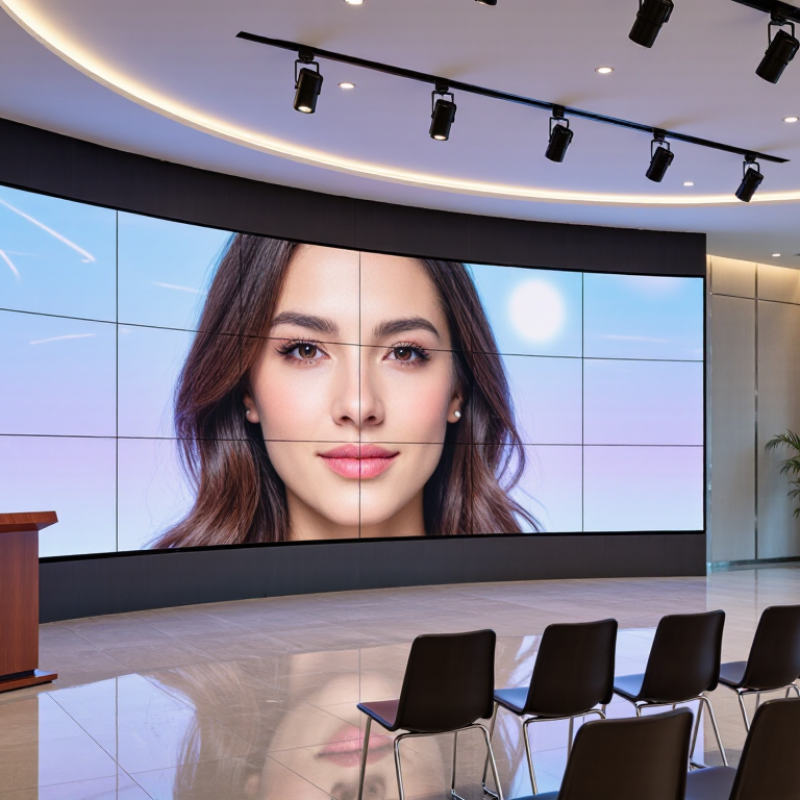
The best indoor LED display from China is defined by measured performance, not a low quotation. Pixel pitch must match viewing distance. For close viewing, 1.2–1.5 mm usually produces smoother text and skin tones. TrendForce’s 2024 LED Display Market Outlook identifies fine-pitch displays as a fast-growing segment, especially in control rooms, studios, and corporate spaces. That growth also increases buyer confusion.
A reliable panel needs stable brightness, accurate color, and a refresh rate above 3,840 Hz. These specifications reduce scan lines during filming. They matter in practice. Front-access modules simplify maintenance, while redundant power and data paths limit black screens. IEC 62368-1 alignment adds a useful safety reference. However, certification alone does not prove visual quality. I would request factory calibration records, grayscale tests, and a two-hour thermal demonstration before ordering.
Power consumption deserves attention. The MarketsandMarkets 2024 LED Display Market report estimates the global market will grow from roughly 7.5 billion dollars in 2024 to 11.6 billion dollars by 2029. More installations mean higher operating costs. Energy-efficient drivers, automatic brightness control, and proper ventilation can reduce that burden. Still, a brighter display is not always better. Excessive brightness can cause eye fatigue indoors. A practical evaluation should include viewing comfort, color consistency after several hours, service response, and spare-part availability. I would also leave room for doubt: laboratory figures may not reflect dust, heat, or uneven installation conditions.
Practical comparison criteria and recommended performance benchmarks for indoor LED displays
| Evaluation Dimension | Recommended Benchmark | Why It Defines a High-Quality Display | How to Verify It |
|---|---|---|---|
| Pixel Pitch | Approximately 0.9–3.9 mm, selected according to viewing distance | A smaller pixel pitch provides higher image detail at close viewing distances, while larger pitches can reduce project cost for distant audiences. | Match the pitch to the nearest viewing distance and inspect text, faces, and fine graphics from the intended audience area. |
| Pixel Density | Approximately 65,000–1,234,000 pixels per square metre, depending on pixel pitch | Higher density improves detail reproduction and supports clearer content in meeting rooms, retail spaces, studios, and control rooms. | Confirm the manufacturer’s calculated density from the stated pixel pitch: pixels/m² = 1,000,000 ÷ pitch². |
| Brightness | Typically 600–1,200 nits for indoor applications, with adjustable brightness | Adequate brightness maintains visibility under indoor lighting without creating unnecessary glare or eye strain. | Request a calibrated brightness report and test the display under the actual room lighting conditions. |
| Refresh Rate | At least 1,920 Hz; 3,840 Hz or higher is preferable for camera-based recording | A high refresh rate helps reduce scan lines, flicker, and rolling bands in photographs and video recordings. | Record the screen with the cameras and shutter speeds that will be used in the venue. |
| Color Performance | 16-bit or higher internal processing; grayscale performance of at least 14-bit is preferred | Higher processing depth supports smoother gradients, more natural skin tones, and fewer visible steps in dark scenes. | Display grayscale ramps, skin-tone images, and dark video scenes at several brightness levels. |
| Color Uniformity | Consistent brightness and color across the entire cabinet and full display surface | Uniform modules prevent visible blocks, color patches, and distracting seams across large images. | Show full-screen white, red, green, blue, and gray test patterns and inspect them from multiple angles. |
| Viewing Angle | Approximately 140° horizontal and 120° vertical or better | A wide viewing angle keeps content readable for audiences positioned away from the center axis. | Evaluate brightness, contrast, and color shift from the sides, above, and below the display. |
| Contrast and Black Level | High contrast with effective black-level control and independent pixel or module calibration | Good black performance improves depth, readability, and video quality in dim indoor environments. | Test dark content, black screens, and mixed bright-dark scenes in the actual installation environment. |
| Power Efficiency | Typical power consumption commonly below 300 W/m², with lower levels available through brightness control | Lower energy use reduces operating costs, heat output, and the cooling load of the room. | Request maximum and typical power data and measure consumption during representative content playback. |
| Operating Temperature | A stated operating range commonly around −10°C to +40°C or wider | A suitable temperature range supports stable operation during transport, storage, installation, and normal indoor use. | Compare the specified range with the venue conditions and confirm thermal testing documentation. |
| Protection Rating | An indoor enclosure commonly uses a low water-ingress rating such as IP30; higher protection may be required in humid areas | The correct ingress protection level helps protect internal components from dust and accidental moisture exposure. | Verify the exact IP rating for the front and rear of the cabinet and review the applicable test report. |
| Cabinet Flatness | Approximately ±0.1 mm or better between adjacent cabinets for fine-pitch installations | Accurate cabinet alignment minimizes visible seams, uneven joints, and image distortion. | Use a straightedge or precision measurement tool after assembling several cabinets together. |
| Maintenance Design | Front access for modules and power or receiving components when the rear of the display is inaccessible | Front maintenance can reduce service time and eliminate the need for large rear clearance spaces. | Check that modules can be removed safely with the supplied tools and that replacement procedures are documented. |
| Installation Weight | Common cabinet weights range from approximately 20–35 kg/m², depending on construction | A lighter structure can simplify wall mounting, reduce reinforcement requirements, and improve installation efficiency. | Confirm net weight, mounting points, load distribution, and the building’s structural capacity. |
| Reliability and Service Life | LED service-life claims commonly reach 100,000 hours to 50% initial brightness, subject to operating conditions | Long service life can reduce replacement frequency, but actual durability also depends on temperature, current, ventilation, and maintenance. | Request aging-test information, failure-rate data, warranty terms, and spare-parts availability. |
| Compliance and Documentation | Clear electrical, electromagnetic compatibility, safety, and material documentation for the destination market | Complete documentation helps reduce import, installation, insurance, and regulatory risks. | Check test reports, declarations, user manuals, wiring diagrams, installation instructions, and product labels. |
Choosing the best indoor LED display requires more than comparing prices. Key specifications should match the room, content, and viewing distance. Pixel pitch is a practical starting point. A 1.5mm pitch suits close viewing in meeting rooms or retail spaces. Larger pitches may work better in spacious halls. Test the screen from the nearest seat, not only from a showroom doorway.
Pixel pitch A 1.5mm pitch suits close viewing in meeting rooms or retail spaces. Larger pitches may work better in spacious halls. Test the screen from the nearest seat, not only from a showroom doorway.
Brightness and image quality Brightness also matters. Indoor displays commonly need controlled brightness, especially in rooms with windows. Excessive brightness can cause eye fatigue and dull skin tones on camera. A refresh rate above 3,840Hz helps reduce flicker during video recording. Check grayscale performance, contrast, and color consistency across the entire cabinet. Small differences become obvious on large white backgrounds.
Tips: Ask for a real demonstration video. Request brightness measurements at several levels. Inspect spare modules, receiving cards, and power supplies. Confirm front-service access if the display sits against a wall. Review heat management, cabinet weight, power consumption, and installation tolerances. A lightweight cabinet is useful, but weaker structure may create alignment problems. Think twice here. Warranty terms and technical response times also affect long-term reliability. A display can look excellent on day one, yet uneven calibration may appear after months of daily operation. Independent testing is safer than trusting a specification sheet alone.
What Is the Best Indoor LED Display from China?
Leading Chinese Indoor LED Display Technologies and Applications
The best indoor LED display depends on the room, viewing distance, and content type. Chinese manufacturers now offer fine-pitch SMD and COB technologies for demanding indoor environments. Pixel pitches from 0.9 to 2.5 millimeters can create sharp images at close range. COB surfaces also provide stronger protection against light impact and dust.
In a retail showroom, a 1.5-millimeter display can show product textures clearly from two meters away. In a control room, stable brightness and low operating noise matter more than extreme resolution. High refresh rates reduce camera scanning lines during live events. Front maintenance saves time when displays are installed against a wall. Precise factory calibration helps keep color uniform across large cabinets.
I have seen displays perform well in bright meeting rooms, yet appear too intense after sunset. That detail is easy to overlook. Automatic brightness control should respond smoothly, not jump between visible levels. Reliable systems also include spare modules, clear testing records, and accessible technical support. Buyers should request gray-scale performance, power data, viewing-angle measurements, and long-duration test results. A low price may hide weaker calibration or harder maintenance. Not every advanced specification improves the actual experience. The best choice is the one that fits the application honestly.
Choosing the best indoor LED display from China requires more than comparing pixel pitch and price. According to AVIXA’s 2024 Industry Outlook and Trends Analysis, global professional audiovisual revenue was projected to reach about 332 billion dollars in 2024. That growth increases buyer choice, but also makes verification essential. Request measured brightness, grayscale performance, refresh rate, color consistency, and power consumption. A reliable supplier should provide test records, not only attractive samples.
Inspect the cabinet closely. Look for uniform module gaps, stable connectors, protected power supplies, and clean internal wiring. Thermal design matters, even indoors. The U.S. Department of Energy’s Solid-State Lighting research reports continue to identify efficiency, color quality, thermal management, and reliability as important development priorities. Ask for aging-test results and failure-rate data. A short demonstration is not enough. Test the display continuously for at least 48 hours, if possible.
Manufacturer support often decides the real project outcome. Confirm spare-module ratios, remote diagnosis, firmware control, technician training, and response times in writing. Support should continue after installation. A practical supplier can explain calibration procedures without vague promises. Request references from comparable venues, then verify them independently. One weakness remains: published specifications may not reflect long-term operation. Therefore, evaluate factory processes, warranty terms, and communication habits together. The cheapest quotation can become expensive when one unavailable module delays an entire screen.
A reliable evaluation should balance image quality, long-term stability, technical compliance, serviceability, energy efficiency, and manufacturer support rather than focusing only on price.
This neutral 100-point procurement model gives the greatest importance to visual performance and reliability, while also accounting for maintenance access, power consumption, documentation, warranty response, and spare-parts availability. The percentages are evaluation weights, not market-share or company-specific data.
The best indoor LED display depends on viewing distance, room lighting, content, and maintenance access. AVIXA’s 2024 Industry Outlook valued the global professional audiovisual market at more than 300 billion dollars. That scale reflects growing demand for reliable visual systems in retail, transport, education, and corporate spaces.
Start with pixel pitch. A 1.5 mm display suits close viewing in meeting rooms and premium stores. A 2.5 mm or 3.9 mm display may work better in halls where viewers stand farther away. Measure the nearest audience position before choosing.
A bright screen can look impressive, but excessive brightness may cause eye strain indoors. For many rooms, 600 to 1,200 nits is a practical working range. Always test the display under actual ceiling lights.
Color uniformity matters more than showroom brightness. Ask for front and side viewing tests, grayscale images, and skin-tone footage.
Energy use also deserves attention. The U.S. Department of Energy notes that LED efficiency depends strongly on operating conditions, thermal control, and power management. Poor ventilation can shorten component life. It is an easy detail to miss.
China-based suppliers can offer flexible cabinet sizes and spare modules, but quality varies between production batches. Request test reports, a clear warranty, and sample footage from the exact cabinet type.
A perfect screen does not exist; even careful projects may need calibration after installation.
A 1.2–1.5 millimeter pitch suits close viewing in meeting rooms and retail spaces. Test it closely. Use larger pitches in spacious halls.
Pixel pitch should match the nearest viewing position, not only the showroom entrance. Check the nearest seat.
Choose a refresh rate above 3,840 hertz to reduce scan lines during video recording. Real cameras still matter. Request a demonstration using your intended camera.
Brightness should match the room’s windows, lighting, and viewing schedule. Brighter is not always better. Excessive brightness may cause eye fatigue and harsh skin tones on camera.
Fine-pitch SMD and COB displays can support close viewing and detailed content. COB offers added surface protection. However, technology alone does not guarantee comfortable images or accurate color.
Front-access modules simplify maintenance when the display stands against a wall. This saves time. Inspect spare modules, receiving cards, power supplies, and data paths before ordering.
Request factory calibration records, grayscale tests, and measurements across the entire cabinet. White backgrounds reveal differences. Check color consistency after several hours, not only during a short demonstration.
Automatic brightness control, efficient drivers, and proper ventilation can reduce operating costs. Heat changes performance. Ask for a two-hour thermal demonstration and review real power data.
Review warranty terms, service response times, installation tolerances, cabinet weight, and spare-part availability. Laboratory figures may disappoint. Dust, heat, uneven installation, and months of daily use can reveal weaknesses.
Choosing the best Indoor Led Display from China requires more than comparing price or screen size. The right product should combine clear image quality, suitable brightness, accurate color performance, stable refresh rates, efficient energy use, and a practical pixel pitch for the viewing distance. Important considerations also include cabinet design, installation flexibility, heat management, front or rear maintenance, and compatibility with the intended indoor environment. Different technologies and configurations can support applications such as meeting rooms, retail spaces, control centers, stages, education facilities, and public information areas.
To evaluate quality and reliability, buyers should review manufacturing standards, component consistency, testing procedures, warranty terms, spare-part availability, and technical support. A dependable manufacturer should provide clear specifications, installation guidance, troubleshooting assistance, and long-term service. The best choice ultimately depends on the project’s viewing conditions, content type, screen dimensions, operating schedule, budget, and future expansion plans. By matching these requirements carefully, buyers can select an Indoor Led Display that delivers lasting performance and dependable value.