Choosing a USA LED Display supplier in 2026 takes more than comparing prices or browsing bright product photos. The right partner should explain how pixel pitch, brightness, viewing distance, and installation conditions affect the final result. Ask for a sample under realistic lighting. Check the cabinet seams, color consistency, and service access. Small details matter.
LED researcher E. Fred Schubert’s published work focuses on the technology behind LEDs, including their electrical and optical behavior. A useful buyer’s principle—not a direct quotation—is: “Judge the display by its performance in your space, not by a specification sheet alone.” That distinction matters. A technically impressive panel can still be a poor fit for a sunlit storefront or a close-view control room.
This guide examines supplier experience, product testing, warranties, spare-parts planning, and after-sales support. Look for clear answers about brightness calibration, refresh rate, control systems, and replacement modules. Request references for projects similar in size and setting to yours. Then verify the details with a real demonstration. Not just a brochure.
A careful supplier will discuss limitations as well as strengths. Some questions may remain open until site conditions are measured; that is normal. What should not remain vague is who handles commissioning, troubleshooting, and parts after delivery. The best choice is not always the cheapest, or the most famous. It is the supplier whose claims you can check and whose support plan makes sense for your project.
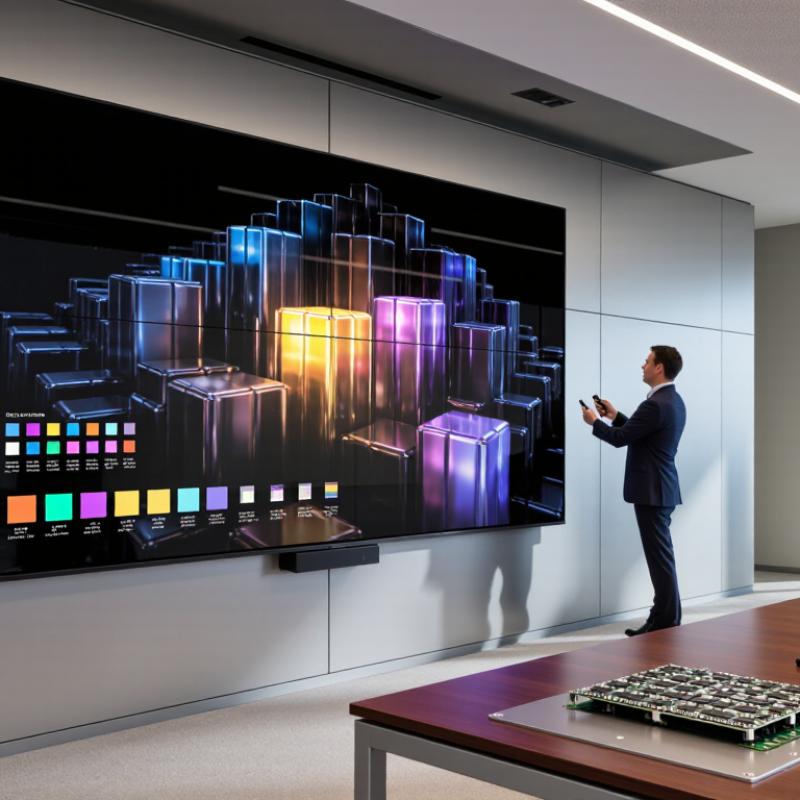
Choosing a USA LED Display Supplier in 2026 starts with a clear display purpose. An indoor retail wall needs different specifications than a roadside message board. Define the audience, viewing distance, content type, operating hours, and installation location.
A close-viewed lobby screen may need a fine pixel pitch and accurate skin tones. A large outdoor display may require higher brightness, weather protection, and strong contrast. Ask for measured brightness, refresh rate, grayscale performance, and color calibration data. Request test videos from similar installations. Numbers alone can hide uneven cabinets or poor motion handling.
Environment affects long-term reliability. Check operating temperature, moisture protection, ventilation, power requirements, and structural loading. For outdoor use, review the enclosure rating and resistance to dust and rain. Indoor projects still need thermal planning. Heat can shorten component life. It is easy to overlook this detail.
Supplier evaluation should include production controls, inspection records, installation guidance, spare-part planning, and warranty response times. Ask whether technicians can support calibration and replacement procedures in the United States. Clear documentation matters. So does communication.
I once focused too heavily on pixel pitch and underestimated maintenance access. That mistake increased service time. A detailed site survey could have prevented it. Leave room for honest uncertainty. Lighting changes, content habits, and future upgrades may affect the final specification. A reliable supplier should explain these risks instead of promising a perfect result.
How to Choose a USA LED Display Supplier in 2026?
Supplier experience should mean more than operating for many years. Ask for similar installations, cabinet dimensions, pixel pitch, climate conditions, and service records. A supplier with stadium experience may still lack expertise in roadside signs or indoor control rooms. MarketsandMarkets projects the global LED display market to reach about $11.1 billion by 2028, with an 8.4% annual growth rate from 2023. Rapid growth can attract inexperienced resellers. That matters.
Product quality appears in small details. Check brightness uniformity, color calibration, refresh rate, gray-scale performance, and thermal design. Request aging-test records and sample videos filmed at close range. Inspect cabinet seals, power supplies, receiving cards, and spare-module availability. A clear warranty should state response times, replacement procedures, and exclusions. In my experience, a low price often hides installation labor or future maintenance costs. Still, even a detailed checklist can miss poor field support.
Tips: Verify each certification number through the issuing laboratory. For U.S. projects, review applicable electrical safety documentation, FCC compliance, and enclosure protection ratings such as IP65 or NEMA classifications. Do not accept a certificate image alone. Confirm its model scope and test standard. Also ask for references you can contact directly. One honest conversation may reveal more than ten polished case studies. A pilot installation is worth considering when color consistency or viewing distance is critical.
Suggested evaluation weight for supplier experience, product quality, and certifications
Use this framework when comparing suppliers. Review relevant project history, documented quality controls, warranty terms, and test reports. For U.S. projects, verify the scope and validity of applicable evidence such as UL or ETL certification, FCC Part 15 compliance, RoHS declarations, LED lumen-maintenance data based on LM-80 and TM-21, and suitable IP protection ratings. The percentages are a practical purchasing model rather than market-share data.
When choosing a USA LED display supplier in 2026, inspect its installation and service capability before comparing pixel pitch.
The U.S. Department of Energy’s 2020 U.S. Lighting Market Characterization found LED products represented about 48% of installed lamps. The technology is mature. Support quality still varies.
Ask for a written installation plan, stamped engineering details, and proof of trained U.S. technicians. The plan should show lifting methods, mounting loads, weather sealing, power distribution, and commissioning steps. Request response times for dead pixels, control failures, and water intrusion. A serious supplier can identify the local service depot and the technician responsible for your site. Vague answers are expensive.
Warranty language deserves a close reading.
Confirm coverage for modules, power supplies, receiving cards, labor, travel, brightness degradation, and color consistency. The U.S. Department of Energy’s 2023 Solid-State Lighting R&D Opportunities report highlights reliability and lifetime as continuing development priorities. That matters because a display can remain operational while looking visibly uneven. Ask for measurable replacement thresholds, not “satisfaction guaranteed.”
I have seen buyers focus too much on the initial quote. That mistake is understandable, but incomplete. Require spare-part percentages, remote monitoring procedures, and a documented escalation path. Also verify whether the warranty depends on approved installation. The detail is easy to miss.
How to Choose a USA LED Display Supplier in 2026?
Price alone can mislead. Grand View Research valued the global LED display market at about USD 7.3 billion in 2023. Its report projects continued growth through 2030. That growth can pressure component prices, but it does not guarantee lower quotes. Request a line-item proposal covering cabinets, processors, mounting, freight, installation, taxes, and spare modules. Compare the same brightness, pixel pitch, refresh rate, and outdoor protection rating. A cheap quote may simply exclude critical parts.
Production timing needs written evidence. MarketsandMarkets forecasts strong expansion in the fine-pitch LED market through 2028, which may increase factory demand. Ask for a sample schedule: engineering approval, component purchasing, assembly, testing, and shipment. For many custom displays, eight to twelve weeks is a realistic planning range, but unusual sizes can take longer. I once treated a promised ship date as fixed. That was careless. Build buffer time for approvals and inspection.
Contract terms protect the installation. Specify measurable brightness, color uniformity, refresh performance, ingress protection, and factory acceptance testing. Define warranty duration, response times, replacement procedures, and who pays return freight. The contract should also state payment milestones, delivery terms, ownership of drawings, and remedies for late shipment. Avoid vague language such as “industry standard.” It invites disputes. Independent inspection costs extra, yet it can reveal dead pixels, uneven cabinet seams, or weak connectors before final payment.
| Display Application | Typical Pixel Pitch | Recommended Brightness | Indicative Hardware Price | Typical Production Lead Time | Common Warranty Term | Typical Payment Structure | Contract Terms to Review | Key Supplier Qualification Evidence |
|---|---|---|---|---|---|---|---|---|
| Indoor corporate lobby or reception | 1.5–2.5 mm | 800–1,200 nits | US$650–US$1,200 per m² | 4–8 weeks | 3 years parts coverage; labor terms vary | 30% deposit; 60% before shipment; 10% after commissioning | Dead-pixel policy, color-uniformity tolerance, remote-support response time, and replacement-part availability | Recent indoor installation references, module aging-test records, calibration reports, and documented service escalation process |
| Retail storefront or shopping center | 2.5–3.9 mm | 1,200–2,500 nits | US$550–US$1,000 per m² | 5–9 weeks | 3–5 years, depending on service package | 30% deposit; balance linked to factory acceptance or delivery milestone | Operating-hour limits, content-management software scope, spare-module percentage, and service-level response times | UL or ETL documentation where applicable, product safety files, brightness measurements, and proof of commercial deployment |
| Indoor conference or broadcast studio | 1.2–2.6 mm | 600–1,500 nits | US$900–US$1,800 per m² | 6–10 weeks | 3 years; extended support often available | 40% deposit; 50% after factory acceptance test; 10% after installation | Refresh rate, scan mode, camera compatibility, genlock or synchronization requirements, and on-site commissioning responsibility | High-speed camera test results, grayscale measurements, calibration records, and an installation engineer with video-wall experience |
| Outdoor roadside advertising | 6–10 mm | 5,000–8,000 nits | US$450–US$900 per m² | 7–12 weeks | 3 years; weather-related exclusions must be stated | 30% deposit; 60% before shipment; 10% after site acceptance | Wind-load rating, ingress protection, thermal management, brightness scheduling, structural engineering, and local permitting obligations | Weather-exposure test records, IP rating documentation, electrical safety certification, wind-load calculations, and outdoor project references |
| Outdoor stadium or venue ribbon display | 6–10 mm | 5,000–7,000 nits | US$500–US$1,000 per m² | 8–14 weeks | 3–5 years with scheduled preventive maintenance | 25% deposit; milestone payments tied to fabrication, delivery, installation, and acceptance | Impact protection, service access, replacement-module stock, event-day support, control-system redundancy, and liquidated damages for delay | Venue references, impact-test information, spare-parts plan, installation method statement, and documented emergency support coverage |
| Rental or touring display system | 2.6–4.8 mm | 3,500–5,000 nits | US$750–US$1,500 per m² | 5–10 weeks | 2–3 years; transport damage often excluded | 40% deposit; balance before shipment or collection | Tool-free serviceability, cabinet-lock warranty, flight-case scope, transport damage rules, spare inventory, and rapid replacement obligations | Repeated-assembly test results, cabinet locking specifications, flight-case quality, rental-industry references, and spare-unit availability |
| Transparent or creative architectural display | 3.9–10 mm equivalent | 3,000–6,000 nits | US$900–US$2,000 per m² | 8–16 weeks | 2–3 years, subject to custom-design exclusions | 40% deposit; 40% after prototype approval; 20% after final acceptance | Prototype approval, custom fabrication tolerances, optical transparency, structural interface, engineering-change control, and replacement compatibility | Working prototype, photometric data, structural drawings, thermal analysis, custom-production quality plan, and sample approval procedure |
| Service and support comparison | Not applicable | Not applicable | Annual support commonly budgeted at 5%–12% of hardware value | Initial response: 4–24 business hours | Warranty extension commonly available to 4–5 years | Annual service fee or pay-as-needed labor model | Parts ownership, response and resolution targets, travel charges, software updates, preventive-maintenance schedule, and after-hours support | Named support contacts, ticketing records, U.S. parts location, technician coverage map, escalation chart, and sample service-level agreement |
Choosing a USA LED display supplier requires evidence, not polished sales claims. AVIXA’s 2024 Industry Outlook forecasts the professional AV market at $325 billion in 2024, reaching $402 billion by 2029. This growth attracts capable suppliers, but it also increases verification pressure. Ask for a working sample before discussing large orders. Run it for at least 72 hours. Check brightness uniformity, cabinet alignment, pixel defects, seam visibility, fan noise, and heat around power supplies. U.S. Department of Energy solid-state lighting research also highlights thermal management and lifetime testing as continuing priorities. A bright sample means little if heat control is weak.
Tips: Request two customer references with similar installation sizes. Ask about delivery delays, replacement module rates, warranty response times, and the oldest operating screen. Speak with the installer, not only the sales contact. Review certification documents, factory test records, spare-parts policies, and firmware update procedures. For networked displays, compare the supplier’s controls with the NIST Cybersecurity Framework 2.0. Keep every promise in the contract.
A sample can still be staged. One factory visit is not proof. I would inspect a random production cabinet, photograph serial numbers, and repeat measurements independently. A supplier may offer an attractive price but unclear ownership of software, spare inventory, or technical support. That uncertainty deserves a written answer. My imperfect lesson is simple: trust grows through repeated checks, not confident presentations.
Identify the audience, viewing distance, content type, operating hours, and installation location. A lobby screen differs from a roadside display. Be specific.
Compare pixel pitch, measured brightness, refresh rate, grayscale performance, color accuracy, and calibration data. Request videos from similar installations. Numbers can hide uneven cabinets.
Check temperature, moisture, ventilation, power demand, dust protection, rain resistance, and structural loading. Outdoor displays need sealed enclosures. Indoor screens still produce heat.
Request a written installation plan, engineering details, lifting methods, mounting loads, weather sealing, and commissioning steps. Confirm trained local technicians. Vague answers cost time.
Review coverage for modules, power supplies, control cards, labor, travel, brightness loss, and color inconsistency. Ask for measurable replacement thresholds. “Good quality” is too vague.
Require a line-item proposal covering cabinets, processors, mounting, freight, installation, taxes, and spare modules. Match brightness and protection ratings. A low quote may omit essentials.
Custom displays often require eight to twelve weeks. Allow extra time for design approval, testing, inspection, and shipping. Promised dates can move. I learned that late.
Define brightness, color uniformity, refresh performance, protection rating, factory testing, payment milestones, delivery terms, and replacement procedures. Avoid “industry standard.” It creates uncertainty.
Choosing a Usa Led Display supplier in 2026 starts with a clear understanding of what the screen must do. Define its purpose, viewing distance, size, brightness, resolution, and operating environment, including exposure to weather, heat, or dust. These requirements make it easier to compare suppliers on relevant experience, product quality, and suitable certifications rather than relying on general promises.
Next, evaluate practical support and project terms. Confirm whether the supplier can coordinate installation and provide timely service, warranty coverage, and replacement parts in the United States. Compare total costs, production and delivery schedules, payment terms, and responsibilities in the contract. Before committing, request a sample or demonstration, speak with previous customers, and check references and project details. A careful review of these factors can help you select a dependable partner and reduce surprises during installation and long-term use.