Choosing a Usa Indoor Led Display manufacturer involves more than comparing screen prices. Buyers need to consider image quality, installation requirements, service access, and long-term operating costs. A display in a retail window has different demands from one in a control room or conference hall. Pixel pitch, viewing distance, brightness, refresh rate, and cabinet design all affect the result. Small details matter.
This guide introduces ten manufacturers serving the U.S. indoor LED display market. It is a starting point, not a universal ranking: product ranges and support arrangements can change, and the best supplier depends on the project. For a fair comparison, review published specifications, request project references, and confirm warranty terms, parts availability, and local installation support. Ask how the display performs under real viewing conditions, not only in a showroom. A bright demo can look impressive, yet it may not reflect a typical room.
Some information may need direct verification. That is worth stating plainly. Manufacturer claims differ, and a specification sheet cannot answer every practical question. The sections ahead outline useful comparison points, from fine-pitch panels and color consistency to commissioning and after-sales service. Use them to build a shortlist, then match each candidate’s documented capabilities to the room, budget, and support needs. No single brand fits every project.
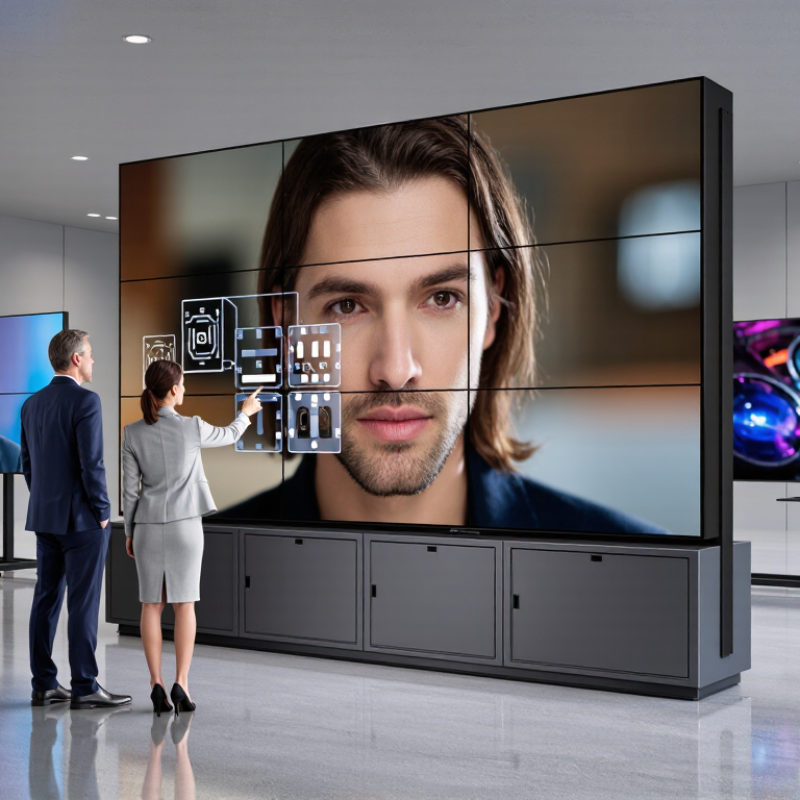
An indoor LED display is a direct-view screen made from closely spaced light-emitting diodes. Unlike a projector, it produces its own light, so images remain visible in bright lobbies and retail spaces. Pixel pitch—the distance between neighboring pixels—helps determine how close viewers can stand before the image looks uneven. A fine-pitch screen suits a control room or conference table; a larger pitch may work well across a hotel atrium. Small details matter.
In the United States, indoor LED screens support presentations, wayfinding, advertising, and live event visuals in offices, shops, arenas, and transport hubs. MarketsandMarkets’ 2024 LED Display Market report estimates the worldwide market will grow from $13.8 billion in 2024 to $23.3 billion by 2029. This is a global estimate, not a U.S.-only figure, but it signals wider investment in display infrastructure. For buyers, the role of a screen is practical: show clear content, fit the room, and remain serviceable over time. That sounds obvious. Yet brightness, viewing distance, heat, and maintenance access are easy to overlook when a display is chosen mainly from a showroom image. A screen can be impressive and still be wrong for the room.
Chinese manufacturers supply indoor LED displays to the United States through customized production, export logistics, and project-specific technical support. Buyers typically share viewing distance, screen dimensions, brightness requirements, and installation details before confirming a configuration.
For a control-room wall viewed from a few metres away, a fine pixel pitch may matter more than maximum brightness. Details matter.
Grand View Research’s 2024 LED Display Market report estimated the global market at US$7.47 billion in 2023 and projected an 8.2% compound annual growth rate from 2024 to 2030. This figure covers LED displays worldwide, not Chinese indoor-display shipments to the United States. That distinction is easy to overlook.
In practice, US buyers often request sample modules, video-wall testing, documented operating conditions, and spare parts before shipment. Export packaging also needs to protect cabinets and modules from vibration and moisture during transit.
At the receiving site, teams can check cabinet alignment, colour consistency, and signal performance before installation. Electrical and safety documentation should be confirmed for the intended project and venue.
A useful procurement plan also defines response times for technical questions and replacement parts. Some projects still underestimate commissioning time; a few spare modules cannot fix unclear installation responsibilities.
When evaluating Chinese indoor LED display manufacturers for the US market, price should not lead the decision. MarketsandMarkets’ 2024 LED Display Market report forecasts continued growth through 2028, increasing pressure on factories to prove consistency, not only production volume. Ask for measured data on brightness, color uniformity, refresh rate, and cabinet flatness. A reliable supplier should provide factory test records and independent sample results.
Pixel pitch matters. For a conference room viewed from three meters, a fine-pitch display can protect text clarity, but higher density may increase cost and heat. Check calibration under real lighting, including warm white ceiling lights. Request a 72-hour burn-in test. Look for dead pixels, flicker, uneven seams, and unstable receiving cards. Small defects become obvious on a large close-view wall.
Certification and service deserve equal attention. UL 62368-1 and FCC requirements should be verified for the complete system, not assumed from component paperwork. ISO 9001 can indicate process control, but it does not guarantee visual performance. Ask about spare modules, remote diagnostics, replacement timing, and warranty exclusions. The U.S. Department of Energy has repeatedly highlighted efficiency as an important factor in commercial display operation, so measure power consumption at normal brightness. Factory tours help, though they can create a polished impression. One visit is not enough. Use third-party inspection and a written acceptance checklist.
A practical, brand-neutral scorecard for comparing manufacturers of indoor LED displays for projects in the United States. The weights below are suggested buyer-assigned priorities, not ratings of specific companies.
| Evaluation Criterion | Evidence to Request and Review | Why It Matters for U.S. Buyers | Suggested Weight |
|---|---|---|---|
| U.S. compliance and electrical safety | Request documentation for the exact display, power supplies, and configuration. Confirm whether relevant NRTL certification or listing is available and whether FCC Part 15 requirements apply to the product. Check requirements with the project’s electrical contractor or authority having jurisdiction. | Certification and regulatory requirements depend on the product and installation. Verifying the specific configuration helps avoid approval, installation, or electromagnetic-interference issues. | 16% |
| Product quality and reliability | Review test reports, quality-control procedures, burn-in practices, component specifications, and documented failure or repair data. Ask how defects are tracked and how corrective actions are verified. | Consistent manufacturing and documented testing can reduce early failures, downtime, and maintenance costs over the display’s service life. | 14% |
| Pixel pitch and viewing distance | Compare available pixel pitches with the planned viewing distance, screen size, content, and resolution needs. Request a layout or sample image at the proposed configuration. | Pixel pitch affects image detail and the viewing experience. The appropriate choice depends on the installation rather than a single universally best specification. | 10% |
| Brightness and ambient-light suitability | Request measured brightness specifications and the test conditions used. Confirm that the display supports suitable brightness adjustment for the venue’s lighting and viewing conditions. | Indoor displays must remain legible in their intended environment while avoiding unnecessarily high brightness that can cause discomfort or increase power use. | 8% |
| Color performance and calibration | Ask for color-uniformity and calibration procedures, grayscale performance information, and details of how replacement modules are matched to the existing display. | Consistent color and brightness across modules are important for large screens, brand content, and displays viewed from different angles. | 10% |
| Power use and thermal management | Request typical and maximum power-consumption figures for the proposed configuration, along with operating-temperature limits and information about cooling requirements. | These details help estimate electrical capacity, operating costs, ventilation needs, and suitability for the planned enclosure or room. | 8% |
| Control system and integration | Confirm supported video inputs, processor and software requirements, network options, content workflow, and compatibility with the project’s signal sources and control systems. | Early compatibility checks can prevent unexpected equipment purchases and reduce commissioning delays. | 8% |
| Customization and installation support | Review drawings, cabinet dimensions, mounting details, service access, cable routing, and the manufacturer’s process for approving custom configurations. Clarify what installation guidance is included. | Accurate mechanical and electrical planning is essential for fitting the display safely into the venue and maintaining access for future service. | 8% |
| Warranty, spare parts, and service | Check written warranty terms, exclusions, claim procedures, spare-parts availability, repair options, and response arrangements for U.S.-based projects. Confirm who pays shipping and labor. | A warranty’s practical value depends on its coverage and how quickly replacement parts or technical assistance can be obtained. | 10% |
| Documentation and traceability | Request product datasheets, wiring diagrams, installation and maintenance manuals, configuration records, and identifiable part numbers for modules and key components. | Clear documentation supports installation, troubleshooting, maintenance, and consistent ordering of replacement parts. | 8% |
| Total suggested evaluation weight | 100% | ||
How to use: Score each manufacturer against the same evidence checklist, and verify claims for the exact model and project configuration. Applicable codes, certifications, and approval requirements can vary by product, venue, and local jurisdiction.
Serving U.S. buyers requires more than bright cabinets and attractive pricing. One manufacturer specializes in fine-pitch displays for conference rooms and control centers. Another builds lightweight rental panels for indoor exhibitions. A third focuses on fixed installations in retail stores, using front-service modules for easier maintenance. One producer develops small all-in-one screens for classrooms and meeting spaces. Another offers curved cabinets for museums, studios, and immersive presentations. Their technical teams commonly discuss pixel pitch, refresh rate, brightness, viewing distance, and power consumption with customers.
The sixth manufacturer emphasizes custom cabinet sizes for architectural interiors. The seventh supplies high-resolution displays for broadcast backgrounds and virtual production. Another concentrates on narrow-profile products for reception areas and transportation hubs. The ninth provides integrated systems with sending cards, processors, and monitoring software. The tenth works mainly with distributors, offering documentation, spare modules, and remote troubleshooting. These profiles show different strengths, not identical quality. A lower price may reflect fewer accessories, limited local support, or longer replacement times.
Real evaluation should include factory inspection, sample testing, and warranty details. Ask for gray-scale performance under low brightness. Check cabinet seams from a normal viewing distance. Also confirm electrical certifications and installation responsibilities before ordering. A polished demo can hide uneven calibration. That happened in one practical comparison. The display looked excellent in photographs but needed better color matching across cabinets. Buyers should request a live video test, written tolerances, and a clear service process for the U.S. site.
China Top 10 USA Indoor LED Display Manufacturers?
Choosing among China’s leading indoor LED display manufacturers requires more than comparing pixel pitch and price. U.S. buyers should request factory test reports, product specifications, and documented quality procedures. Ask whether the display supports the required voltage, refresh rate, brightness control, and content system. A showroom image is not enough. It can hide installation problems.
Import compliance deserves careful review. The importer should confirm the correct tariff classification, country-of-origin marking, commercial invoice, packing list, and shipping terms. Electrical products may also require applicable FCC compliance and recognized safety certification, depending on their design and use. Local building, fire, and electrical requirements still apply after customs clearance. Requirements can change, so written verification from qualified trade and compliance professionals is wise.
Installation planning should include wall structure, ventilation, cable routes, controller access, and service clearance. A large lobby display may look simple, yet uneven mounting can create visible seams within hours. Use trained technicians familiar with U.S. electrical practices. Support terms should define spare modules, response times, remote diagnostics, and replacement procedures. Warranty language needs careful reading, especially for labor and cross-border shipping. Some suppliers communicate well before payment, then respond slowly during commissioning. That risk is real. A pilot order and factory acceptance test may reduce surprises, although they cannot replace an independent inspection.
For U.S. indoor LED display procurement, evaluation should extend beyond display specifications. Import documentation, FCC requirements, electrical safety certification, professional installation, spare parts, warranty coverage, and technical support can significantly affect project risk and total cost. The chart shows a practical procurement-weighting model for comparing China-based suppliers without presenting company or brand rankings.
It is a direct-view screen using closely spaced light-emitting diodes. It creates its own light. No projector is needed.
Common locations include offices, shops, arenas, hotel atriums, transport hubs, and control rooms. They show presentations, directions, advertisements, and live visuals.
Pixel pitch measures the distance between neighboring pixels. Smaller pitch usually improves text clarity at close viewing distances.
A fine-pitch display often suits viewers sitting about three metres away. Higher density can increase cost and heat.
Share viewing distance, screen dimensions, brightness needs, and installation conditions. Request sample modules and complete system test records.
Ask for a 72-hour burn-in test. Check dead pixels, flicker, uneven seams, colour consistency, and unstable signal performance.
Packaging should protect cabinets from vibration and moisture. Receiving teams should check alignment, colour, and signal performance before installation.
Confirm spare modules, remote diagnostics, replacement timing, warranty exclusions, and technical response times. A few spare parts may not solve unclear responsibilities.
Normal operating brightness affects energy use and heat. A showroom image cannot reveal real operating conditions.
Probably not. Use third-party inspection and a written acceptance checklist. Impressive production floors can hide inconsistent results.
This guide explains what defines an indoor LED display and why it has become an important visual communication tool in the U.S. market. It covers key factors such as pixel pitch, brightness, color performance, viewing distance, cabinet design, energy efficiency, durability, and control systems. It also describes how Chinese manufacturers supply products to the United States through customized production, international shipping, technical documentation, distributor cooperation, and project-based support.
The article presents a practical framework for evaluating Chinese indoor LED display manufacturers, including product quality, manufacturing capability, certifications, quality control, customization options, communication, warranty policies, and after-sales service. It also introduces ten manufacturer profiles without relying solely on marketing claims, while discussing U.S. import procedures, electrical and safety compliance, installation planning, maintenance, spare parts, and local technical assistance. By considering these factors together, buyers can make more informed decisions when selecting a reliable Usa Indoor Led Display solution for retail, corporate, education, entertainment, and public-space applications.