What Is a Transparent LED Display and How Does It Work?

Time:2026-10-18 Author:Ethan
0%

A Transparent Led Display brings digital images into spaces that once held only glass, walls, or open views. It uses LED modules, transparent panels, and control electronics to show vivid content without fully blocking the background. In a retail window, shoppers may see product shelves behind animated branding. In an airport, flight information can appear across glass while daylight still enters.

Its operation depends on carefully spaced LED pixels. Tiny light-emitting diodes create images, while the gaps between them preserve visibility. A sending controller processes video signals and distributes them to receiving cards inside the display. These components regulate brightness, color, refresh rate, and playback timing. When viewed from several meters away, the illuminated pixels merge into clear graphics. From close range, the open grid becomes easier to notice.

Installation experience reveals practical differences. A brighter screen may improve daytime visibility, yet it can increase power use and reflections. Glass quality, viewing distance, content contrast, and sunlight direction also affect performance. Specifications alone cannot predict the final result. That part deserves more testing.

Reliable manufacturers usually provide measured transparency, brightness, service life, and maintenance guidance. However, these figures may vary under real operating conditions. Dust, heat, poor ventilation, and unsuitable content can reduce visual quality over time. Proper calibration and scheduled inspection remain essential. A Transparent Led Display is not simply a see-through television. It is a coordinated system balancing light, structure, software, and architectural purpose. When those elements work together, the screen feels integrated rather than attached. That distinction is easy to miss.
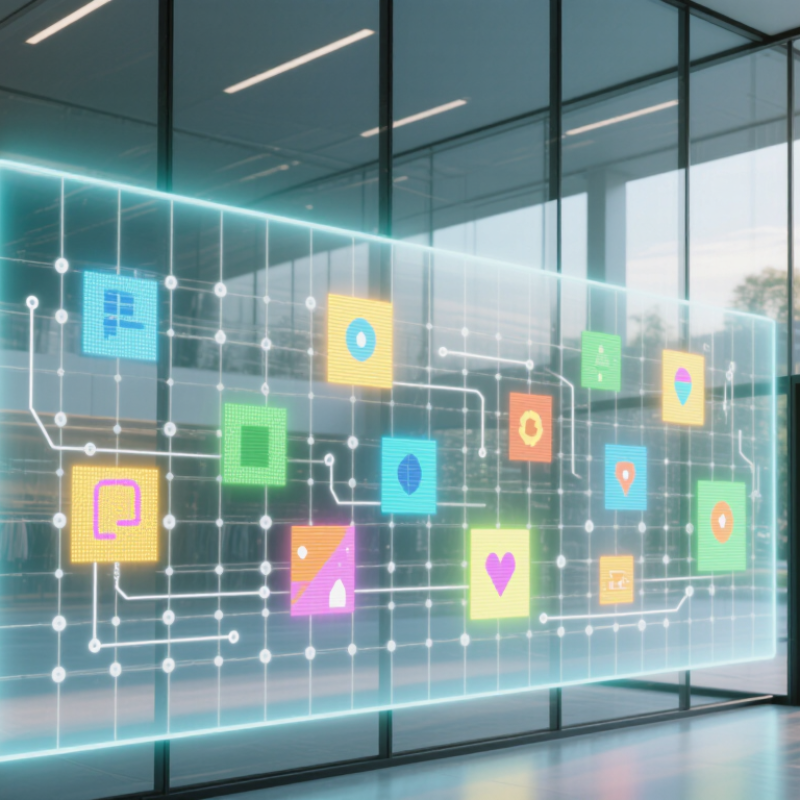
What Is a Transparent LED Display and How Does It Work?

Definition and Core Features of Transparent LED Displays

A transparent LED display is a digital screen that shows images while allowing light and scenery to pass through. It uses LED chips mounted on narrow bars, strips, or a grid-like panel. Open spacing between these elements creates the see-through effect. Unlike a conventional solid screen, it can cover glass without fully hiding the interior.

Its main specification is transparency, usually expressed as a percentage of visible open area. Pixel pitch also matters. A smaller pitch produces finer images, especially for nearby viewers.

Brightness must match the installation. Sunlit storefronts need stronger output than indoor atriums. Ambient light changes perceived contrast. So does the color of the glass behind it.

Core features include lightweight construction, modular replacement, wide viewing angles, and remote content control. Many systems support front or rear service access, but this detail should be verified before installation.

Dust, heat, moisture, and reflections can affect performance over time. Proper ventilation and electrical protection remain essential.

In practical projects, the word transparent can be misleading. A display may look nearly invisible in a showroom, then appear more noticeable under direct sunlight. Dark images can also lose impact against bright backgrounds. Designers should test real content on the actual glass, rather than rely only on a specification sheet. Transparent LED technology is flexible, yet it is not magic. Good results depend on pixel spacing, brightness, structure, viewing distance, and careful calibration.

The Main Components Inside a Transparent LED Display

What Is a Transparent LED Display and How Does It Work?

A transparent LED display uses small light-emitting diodes mounted on a clear or open-grid structure. Unlike a conventional screen, it leaves visible gaps between pixels. These gaps allow daylight, shop interiors, or building details to remain visible. The word transparent can mislead, though. No display is completely invisible, especially when showing dark images or operating in bright sunlight.

The main components include LED strips, a transparent substrate, driver ICs, receiving cards, and a control system. LED strips create red, green, and blue light, while driver ICs regulate current and timing for each pixel. The receiving card processes video data before sending it across the display modules. A power supply converts incoming electricity into stable low-voltage power. The frame supports the modules and helps maintain accurate alignment. Protective coatings can reduce moisture and dust exposure, but they do not remove every maintenance risk. During installation checks, uneven module spacing can cause visible lines. This small issue is often underestimated.

Tips: Check pixel spacing against the viewing distance. Confirm brightness settings before installation. Inspect cable connections regularly, especially near outdoor edges. Keep ventilation paths clear. A simple test image can reveal dead pixels, color shifts, or weak connections before the display is used publicly.

What Is a Transparent LED Display and How Does It Work?

Transparent LED displays use individually controlled red, green, and blue LED emitters mounted on a transparent substrate or narrow light bars. The representative peak wavelengths below show how the three LED colors combine to create full-color images.

The LED packages produce light, driver ICs regulate and switch the pixels, the transparent substrate supports the circuit paths, and the control system sends image data to the display. Typical peak wavelengths are approximately 620–630 nm for red, 520–535 nm for green, and 450–470 nm for blue LEDs.

How Transparent LED Displays Produce and Control Images

A transparent LED display forms images with light-emitting diodes mounted on narrow bars or a mesh. The open spaces allow daylight and background details to pass through. Each diode acts as a controllable pixel, although pixel spacing is often wider than on indoor panels. A sending system converts video into digital instructions. Receiving cards distribute those instructions across separate sections. Tiny timing differences matter.

For every frame, the controller assigns red, green, and blue intensity values to each pixel. Pulse-width modulation switches LEDs rapidly, creating intermediate brightness levels that human eyes blend together. The controller also manages refresh rate, grayscale, and panel alignment. A camera image may look smooth, while direct viewing reveals uneven brightness near joins. Installers adjust these areas through calibration software, often using test patterns and measured light levels. This is practical work, not magic.

Ambient light changes the result significantly. In strong sunlight, higher output may be needed, while nighttime viewing demands lower brightness to avoid glare. Content designers must consider the background, because dark graphics can disappear against dark glass. Transparent displays can show vivid moving images, but they cannot hide every structural line or reflection. In installation practice, careful calibration often improves realism more than simply increasing brightness. That judgment still deserves testing from several angles. A display that looks perfect from one position may feel incomplete elsewhere.

How Light Passes Through the Display Structure

A transparent LED display uses small light-emitting diodes mounted on clear strips, glass, or a perforated support. The open areas remain physically empty, allowing daylight and background images to pass through. Each diode creates its own red, green, or blue light. A control system adjusts these colors thousands of times per second, forming text, video, or moving graphics.

The gaps between pixels are the key. More spacing increases transparency, but it reduces image detail and daytime contrast. A tighter pixel layout improves clarity while blocking more of the view. The U.S. Department of Energy’s 2023 Solid-State Lighting R&D Opportunities report identifies LED efficacy above 200 lumens per watt in advanced laboratory conditions. Yet the complete display performs lower because power supplies, circuit paths, protective layers, and heat management absorb energy.

Ambient light changes the result. In direct sun, black areas cannot become truly black because the display does not emit darkness. They simply reveal the scene behind it. Designers therefore tune brightness, pixel spacing, and viewing distance together. Industry market analyses published by MarketsandMarkets describe the transparent display sector as growing at a double-digit compound annual rate through the late 2020s. That growth reflects practical uses in glass façades, retail windows, transport spaces, and exhibitions.

The structure is clever, but not perfect. Dust, reflections, uneven backgrounds, and narrow viewing angles can weaken the visual effect. From several meters away, the image may look seamless; up close, the gaps become obvious.

What Is a Transparent LED Display and How Does It Work? - How Light Passes Through the Display Structure

Display Dimension Typical or Verified Value How It Affects Light Transmission Practical Significance
Display Type Direct-view LED video display with spaced LED pixels Open areas between pixels allow ambient light to pass through the screen. The display can show digital content without fully blocking windows, glass façades, or interior views.
Transparency Rate Common commercial ranges are approximately 50%–90%, depending on pixel pitch and construction. A higher open-area ratio generally permits more light to pass through the display structure. Higher transparency is useful where daylight, outward visibility, and façade appearance are priorities.
Pixel Pitch Common transparent-display pitches are roughly 3 mm–20 mm or more. Larger spacing leaves more open area; smaller spacing places LEDs closer together and can reduce transparency. Smaller pitch improves close-view image detail, while larger pitch can improve see-through performance and reduce weight.
LED Light Source Red, green, and blue LEDs combine to create full-color pixels. The LEDs emit light toward viewers; the areas without LED packages remain comparatively open. Digital images are produced by controlling the brightness of each color channel at each pixel.
Transparent Structure LED modules are commonly mounted on narrow bars, strips, or grid-like support frames. The reduced backing material and separated light-emitting sections create visual gaps through which light can travel. Compared with a solid LED cabinet, the structure can preserve more of the underlying glass or architectural surface.
Brightness Many outdoor transparent LED displays are designed for approximately 4,000–7,000 nits; actual values vary by model and operating mode. High brightness helps the emitted image remain visible against daylight passing through or reflecting from the display. Brightness should be adjusted to ambient conditions to maintain readability and avoid unnecessary glare or energy use.
Viewing Distance A basic planning rule is that the minimum comfortable distance in meters is approximately the pixel pitch in millimeters divided by 1,000, with installation-specific variation. At shorter distances, gaps between pixels are easier to notice; at greater distances, the image visually merges into a continuous picture. Pixel pitch should be selected according to the audience’s nearest viewing position.
Viewing Angle Many LED display systems provide horizontal and vertical viewing angles of about 120°–160°, depending on LED package and design. A wide angle allows emitted light to remain visible to people viewing the display from off-center positions. Wide viewing angles are valuable in retail areas, transit spaces, and building façades with multiple sightlines.
Refresh Rate Common specifications range from 1,920 Hz to 3,840 Hz or higher. A higher refresh rate updates the image more frequently and can reduce visible flicker and camera banding. Higher refresh rates are especially important for filmed events, broadcast environments, and promotional video recording.
Light Direction LEDs primarily project light toward the viewing side, while daylight can pass through the open spaces in both directions. The display overlays its generated image on the background rather than forming an opaque visual barrier. Background visibility depends on transparency, brightness, contrast, viewing angle, and the brightness of the surface behind the screen.
Energy Consumption Typical power figures vary widely; approximate maximum values may range from 300–800 W/m², with average use usually lower. The open structure can reduce the amount of illuminated material compared with a solid display, but power still depends on brightness and content. Actual consumption should be calculated from the display’s rated power, operating schedule, brightness setting, and content pattern.
Heat and Airflow The open layout naturally permits airflow around LED modules; some installations may still require thermal planning. Air gaps help dissipate heat and reduce the need for a fully enclosed rear surface. Ventilation, sunlight exposure, enclosure design, and ambient temperature should be reviewed before installation.
Content Control A sending system and receiving electronics divide video content into addressable pixel data. Each pixel receives brightness instructions, while unoccupied areas continue to transmit background light. Transparent LED displays can present text, graphics, animations, and video while retaining a degree of visual openness.
Best-Fit Applications Glass façades, retail windows, exhibition spaces, airports, museums, stages, and architectural installations. These locations benefit from the combination of digital illumination and preserved background visibility. The technology is most effective when a solid screen would obstruct daylight, views, or the appearance of the supporting structure.

Note: Specifications are representative industry ranges rather than a guarantee for every transparent LED display. Transparency, brightness, power consumption, and viewing performance vary with pixel pitch, module design, installation conditions, and operating settings.

Common Applications and Key Performance Considerations

A transparent LED display uses light-emitting diodes mounted on narrow vertical or horizontal strips. Open spaces between the strips allow daylight and interior views to pass through. A control system sends image data to the LED modules, while brightness and color are adjusted frame by frame. The result is an image that appears to float across glass, a façade, or a stage opening.

Retail storefronts use transparent displays for window campaigns without completely blocking merchandise. Airports and museums can show directions or educational visuals while preserving architectural sightlines. Event venues often install them behind performers, where lighter structures can simplify rigging. They also suit building façades, but sunlight, wind, and viewing distance need careful evaluation. Indoor and outdoor installations require different protection levels and maintenance plans.

Performance depends on more than pixel pitch. A tighter pitch produces finer detail, yet it usually increases weight, power use, and cost. Transparency improves with wider spacing, but image density and contrast may fall. Brightness should be measured under actual daylight, not only in a dark showroom. High refresh rates help reduce camera scanning lines, especially during broadcasts. Engineers should also check viewing angles, thermal behavior, power distribution, and front or rear service access. Specifications can look convincing. That assumption can fail. Dust, reflections, and uneven cabinet alignment may weaken the real result, so an on-site test remains the more reliable decision.

FAQS

What is a transparent LED display?

It shows digital images while allowing light and scenery to remain visible. Open gaps create the see-through effect.

How does a transparent LED display work?

LED chips sit on narrow strips or an open-grid structure. These chips produce red, green, and blue light. The gaps allow daylight to pass through.

What affects image quality?

Pixel pitch, brightness, viewing distance, and calibration affect image quality. Smaller pixel spacing creates finer images for nearby viewers. The glass background matters too.

Is a transparent LED display completely invisible?

No. The display can become noticeable in direct sunlight or with dark images. “Transparent” is not perfect invisibility. This is easy to overlook.

Where can these displays work well?

They can cover storefront glass, indoor atriums, and other transparent surfaces. They preserve views of interiors and building details. Real-site testing remains important.

What components are inside the display?

Common parts include LED strips, driver circuits, receiving cards, power supplies, and support frames. Protective coatings may reduce dust and moisture exposure. They do not remove every maintenance risk.

What should be checked before installation?

Confirm the pixel spacing, brightness, service access, frame alignment, and cable connections. Check whether maintenance occurs from the front or rear. Do not trust the specification sheet alone.

How can performance remain stable over time?

Keep ventilation paths clear and protect electrical connections. Inspect outdoor edges for loose cables or moisture exposure. Test images can reveal dead pixels and color shifts early.

Conclusion

A Transparent Led Display is a visual screen designed to show bright, dynamic images while allowing light and scenery to pass through its structure. Unlike traditional solid panels, it uses spaced LED modules, transparent support materials, and carefully arranged circuits to create an open appearance. Its main components typically include LED pixels, driver chips, control boards, power systems, structural frames, and protective layers. Together, these parts determine the display’s brightness, color accuracy, viewing angle, durability, and transparency.

The display produces images by converting digital signals into controlled electrical pulses that adjust the intensity of red, green, and blue LEDs. By combining these colors at different brightness levels, it creates text, graphics, video, and animated effects. Because the LEDs and wiring are distributed with gaps between them, ambient light can travel through the screen, preserving visibility of the background. Transparent LED displays are commonly used in retail windows, architectural facades, exhibitions, transportation areas, and stage environments. Important performance considerations include pixel spacing, brightness, transparency rate, viewing distance, installation conditions, energy use, maintenance access, and weather resistance.


Ethan

Ethan

Ethan is a seasoned marketing professional with a deep expertise in our company's innovative product line. With a passion for sharing knowledge and insights, he takes the lead in regularly updating our corporate blog, where he explores industry trends, product features, and effective marketing......