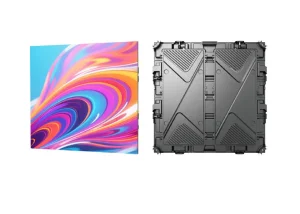
Engineered in Shenzhen manufacturing hubs, featuring high refresh rates, common cathode energy efficiency, and fine pixel pitch precision for global commercial integration.
How Chinese LED manufacturers are advancing from SMD chip packaging to sub-millimeter Chip-on-Board (COB) and Micro-in-Package (MIP) architectures.
The global visual communication market is experiencing an unprecedented structural transition. High-definition direct-view LED (dvLED) video walls have rapidly superseded traditional LCD video walls and projection matrix systems across corporate command centers, broadcast environments, and high-end commercial venues. This technological shift is fundamentally anchored in the advanced manufacturing capabilities concentrated within China’s LED industrial ecosystem, specifically in Shenzhen and the broader Guangdong province, which accounts for over 85% of worldwide LED screen production capacity.
Historically, standard surface-mount device (SMD) packaging dominated the market for pitch sizes above P2.0mm. However, as global enterprise buyers demand seamless pixel-free imaging, higher contrast ratios, and operational stability at sub-1.0mm pixel pitches (such as P0.93, P0.78, and P0.62), traditional SMD packaging encounters physical limitations regarding thermal dissipation, solder joint mechanical failure, and physical damage vulnerability. In response, premier China high definition LED video wall factories have scaled industrial production of Chip-on-Board (COB) and Glue-on-Board (GOB) encapsulations.
China’s localized supply chains unify raw wafer fabrication, driver IC logic design, high-speed SMT assembly, and die-cast aluminum cabinet machining within a 50-kilometer industrial radius, drastically compressing production lead times.
By eliminating wire bonding and directly bonding the inverted LED micro-chips onto the PCB substrate, thermal resistance is reduced by 60%, pixel failure rates drop below 5 PPM, and black surface uniformity exceeds 99%.
Advanced PWM driver IC architectures enable 16-bit to 22-bit grayscale processing, ensuring smooth gradient transitions in low-brightness environments without color shifting or visual banding.
A comparative technical breakdown for B2B procurement directors, system integrators, and AV consultants assessing optical performance and lifecycle reliability.
| Engineering Parameter | Surface Mount Device (SMD) | Glue-on-Board (GOB) | Flip-Chip COB (Chip-on-Board) |
|---|---|---|---|
| Chip Packaging Topology | Wire-bonded LED lamp bead soldered to PCB surface | SMD LED lamps covered with optical epoxy coating | Bare micro LED chips flip-bonded directly onto PCB |
| Achievable Pixel Pitch Range | P1.2mm – P10mm | P1.2mm – P3.9mm | P0.4mm – P1.5mm (Micro Pitch) |
| Physical & IP Protection Level | Front IP30 (Standard indoor), vulnerable to physical impact | Front IP65, anti-collision, dust-proof, moisture-proof | Front IP65/IP68, chemical-proof, anti-static, wipeable surface |
| Thermal Resistance (°C/W) | High (80 - 120 °C/W) due to wire-bond layer | Moderate (60 - 90 °C/W) | Ultra-Low (< 25 °C/W) via direct copper heat dissipation |
| Pixel Failure Rate (MTBF) | < 50 PPM (Parts Per Million) | < 20 PPM | < 5 PPM (Industry-leading structural stability) |
| Surface Optical Uniformity | Standard matte/glossy plastic casing reflection | High gloss epoxy resin layer | Nano-optical deep black resin, uniform 170° viewing angle |
How international B2B buyers can effectively evaluate Chinese exporters on production precision, quality control protocols, and supply chain integrity.
Selecting a high-definition LED video wall manufacturer in China requires looking beyond initial FOB unit pricing. Professional AV integrators, enterprise IT officers, and billboard operators evaluate manufacturing vendors based on strict process automation, testing rigor, and long-term component availability.
Leading factories deploy Yamaha and ASM high-speed Surface Mount Technology (SMT) lines capable of mounting micro LEDs with placement tolerances within ±0.01mm, preventing mechanical grid alignment errors across fine-pitch panels.
Rigorous quality control requires 3D Solder Paste Inspection (SPI) prior to chip placement, followed by Automated Optical Inspection (AOI) post-reflow soldering to detect solder bridges, cold joints, or misaligned dies immediately.
Uncompromising exporters subject 100% of LED modules to a continuous 72-hour burn-in cycle (24 hours white balance, 48 hours video pattern playback) inside environmental chambers operating under elevated ambient temperature and humidity.
Tailored display engineering for critical infrastructure, corporate communication, broadcast production, and digital-out-of-home advertising.
Sub-millimeter fine pitch COB video walls (P0.9 - P1.2) featuring dual power supplies, redundant receiving cards, and zero-latency IP streaming controllers for 24/7 security operation centers, traffic management, and utility grids.
Ultra-high refresh rate displays (7680Hz), 120fps frame rates, 22-bit grayscale, and anti-reflective optical masks designed to eliminate moiré effects under cinema camera lenses during extended reality (XR) filming.
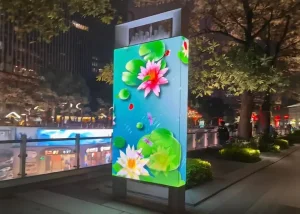
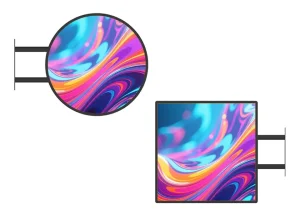
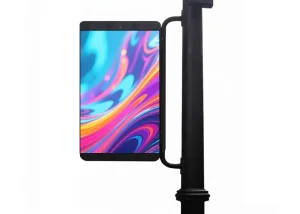
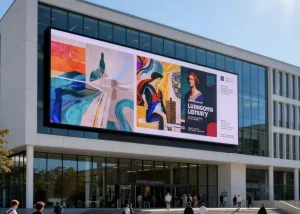
High-bright outdoor billboards (6,500 to 10,000 nits) equipped with light sensors for automatic dimming, IP65 waterproof aluminum cabinets, and integrated 5G smart pole interfaces for urban digital signaling.
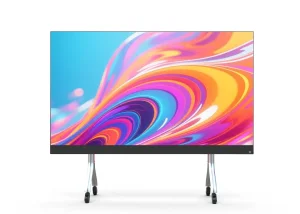
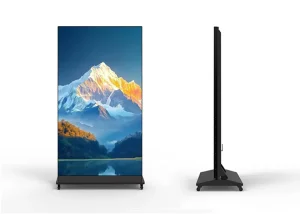
Plug-and-play LED commercial displays integrating video conferencing, interactive wireless screen sharing, embedded operating systems, and ultra-thin bezels to streamline corporate collaboration.
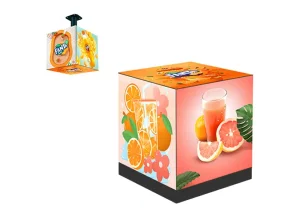
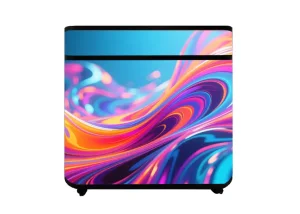
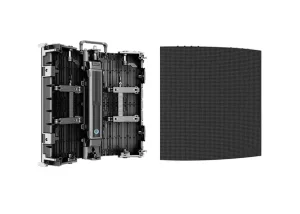
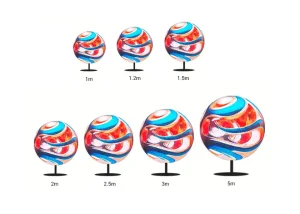
Custom-shaped LED displays—including 360-degree spherical arrays, dynamic magic cubes, 80% transparency see-through glass screens, and flexible soft-module displays for immersive flagship store architecture.
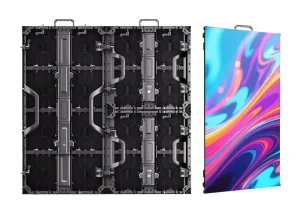
Lightweight magnesium-alloy cabinet systems equipped with quick-locking mechanisms for 10-second single-operator panel installation, corner protection guards, and heavy-duty touring flight case packaging.
Navigating international regulatory frameworks, electromagnetic compatibility standards, and post-installation lifecycle support.
Exporting high-definition LED displays globally demands full compliance with international safety, environmental, and electromagnetic compatibility standards. Quality manufacturers maintain certified management systems ensuring products clear customs smoothly and operate safely in regulated commercial facilities.
Compliance with FCC Part 15 Class A/B and CE-EMC directives prevents electromagnetic interference with local wireless networks, audio-visual equipment, and aviation communication frequencies.
UL62368-1, CE-LVD, and CB electrical safety certifications confirm non-flammable PCB substrate construction, flame-retardant power cables, and automated thermal shutdown protections.
Full compliance with European Union hazardous material restrictions ensures lead-free soldering processes, mercury-free components, and recyclable packaging materials.
Key technological vectors shaping the next generation of direct-view LED video wall engineering.
As semiconductor wafer transfer technology matures, Micro-LED screens with pixel pitches below P0.4mm will provide true 8K resolution on compact 110-inch video walls without sacrificing contrast or structural stability.
Integrating Quantum Dot ink-jet printed color conversion layers over blue Micro-LED chips will expand color gamuts beyond 120% DCI-P3, delivering hyper-realistic color accuracy for colorists and digital artists.
Next-generation receiving cards powered by edge-AI neural processors will dynamically adjust per-pixel luminance and color drift in real-time, counteracting diode degradation over 10-year operating lifespans.
Factory-direct solutions for touring events, commercial retail spaces, conference rooms, and custom architectural projects.
Detailed technical insights answering essential procurement, engineering, and maintenance queries from global buyers.
The standard industry formula for optimal viewing distance is based on visual acuity thresholds. A practical engineering rule of thumb dictates that the minimum comfortable viewing distance in meters roughly equals the pixel pitch in millimeters (e.g., a P1.5mm display is optimal for viewers seated 1.5 meters or farther away).
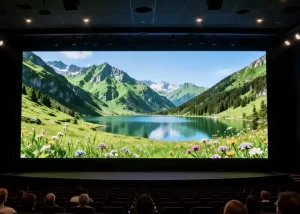
For high-definition corporate boardrooms and control rooms where viewers sit close to the screen, sub-millimeter pitches such as P0.93mm or P1.25mm ensure a continuous, pixel-free canvas. For large auditoriums or retail spaces where viewers are 3 to 5 meters away, P2.0mm to P2.5mm provides optimal image fidelity at a lower cost.
Flip-Chip COB (Chip-on-Board) attaches micro LED chips directly onto the circuit board without microscopic wire bonds. The entire surface is then encapsulated with a smooth nano-optical resin. This yields exceptional thermal dissipation, deep black levels, zero physical lamp collision risks, and IP65-rated front protection.
GOB (Glue-on-Board) is an evolutionary enhancement to standard SMD packaging. SMD lamps are first soldered onto the PCB, and an optical epoxy resin layer is poured over the surface. While GOB offers superior physical protection compared to standard SMD, Flip-Chip COB achieves far higher thermal efficiency, smaller pixel pitches (sub-1.0mm), and lower failure rates.
Refresh rate determines how many times per second the driver IC updates the LED pixels. Low refresh rates (1920Hz or below) produce invisible flickering that causes optical fatigue during extended viewing. More importantly, when recorded by digital cinema cameras or broadcast equipment, low refresh rates cause dark black scan lines and moiré distortion across the screen.
High-definition LED screens operating at 3840Hz or 7680Hz ensure smooth, flicker-free image capture, rendering them fully compatible with broadcast television, virtual production stages (XR), and live event video streaming.
Enterprise-grade LED video walls manufactured by certified OEM factories are rated for a Mean Time Between Failures (MTBF) exceeding 100,000 operational hours (equivalent to approximately 11.4 years of continuous 24/7 operation under normal thermal conditions).
To maximize operational lifespan, systems should be driven using Common Cathode power architecture, maintained within ambient operational temperatures between -10°C and +40°C, and calibrated annually for optical uniformity.
Professional exporters include a 3% to 5% spare parts package with every project shipment. This spare kit includes color-matched LED module batches, power supply units, receiving cards, HUB boards, and ribbon interconnect cables from the exact same production batch to prevent color variance during component swaps.
Leading factories offer 3-year to 5-year warranties covering free component replacement, supplemented by remote desktop support, NovaStar/Colorlight calibration files, and local engineer dispatch agreements for major installations.
The standard international Harmonized System (HS) code for LED display screens is 8528.59.1090 (or 8528.59.00 depending on national tariff schedules). Customs documentation provided by top exporters includes the Commercial Invoice, Detailed Packing List, Certificate of Origin (Form E/Form F/CO), CE/FCC Test Reports, and Bill of Lading.