Engineered for corporate broadcast, rental touring, and architectural integration. Standardized module layouts with custom cabinet adaptations from our Bao'an Shenzhen manufacturing core.
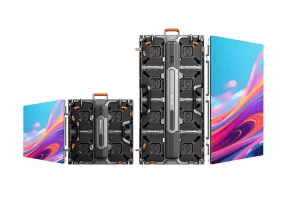
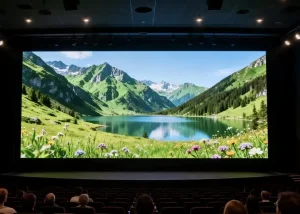
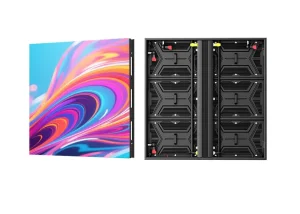
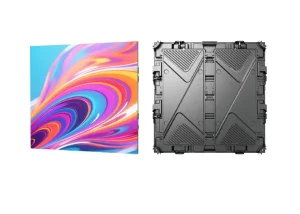
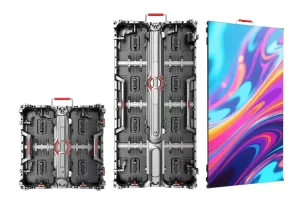
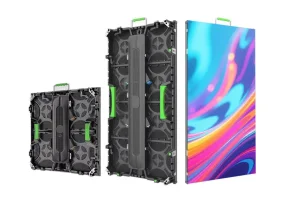
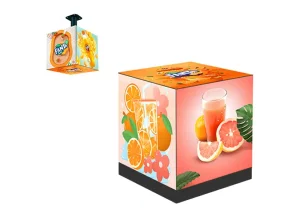
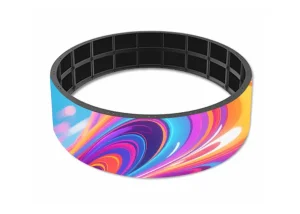
Understanding the tectonic shift from legacy Liquid Crystal Display (LCD) video walls and rear-projection cubes toward seamless, solid-state Micro-Pitch and Chip-on-Board (COB) architectures across enterprise environments.
The global indoor fixed LED display market is experiencing an accelerating Compound Annual Growth Rate (CAGR) exceeding 18.4% through 2032. Growth is fueled by corporate boardroom modernization, digital out-of-home (DOOH) retail integration, and federal command installations demanding zero bezel interference.
Over 88% of the world's commercial LED display hardware originates within the Guangdong-Hong Kong-Macao Greater Bay Area, with Bao'an District, Shenzhen serving as the primary engineering axis. Proximity to high-density SMT machinery, semiconductor packaging, and precision CNC fabrication yields unmatched economies of scale.
Procuring directly from an established Tier-1 manufacturer such as JINGRUNS resolves critical supply chain vulnerabilities commonly faced by overseas distributors and master AV systems integrators. We mitigate pixel-batch mismatching, cold-soldering failures, and erratic delivery schedules.
A technical cross-examination of Surface Mounted Device (SMD), Glue-on-Board (GOB), Chip-on-Board (COB), and MicroLED-in-Package (MiP) platforms driving today's fixed installations.
| Packaging Architecture | Typical Pixel Pitch Range | Thermal Dissipation Efficiency | Impact Protection & Ingress (IP) | Contrast Ratio & Optical Uniformity | Ideal Commercial Deployment |
|---|---|---|---|---|---|
| SMD (Surface Mount Device) | P1.53 - P4.0 mm | Moderate (Copper Trace PCB) | IP30 (Unprotected front pins) | 3,000:1 to 5,000:1 Contrast | Large Auditoriums, Churches, Retail Signage |
| GOB (Glue-on-Board Epoxy) | P1.25 - P2.5 mm | Standard with Epoxy Buffer | IP54 Surface (Anti-collision, Moisture) | 4,000:1 to 6,000:1 Contrast | High-Traffic Lobbies, Primary Schools, Malls |
| COB (Flip-Chip on Board) | P0.62 - P1.56 mm | Superior Direct Substrate Sink | IP65 Surface (Dustproof, Waterproof, Anti-static) | 10,000:1 Ultra-Black Optical Layer | Executive Boardrooms, Mission-Critical NOCs |
| MiP (MicroLED in Package) | P0.39 - P0.93 mm | High (Micro-structured dissipation) | IP65 (Hermetically sealed micro-chips) | 15,000:1 Pure Deep Optical Black | Next-Gen Home Cinema, Defense Simulation |
Traditional Common-Anode arrays route a uniform voltage across Red, Green, and Blue diodes, bleeding substantial energy as thermal waste across Red chips. JINGRUNS utilizes Common-Cathode driver topologies supplying independent power rails (2.8V for Red, 3.8V for Green/Blue).
Operating fine-pitch screens at comfortable indoor viewing luminance (often dialled down to 100-300 nits) typically degrades grayscale depth. Our high-bitrate PWM driving algorithms sustain full 16-bit to 22-bit internal grayscale mapping without clipping or color stepping.
Pixel-to-pixel planar integrity requires structural tolerances under 0.05 mm. JINGRUNS utilizes robotic high-pressure die-cast aluminum and extruded magnesium-aluminum alloy frames processed via automated 5-axis CNC milling centers.
Color space compliance with DCI-P3 (≥98%) and BT.2020 color targets is achieved via custom phosphor formulations and anti-glare nano-matrix coatings. This suppresses moiré fringing and diffuses sharp specular light reflection in ambient-lit rooms.
From 24/7/365 network operation hubs to ultra-luxury retail flagships, indoor fixed LED displays must be configured around human viewing distance, ambient foot-candles, and architectural constraints.
Mission-critical operations require absolute uninterrupted uptime, razor-sharp GIS telemetry rendering, and micro-text legibility. System architectures must feature hardware-level power supply and receiving card redundancy to ensure zero blackout risk.
Moving away from noisy, dim projectors, enterprise headquarters require standardized 16:9 aspect-ratio All-in-One LED hubs (108", 135", 163") supporting native Windows/macOS pixel-to-pixel scaling without software stretching.
High-end broadcast environments demand specialized high-framerate panels capable of syncing with genlocked tracking cameras (Stype, Mo-Sys, RedSpy) to eliminate shutter roll, phase banding, and color shift.
Flagship retail environments rely on creative modular displays that wrap tightly around structural concrete pillars or curve smoothly along interior walls, turning architectural obstacles into revenue-generating visual centerpieces.
Auditorium sanctuaries demand wide viewing angles, balanced brightness, and flicker-free live-stream recording. Displays must deliver high-contrast text and video lyrics clearly to every seat, regardless of interior lighting.
A transparent look inside JINGRUNS' Bao'an automated manufacturing lines, highlighting the engineering controls that guarantee zero dead pixels upon commissioning.
Equipped with modern high-precision placement heads (Yamaha & Panasonic modular systems), our assembly lines mount micro-diodes at speeds up to 80,000 components per hour with ±0.015mm placement accuracy.
To eliminate solder bridge defects and intermetallic oxidation, our PCBs pass through 10-zone nitrogen (N2) reflow ovens. This maintains oxygen concentrations below 500 PPM, creating clean, durable solder joints that resist fracturing.
Every module is checked by 3D Solder Paste Inspection (SPI) prior to placement, followed by dual-spectrum Automated Optical Inspection (AOI) after reflow to verify alignment, solder joint shape, and pin wetting.
No screen leaves our Bao'an facility without undergoing a continuous 72-hour thermal stress screening: 24 hours of full white balance, 24 hours of dynamic RGB cycling, and 24 hours of high-temperature burn-in.
A practical guide for system architects, engineering consultants, and commercial procurement teams evaluating competitive bids from Chinese manufacturers.
To avoid overpaying for unnecessary resolution, specify pixel pitch based on the human visual acuity limit (1 arcminute). The rule of thumb: Minimum Optimal Viewing Distance (meters) ≈ Pixel Pitch (mm) × 1.0.
Initial capital expenditure (CAPEX) represents just 45% of an enterprise LED wall's total lifecycle cost. Operational expenditure (OPEX) is dominated by electrical power draw, thermal HVAC cooling loads, and spare part availability over 5-10 years.
Prior to approving factory release and final letter of credit (LC) payments, demand comprehensive engineering documentation and verification test results from your manufacturing partner.
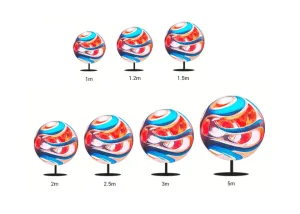
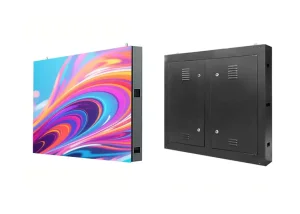
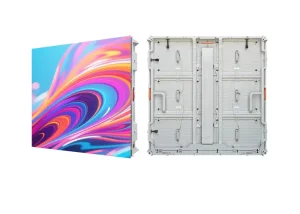
Explore the rest of our export lineup: from ultra-smooth 4K COB fine-pitch panels to creative spherical and architectural digital signage.

Straight, technically sound answers addressing real-world integration, warranty protocols, and factory operations.