Direct-from-factory LED screen technology engineered for high contrast, maximum uptime, and robust weatherproofing across global commercial projects.
Analyzing how sub-millimeter fine-pitch displays, virtual production, and energy-efficient driver designs are replacing conventional visual infrastructure across international enterprises.
The global commercial display sector has officially transitioned into the micro-pitch era. Where P2.5mm was once the standard for indoor video walls, corporate AV integrators and control center engineers now benchmark proposals against P0.93mm to P1.25mm configurations. Driven by Micro-LED and flip-chip COB (Chip-on-Board) advances, high-density panels deliver 4K/8K native resolutions within compact room dimensions, replacing legacy LCD video walls by eliminating bezel seams and image degradation.
Commercial buyers no longer accept basic color reproduction. Modern indoor LED screens must achieve DCI-P3 color gamut coverage exceeding 98%, paired with 16-bit to 22-bit grayscale depth. Advanced PWM (Pulse Width Modulation) driver ICs operate at refresh rates reaching 3,840Hz to 7,680Hz, eliminating optical flicker during broadcast capture, teleconferencing, and camera operations—a critical requirement for corporate studios and virtual production setups.
Operational expenditure (OpEx) has become a primary metric in large-scale visual procurements. China’s leading indoor LED panel manufacturers have pioneered dynamic common cathode power architecture. By independently delivering precise voltage to Red, Green, and Blue diode chips (e.g., 2.8V for Red, 3.8V for Blue/Green), thermal dissipation is reduced by up to 35%, operational temperatures drop by 15°C, and total energy consumption declines significantly over continuous 24/7 run cycles.
Selecting the correct encapsulation technology is crucial for balancing physical durability, thermal management, pixel repairability, and lifecycle costs.
| Technology Vector | Surface Mount Device (SMD) | Glue on Board (GOB) | Chip on Board (COB) |
|---|---|---|---|
| Diode Architecture | Encapsulated RGB LED lamps soldered to PCB substrate. | Standard SMD modules coated with protective epoxy/silicone resin. | Flip-chip Micro/Mini LED dies mounted directly on PCB substrate. |
| Pixel Pitch Range | P1.5mm to P10mm | P1.2mm to P3.9mm | P0.4mm to P1.25mm |
| Physical Protection Level | Standard. Vulnerable to pixel collision during installation. | High. IP65 front surface, impact-resistant, anti-collision. | Extreme. Smooth surface, dust-proof, moisture-proof, scratch-resistant. |
| Thermal Dissipation | Moderate. Heat dissipated through lead frame to PCB. | Moderate to Low. Resin layer can trap heat if not optimized. | Superior. Direct thermal path from die to aluminum core substrate. |
| Contrast Ratio & Black Level | Up to 5,000:1 (Dependent on mask resin). | Up to 8,000:1 (Enhanced by matte protective coating). | Up to 20,000:1 (Full optical black epoxy encapsulation). |
| On-Site Repairability | High. Single SMD lamp can be replaced using hot-air iron. | Moderate. Resin module requires specialized repair station. | Factory Level. Requires localized vacuum micro-soldering unit. |
For high-traffic environments such as retail concourses, school auditoriums, or touch-interactive video walls, GOB (Glue-on-Board) provides an optimal balance of impact resistance and cost efficiency. For command centers, broadcast studios, and executive boardrooms requiring fine resolution under P1.2mm, direct-bond Flip-Chip COB is the industry standard due to its superior black levels, wide viewing angles (175°/175°), and low failure rate (<10 PPM).
Modern high-end indoor panels manufactured in China integrate per-pixel color and brightness calibration data directly within the module's EEPROM. When a panel or receiver card is replaced during maintenance, the NovaStar or Colorlight control system automatically reads the calibration coefficients, guaranteeing visual uniformity across the screen without manual adjustment.
Structural integrity dictates seam invisibility. Leading Shenzhen factories utilize high-precision CNC machining for die-cast aluminum cabinets, achieving dimensional tolerances under ±0.05mm. This prevents cumulative physical alignment errors across massive 16:9 widescreen video walls, enabling zero-gap installation even on large 8K surfaces.
Unpacking the ecosystem in Shenzhen and Guangdong: vertical integration, automated SMT lines, raw material control, and cost-efficiency advantages.
Over 85% of the world’s LED displays originate from Guangdong province, specifically the Shenzhen-Bao'an and Dongguan manufacturing hubs. Upstream wafer fabrication (Epistar, San'an), midstream packaging (Nationstar, Kinglight), control card development (NovaStar, Colorlight, Brompton), and downstream cabinet assembly operate within a 2-hour logistics radius. This concentration minimizes supply chain disruption, slashes component lead times, and accelerates custom prototype turnaround.
Modern Chinese production lines feature fully automated high-speed Surface Mount Technology (SMT) equipment capable of placing hundreds of thousands of components per hour with placement accuracy under 10 micrometers. Advanced 3D Solder Paste Inspection (SPI) and Automated Optical Inspection (AOI) capture micro-soldering defects prior to dynamic 72-hour high-temperature thermal aging tests.
Mass procurement of raw materials—aluminum ingots, gold wire bonding leads, specialized driver ICs—enables Tier-1 Chinese suppliers to offer pricing 30% to 50% lower than European or North American assembly brands. Furthermore, OEMs provide custom PCB layouts, bespoke cabinet dimensions, and tailored front-maintenance mechanics without forcing massive minimum order quantities (MOQs).
Tailoring electrical, optical, and structural specifications to meet the distinct operational demands of diverse indoor applications.
Deployment Specs: Fine-Pitch P0.93mm to P1.25mm, Redundant Power Supplies, Dual Signal Receivers, Low Electromagnetic Emission (EMC Class B).
In power utilities, traffic control hubs, and security operations, video walls operate non-stop (24/7/365). Systems require dual-loop signal backup (HDMI/DP over fiber) and hot-swappable power modules. High grayscale performance at reduced brightness levels (100–300 nits) ensures operator eye comfort during extended shifts without risking color banding or lost detail.
Deployment Specs: P1.5mm to P1.9mm, 7680Hz Refresh Rate, Frame Rates up to 240fps, Genlock Synchronization, Color Gamut > 99% DCI-P3.
Virtual production walls replace green screens by rendering real-time 3D backgrounds via Unreal Engine. Screens must feature high refresh rates, high frame rates, and low latency control processors (e.g., Brompton Tessera or NovaStar MX40 Pro) to prevent moiré patterns, scan lines, and image tearing under cinema camera lenses.
Deployment Specs: GOB or COB Encapsulation, High Brightness (800–1200 nits), Custom Shapes (Curved, 90° Corner, Columns), Front-Access Service.
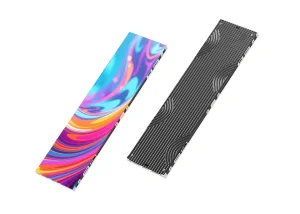
Commercial retail installations require visually striking, high-impact displays resistant to shopper contact. Ultra-thin, lightweight panels with vacuum front-maintenance access allow clean, flush wall mounting within retail millwork, maximizing floor space while driving brand engagement.
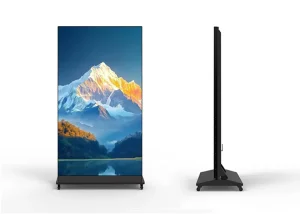
Deployment Specs: All-in-One Native 16:9 Aspect Ratio (108", 136", 163" Diagonals), Integrated Audio, Wireless Screen Sharing, Easy DIY Setup.
Replacing traditional projectors, All-in-One indoor LED displays offer high brightness, deep contrast, and long lifespans without ambient light washing out image quality. Built-in Android/Windows OS and plug-and-play HDMI connectivity streamline integration for corporate AV teams and sanctuary media staff.
Assuring long-term operational success for international distributors, system integrators, and venue operators.
Deploying LED products in North America, Europe, and Asia-Pacific requires strict adherence to international electrical safety and electromagnetic standards. Premier Chinese manufacturers provide certified products with documentation for:
Because diode production runs vary slightly in color wavelength, trusted suppliers include a dedicated spare parts allotment sourced from the exact same wafer batch for every project order:
Robust operational agreements bridge geographical distances between Chinese engineering hubs and project installation sites worldwide:
Explore high-resolution wall-mounted panels, ultra-thin posters, rounded corner designs, and holographic transparent LED solutions.
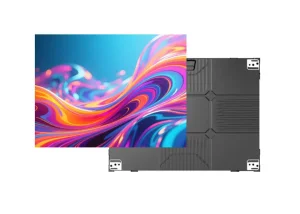
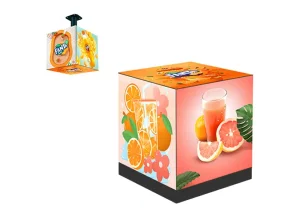
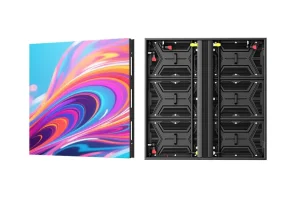
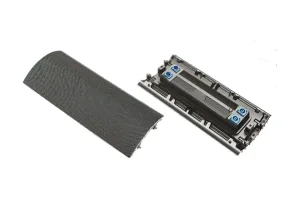

Addressing core engineering, installation, and procurement questions regarding China-manufactured indoor LED video walls.
Optimal pixel pitch is calculated based on the Minimum Comfortable Viewing Distance (MVD) and the Optimal Viewing Distance (OVD):
Pixel Pitch × 2.5 to 3. For P1.5mm, peak image clarity is achieved between 3.75 and 4.5 meters.For boardrooms and control centers where viewers sit within 2 to 4 meters, select fine-pitch options between P0.93mm and P1.25mm. For auditoriums, retail spaces, or churches where viewers are 5+ meters away, P1.86mm to P2.5mm offers ideal clarity at lower cost.
In traditional Common Anode architecture, a uniform voltage (typically 5V) is supplied simultaneously to Red, Green, and Blue LED chips. However, Red diodes only require approximately 2.8V to operate, while Green and Blue require ~3.8V. The excess 2.2V supplied to the Red diode converts directly into heat energy.
Common Cathode technology separates voltage distribution, delivering 2.8V specifically to Red diodes and 3.8V to Green/Blue diodes. This dedicated power path achieves:
Standard LED displays operating at 1920Hz look fluid to the human eye, but when filmed by high-speed digital cameras or smartphones, the camera's shutter speed intersects with the display's multiplexing scan cycle. This creates visible black scan lines, flicker, and moiré artifacts.
Displays engineered with 3840Hz to 7680Hz high refresh rates use specialized high-grade PWM driver ICs. This ensures the LED diodes cycle thousands of times within a single camera shutter frame, yielding flawless, flicker-free image capture during live TV broadcasts, virtual studio shoots, or corporate webcasts.
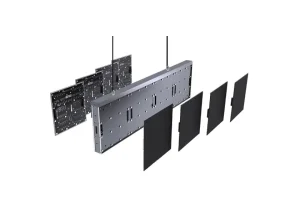
Indoor video walls are frequently recessed or surface-mounted flush against walls without rear service corridors. Front-access maintenance utilizes high-strength magnetic posts on the back of each LED module that snap onto matching anchor points on the die-cast aluminum cabinet frame.
Technicians use a vacuum extraction tool or magnetic suction device pressed against the module face. By pulling straight forward, individual modules unlatch in under 5 seconds without disturbing neighboring panels or dismounting structural cabinets. Power supplies and receiver cards are accessible from the front for simple serviceability.
Standard production cycles for custom OEM indoor LED screen orders typically follow these timeframes:
Air freight delivery (for urgent concert or event schedules) takes 5 to 7 days globally. Sea freight (FCL/LCL) or rail transport typically ranges from 20 to 35 days depending on destination ports in Europe or North America.
Engineering teams must evaluate three structural factors before installation: