Industry Whitepaper & Technical Guide

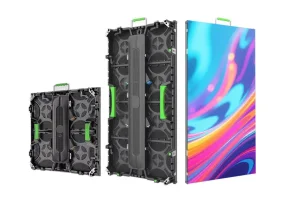
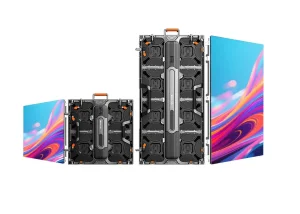
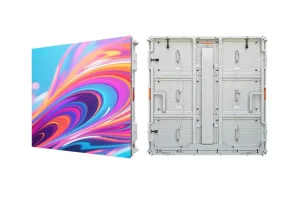
China Indoor Vs Outdoor LED Display Brightness Manufacturers & Exporters

A Comprehensive Photometric Benchmark on Nit Levels, Thermal Dissipation Architecture, Common Cathode Energy Efficiency, and Global Export Compliance Standards.

1. Executive Overview & Photometric Engineering Fundamentals

Understanding the fundamental distinction between candela per square meter ($cd/m^2$ or Nits) in indoor vs. outdoor optical environments.

When selecting digital display infrastructure, procurement executives and AV system integrators face a core engineering challenge: balancing luminous efficacy against thermal degradation, power consumption, and ambient contrast ratios (ALCR). China has emerged as the global epicenter for LED display manufacturing, driving innovations in both Surface Mount Device (SMD) packaging and Chip-on-Board (COB) fine-pitch architectures. However, the operational parameters required for indoor environments differ drastically from those designed for high-brightness outdoor DOOH (Digital Out-of-Home) installations.

600–1,200
Indoor Standard Nits
5,500–10,000
Outdoor Sun-Readable Nits
7,680 Hz
Broadcast Refresh Rate
40%
Common Cathode Power Saved

Photometric Metrics: Nits, Lux, and Ambient Contrast

Brightness in LED displays is measured in Nits ($1 \text{ Nit} = 1 \text{ cd/m}^2$). The required nit rating is determined by the maximum lux (ambient illuminance) incident upon the screen surface:

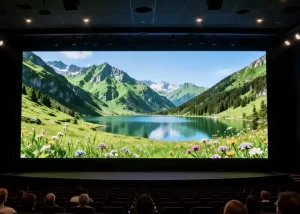
  • Controlled Indoor Environments (Auditoriums, Control Rooms, Boardrooms): Ambient illuminance typically ranges from 150 to 500 Lux. Displays configured for 600 to 1,000 nits deliver optimal contrast without inducing viewer eye strain or image blooming.
  • Semi-Outdoor & Sun-Exposed Indoors (Glass Atriums, Retail Windows): Ambient lighting can reach 5,000 to 10,000 Lux. Here, indoor displays fail; specialized high-brightness indoor or window-facing displays operating at 2,500 to 4,000 nits are essential.
  • Direct Outdoor Installations (Highways, Building Facades, Stadiums): Direct sunlight yields illuminance up to 100,000 Lux. To achieve a functional Ambient Light Contrast Ratio (ALCR) greater than 10:1, outdoor panels must sustain 5,500 to 10,000+ nits continuously.

2. Deep Technical Comparison: Indoor vs. Outdoor Brightness Architecture

Systemic hardware differences engineered by Chinese tier-1 exporters to manage driver ICs, heat dissipation, and weatherproofing.

Engineering Parameter Indoor LED Display Architecture Outdoor LED Display Architecture
Typical Brightness Range 600 – 1,500 Nits (cd/m²) 5,500 – 10,000+ Nits (cd/m²)
Encapsulation Tech COB (Chip-on-Board), Micro-LED, SMD1010/1515 SMD1919/2727/3535 or DIP (Dual In-line Package)
Power Distribution Common Anode / Common Cathode (Low Voltage) Common Cathode Energy-Saving Architecture (2.8V / 3.8V split)
Ingress Protection (IP) IP30 – IP41 (Front/Rear Focus on anti-static) IP65 – IP68 Fully Sealed Die-Cast Aluminum/Magnesium
Gray Scale Performance 16-bit to 22-bit (Retained at low brightness levels) 14-bit to 16-bit (Optimized for max luminance output)
Pixel Pitch Focus P0.6mm – P2.5mm (Ultra-Fine Pitch) P2.9mm – P10mm (Long Viewing Distance)
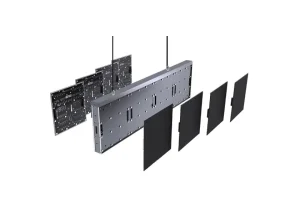
Cooling Architecture Passive Convection / Aluminum PCB Backplates Airflow Channels / Waterproof Fan Kits / Heat Sink Fins

Common Cathode Drivers

Modern outdoor displays manufactured in China utilize Common Cathode topology. By supplying independent, precise voltages to Red (2.8V) and Green/Blue (3.8V) LED dies, thermal generation is reduced by up to 35%, preventing thermal expansion color shifts and extending panel operational life beyond 100,000 hours.

Low-Brightness Grayscale Control

A major failure point in cheap indoor panels is grayscale loss when dimmed. OEM Chinese suppliers incorporate advanced PWM driver ICs (such as ICN2069 or MBI5253) that maintain full 16-bit color depth even when brightness is reduced to 10% for dark boardroom presentations.

Optical Conformal Coatings

For outdoor displays, high nit output generates heat that can degrade epoxy resin. Chinese exporters apply automated nano-conformal coatings and UV-resistant silane mask coatings to prevent yellowing and guarantee long-term IP65/IP67 ingress integrity.

3. Macro Industry Trends & Global Commercial Landscape

How China's LED manufacturing ecosystem leads global exports through supply chain integration and technological convergence.

The global digital signage and LED video wall market is experiencing rapid expansion driven by DOOH transformation, Virtual Production (XR Stages), and Smart City IoT infrastructure. Chinese manufacturers in Shenzhen, Huizhou, and Dongguan account for over 85% of global LED screen production. This concentration allows tier-1 manufacturers to vertically integrate everything from die bonding and wafer fabrication to SMT assembly and thermal chassis machining.

Key Market Drivers Shaping Export Specifications:

  1. Strict Energy Regulations (EU ErP Directive & US Energy Star): High-brightness outdoor billboards traditionally consumed massive amounts of electricity. Modern Chinese manufacturers are implementing automatic light sensor feedback loops and dynamic voltage switching to comply with European power density caps ($< 350 \text{ W/m}^2$ average operational consumption).
  2. The Rise of 3D Naked-Eye Outdoor Displays: Right-angle, curved, and L-shaped outdoor billboards require ultra-high brightness (over 7,500 nits) combined with 7,680Hz refresh rates to eliminate scan lines during smartphone recording by spectators, amplifying viral social media impact.
  3. COB (Chip-on-Board) Dominance in Fine-Pitch Indoor Systems: Indoor environments are transitioning from traditional SMD to COB technology. By mounting flip-chip LEDs directly onto the PCB substrate, indoor displays achieve superior physical impact resistance (anti-collision), IP54 surface protection, and higher visual density without thermal throttling.

4. Localization Support, Compliance & Structural Standards

Ensuring seamless deployment across North America, Europe, the Middle East, and coastal regions.

Electrical & Safety Certifications

Export-ready China manufacturers provide full regulatory compliance including CE-EMC, CE-LVD, FCC Class A/B, ETL, UL62368-1, and RoHS. Electromagnetic compatibility ensures outdoor displays do not interfere with nearby cellular networks or emergency broadcasts.

Extreme Environment Adaptation

For Middle Eastern deployments exposed to 55°C ambient heat, cabinets utilize die-cast aluminum with heat dissipation fins and industrial fanless cooling. For coastal regions, marine-grade anti-corrosion coatings protect against salt spray degradation.

Structural & Wind-Load Engineering

Outdoor billboard installations require structural engineering validation. Premium exporters supply stamped CAD calculations capable of withstanding Typhoon Grade 12–14 wind forces, utilizing modular aluminum frames to minimize load weight.

5. Technical Roadmap & Future Photometric Innovations (2026–2030)

The convergence of Micro-LED, AI optical sensing, and next-generation substrate engineering.

As display technology evolves, Chinese research institutes and manufacturer R&D centers are pioneering breakthroughs in optical engineering that redefine how brightness and color are managed across environments:

  • Micro-LED MIP (Micro-in-Package) Packaging: Combining the high-yield testing of traditional SMD with the ultra-small chip footprint of Micro-LED. MIP enables sub-0.5mm indoor pixel pitch displays capable of reaching 2,000 nits peak brightness with minimal thermal output.
  • Dynamic Tone Mapping & Sensor-Driven AI Brightness Tuning: Integrated ambient light and color temperature sensors communicate directly with receiving cards (such as NovaStar A10s Pro or Colorlight K10). Algorithms adjust panel luminance continuously, preserving true Rec. 2020 color volume whether under bright sunlight or nighttime ambient conditions.
  • Graphene & Vapor Chamber Heat Spreading: To achieve 12,000+ nit output in outdoor displays without shortening LED lifespan, thermal engineers are replacing traditional copper substrates with multi-layer graphene thermal pads and vacuum vapor chamber backplates.

6. Exhaustive Engineering FAQ: Procurement & Optimization

Expert insights on optical metrics, power budgeting, and longevity management for B2B buyers.

What happens if an indoor LED panel (800 Nits) is installed outdoors?
Installing an indoor panel in an outdoor environment causes total visual failure and rapid hardware degradation. First, direct ambient sunlight (up to 100,000 Lux) will completely wash out an 800-nit display, making the image invisible. Second, indoor cabinets lack IP65 moisture sealing and UV-resistant masking, leading to short circuits from rain and thermal warping of epoxy components within weeks.
How does Common Cathode technology reduce power consumption in high-brightness outdoor displays?
Traditional Common Anode displays supply a single 5V power line to Red, Green, and Blue LED diodes. Because Red diodes require only 2.8V, the remaining 2.2V is dropped across driver IC resistors, generating excess heat. Common Cathode architecture splits power lines: 2.8V for Red and 3.8V for Green/Blue. This eliminates wasted electrical energy, reducing overall power consumption by 30%–40% and lowering operating temperatures by up to 15°C.
What is the operational lifespan of a 7,500-nit outdoor billboard operating at maximum output?
Tier-1 Chinese manufacturers build outdoor displays with LED dies rated for 100,000 hours to $L_{70}B_{50}$ (time until brightness drops to 70% of initial output). However, running a panel at 100% fixed brightness continuously accelerates diode aging. Integrating an automatic ambient sensor dims the screen at night (to ~800 nits) and optimizes daylight output, ensuring a functional operational life of 8 to 10 years without noticeable chromatic shift.
How do I choose the correct pixel pitch for an indoor broadcast studio vs. an outdoor roadside billboard?
For indoor broadcast studios, the pixel pitch ($P$) in millimeters should equal the camera distance in meters divided by 1.5 to prevent Moiré patterns (e.g., a 3-meter camera distance requires $P1.5$ to $P1.9$ fine pitch with a $\ge 3,840 \text{ Hz}$ or $7,680 \text{ Hz}$ refresh rate). For outdoor billboards viewed from vehicles 20+ meters away, $P6$ to $P10$ provides optimal resolution at a fraction of the cost per square meter.
What are the key export certifications required to import Chinese LED displays into North America and Europe?
For North America, products require **ETL or UL62368-1** certification for electrical safety compliance and **FCC Class A** (commercial) or **Class B** (residential) for electromagnetic emission control. For the European Union, **CE-EMC, CE-LVD, and RoHS** compliance are mandatory. Responsible manufacturers also provide **TUV Rheinland** or **CB** test reports to streamline customs clearance and local building insurance approvals.
Why is COB (Chip-on-Board) superior to SMD for indoor fine-pitch video walls?
COB encapsulates flip-chip LED dies directly onto the PCB substrate, eliminating wire bonds and fragile SMD legs. COB offers key optical and physical advantages: higher black area ratio (delivering contrast ratios up to 10,000:1), wider 170° viewing angles, superior heat dissipation directly through the substrate, and robust surface protection against dust, moisture, and accidental physical impacts (anti-collision rating > 10H surface hardness).