Explore our export-grade outdoor waterproof, ultra-high-definition indoor, and specialized creative display solutions engineered for demanding commercial applications.
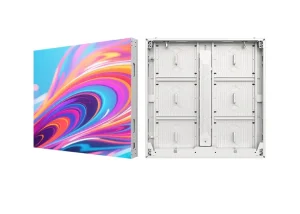
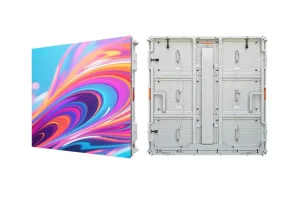
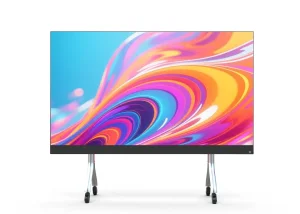
A comprehensive technical analysis of ingress protection standards, sealing architecture, and fluid dynamics for commercial LED hardware buyers.
In global digital-out-of-home (DOOH) advertising, municipal smart city infrastructure, and heavy industrial installations, hardware failure is most frequently triggered by environmental ingress—specifically liquid moisture, micro-particulate dust, and corrosive airborne salts. While legacy outdoor displays historically satisfied the IP65 (Ingress Protection 65) standard, modern enterprise buyers increasingly mandate IP66 compliance to mitigate operational risk and lower lifetime maintenance overhead.
Under International Electrotechnical Commission (IEC) standard 60529, the distinction between IP65 and IP66 represents a significant leap in hydrodynamic protection rather than a minor incremental improvement:
| Ingress Rating | Dust Protection (1st Digit) | Water Jet Velocity & Pressure (2nd Digit) | Test Flow Rate & Nozzle Size | Mechanical Seal Threshold |
|---|---|---|---|---|
| IP65 | Dust-tight (No ingress of dust; complete protection against contact) | Protected against low-pressure water jets from any direction (30 kPa at 3 meters distance) | 12.5 Liters / min; Nozzle diameter: 6.3 mm | Standard silicone Gaskets & Single-Layer Conformal Coating |
| IP66 | Dust-tight (No ingress of dust under negative pressure differential) | Protected against powerful high-pressure water jets (100 kPa at 3 meters distance) | 100.0 Liters / min; Nozzle diameter: 12.5 mm | Hermetic Vacuum Potting, Double-Lip Silicone Seals & ePTFE Equalization Valves |
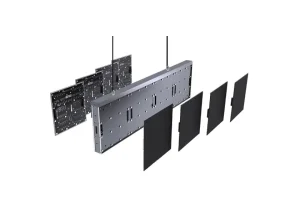
IP66 modules engineered by leading Chinese suppliers utilize dual-component liquid silicone encapsulation over the entire rear PCB surface. This complete void-free resin potting shields drive ICs, resistors, and solder joints against micro-emulsion penetration during severe rainfall and high-pressure washdowns.
Rapid thermal drops during sudden thunderstorms cause internal pressure drops inside sealed cabinets, sucking ambient moisture past standard gaskets. IP66 displays incorporate waterproof ePTFE (expanded polytetrafluoroethylene) air-vent membranes that equalize internal/external pressure while repelling liquid water.
IP66 aluminum cabinets feature multi-stage surface treatments including chromate conversion coating, anti-saline powder primer, and polyurethane topcoats. Stainless steel hardware (SUS316 grade) prevents galvanic corrosion at fastening points in coastal regions.
Analyzing procurement metrics, total cost of ownership (TCO) evaluation, and regional climatic stress factors influencing international buyers.
The global procurement market for outdoor LED displays has undergone a structural shift. Procurement officers, AV system integrators, and engineering consultants no longer evaluate suppliers solely on initial hardware capital expenditure (CapEx). Instead, emphasis has pivoted toward Total Cost of Ownership (TCO), lifetime energy consumption metrics, thermal efficiency under sustained solar radiation, and verified Mean Time Between Failures (MTBF).
Enterprise buyers operating in diverse geographic territories require display hardware specifically optimized for regional environmental stressors:
In environments such as the Gulf Cooperation Council (GCC) countries or Southeast Asia, displays face ambient temperatures exceeding +50°C paired with heavy airborne sand particles or high relative humidity. Sourcing specifications mandate Common-Cathode driver architecture to lower operating temperatures by 30-40% compared to traditional common-anode systems, alongside fanless aluminum heat-dissipation chassis to prevent internal dust buildup.
Ports, cruise terminals, and coastal highway billboards endure relentless salt fog exposure. Sourcing specifications demand ASTM B117 salt spray testing validation exceeding 1,000 continuous hours. IP66 displays engineered with gold-wire LED encapsulation, conformal-coated power supplies, and sealed module-to-cabinet interfaces prevent micro-dendrite growth and short circuits caused by conductive salt deposits.
How Shenzhen's Advanced Production Ecosystem Delivers Unmatched Cost Efficiencies, Precision Manufacturing & Scale
China manufactures over 85% of the world's commercial LED display systems. This dominance is grounded in a highly integrated Industry 4.0 supply chain ecosystem located across Shenzhen and the broader Guangdong manufacturing corridor. From raw semiconductor wafer processing to automated SMT (Surface Mount Technology) assembly and automated IP66 water-immersion testing, Chinese suppliers offer structural competitive advantages that ensure rapid execution of custom OEM/ODM orders.
Examining field performance, mounting configurations, and operational success across diverse commercial verticals.
Seamless right-angle or curved IP66 aluminum cabinets installed on urban building facades. High brightness (6,500–8,500 nits) ensures visual clarity under direct midday sunlight while maintaining waterproof protection against severe downpours.
High-refresh-rate screens deployed at airport access roads, passenger terminals, and railway station exteriors. Features front-access maintenance protocols allowing rapid single-module servicing without dismantling structural frame seals.
High-humidity indoor/outdoor stadium displays exposed to chlorine vapor and high water splashes. Specialized anti-corrosion conformal coatings prevent chemical degradation on control card circuitry.
Heavily sealed fine-pitch COB displays integrated into chemical processing units, mining sites, and energy facilities where high ambient airborne particulates and washdown routines are enforced.
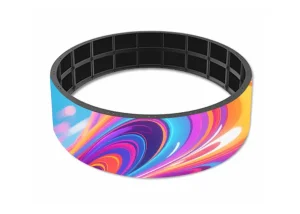
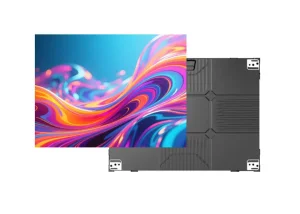
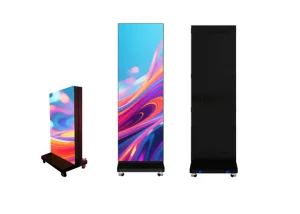
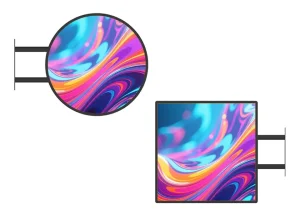
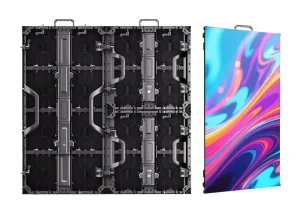
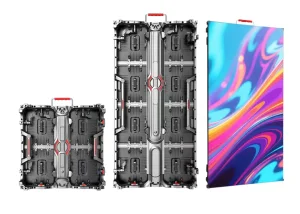
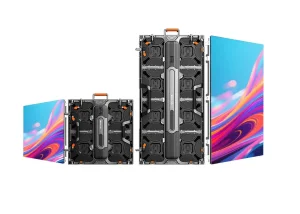
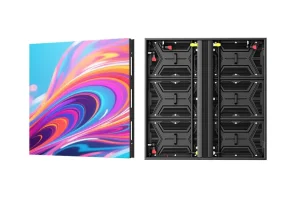
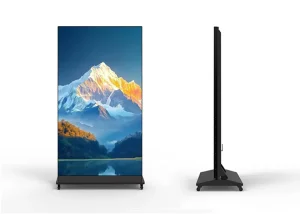
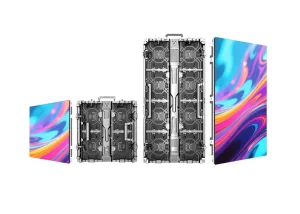
Browse our complete catalog of rental touring panels, ultra-fine detail poster displays, curved systems, and specialized vehicle advertising screens.

In-depth responses from our engineering leadership regarding verification, thermal management, custom engineering, and warranty coverage.
While IP65 protects against low-pressure water streams (12.5 L/min at 30 kPa), IP66 testing subjects the screen to severe high-pressure water jets delivering 100 Liters per minute at 100 kPa pressure. Achieving IP66 requires full rear module potting, dual-lip silicone seals around power and signal connectors, hydrophobic conformal coatings on driver ICs, and ePTFE pressure vents to eliminate vacuum moisture intake.
Common-cathode technology supplies independent precise voltage to Red, Green, and Blue LED chips (e.g., 2.8V for Red, 3.8V for Blue/Green) rather than a uniform 5V supply. Because IP66 cabinets are tightly sealed against rain and dust, reducing internal heat dissipation by 30-40% via common-cathode driving dramatically extends LED component lifespans (over 100,000 hours) without relying on internal fans that attract dust.
When an outdoor display operates under hot direct sunlight and is suddenly cooled by a thunderstorm, the air inside a sealed cabinet rapidly contracts, generating a localized vacuum. Without equalization valves, this negative pressure forces ambient moisture past structural silicone gaskets. Waterproof ePTFE vents allow air molecules to pass freely to maintain equilibrium while blocking liquid water drops entirely.
For coastal and marine deployments, buyers should require ASTM B117 Salt Spray Testing compliance (minimum 500-1,000 continuous hours exposure), alongside CE, RoHS, FCC, and ETL marks. Cabinets must utilize SUS316 grade stainless fasteners and electrostatically powder-coated die-cast aluminum alloys to prevent galvanic corrosion.
Enterprise customization encompasses custom pixel pitch selections (e.g., fine-pitch outdoor P1.9 to P3.9 COB/SMD), tailored cabinet dimensioning for architectural cutouts, right-angle and 90-degree corner beveling for naked-eye 3D screens, integrated remote IoT telemetry diagnostics, and branded silkscreening on aluminum backplates.
Leading Chinese exporters offer a standard 3-year factory warranty covering module replacement, power supply units, and control cards. Export shipments routinely include a 2–5% spare parts kit containing matching-batch LED modules, receiving cards, power units, and waterproof cabling to enable immediate localized field servicing.