Precision-engineered LED screens featuring up to 7680Hz refresh rates, high-grade PWM driver ICs, and IP65 weather-proof enclosures directly from leading China SMT manufacturing lines.
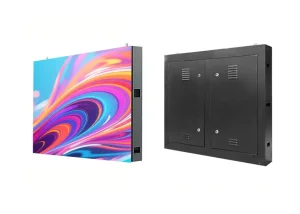
Custom Custom LED Outdoor Billboards | Digital Signage Displays for Advertising Factories, Factory
Explore Product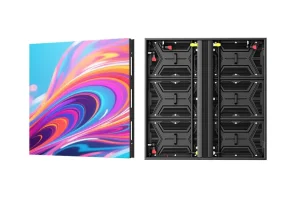
China Outdoor 3D LED Display Manufacturer | LED Screen Factory Exporters, Exporter
Explore Product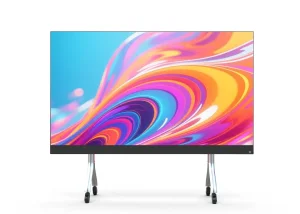
Custom COB Fine Pitch LED Display & Conference All-in-One Machine Manufacturer Supplier, Factory
Explore Product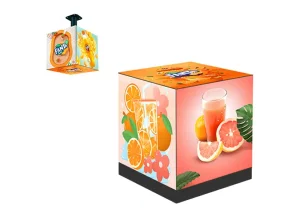
Custom Indoor Outdoor Magic Cube LED Display | For Creative Advertising Factories, Exporter
Explore Product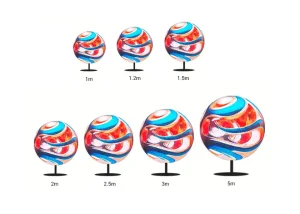
Wholesale Sphere LED Display Prices | Direct from Manufacturer Supplier, Exporter
Explore Product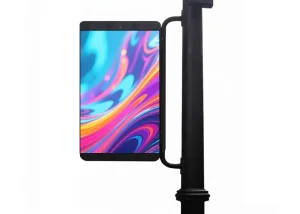
Custom Smart 5G Light Pole Screen | Integrated LED Display for Smart City Infrastructure Manufacturers, Factory
Explore Product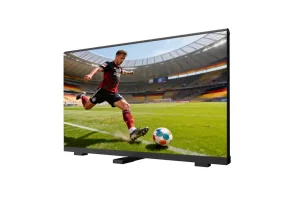
Wholesale Stadium Perimeter LED Display For Football Match Factories, Exporter
Explore Product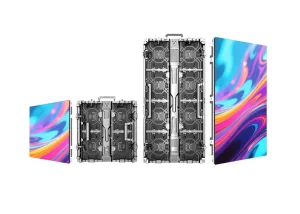
Wholesale Indoor & Outdoor Modular Event LED Display With Front Access Manufacturers, Exporter
Explore ProductFrom broadcast studio camera artifacts to retail foot-traffic degradation, visual flicker is the single highest cause of warranty claims and operational losses in imported LED displays.
When high-definition cinema or broadcast cameras record screens operating under standard refresh rates (1920Hz), severe black scan lines and strobe effects occur due to phase mismatch between the camera shutter angle and screen PWM frequency.
Digital Out-Of-Home (DOOH) advertisers reject screens exhibiting invisible low-frequency flicker because smartphone camera clips captured by passersby show disruptive rolling black bars, destroying campaign engagement on social channels.
In 24/7 mission-critical control centers and corporate boardrooms, micro-flicker (even above conscious human perception) causes optical fatigue, migraines, and reduced concentration for control room operators.
In global LED video wall procurement, overseas buyers frequently encounter a puzzling phenomenon: an LED wall looks smooth and clear to the naked human eye during factory testing, but once commissioned on site—or filmed via mobile phones and broadcast cameras—it exhibits aggressive horizontal rolling bars, random flashing tiles, or micro-strobe distortions. Search queries such as "China Led Display Keeps Flickering" represent a critical intent point where procurement teams, field engineers, and system integrators actively search for technical solutions and qualified Chinese manufacturing partners who build zero-flicker display systems.
Resolving flicker requires moving beyond low-cost, surface-level manufacturing. It requires a comprehensive engineering approach that integrates high-grade PWM (Pulse Width Modulation) driver ICs, stable power supplies with minimal voltage ripple, impedance-matched PCB trace architecture, and anti-interference signal distribution. As China produces over 85% of the world's LED screens, understanding the engineering difference between low-tier trading exporters and high-end OEM/ODM Shenzhen factories is the key to securing long-term visual reliability.
An exhaustive analysis of the five physical and electronic failure points that generate video wall flicker in commercial installations.
The primary driver of visible and camera-captured flicker is the choice of Constant Current Driver ICs populated on the PCB module. Entry-level displays use basic driving ICs (such as standard dual-latch chips) that operate at low refresh frequencies between 960Hz and 1920Hz. While 1920Hz appears acceptable to human vision, high-speed camera sensors operating at 60 FPS or 120 FPS capture incomplete light pulses during the LED duty cycle, producing thick black rolling bars across the display.
Premium Chinese exporters utilize high-end PWM-SS (Pulse Width Modulation Spread Spectrum) driver ICs—such as Macroblock MBI5252/MBI5153 or Chipone ICN2053/ICN2069. These chips boost refresh rates to 3840Hz, 4320Hz, or 7680Hz while maintaining a high grayscale depth of 14-bit to 16-bit, completely eliminating camera shutter pulse misalignment.
LED video walls demand massive, rapid current switching. If an exporter installs substandard switching power supplies (PSUs) lacking active Power Factor Correction (PFC) or high-capacity filter capacitors, the DC output voltage fluctuates significantly under dynamic content loads.
When displaying fast-moving bright content (e.g., white flashes or explosive video transitions), peak power demand causes DC voltage drops below the operating threshold of the driver ICs (typically < 3.8V DC). This ripple effect manifests as localized module flickering, rapid dimming, or random tile blackouts across the screen cabinet matrix.
Modern LED displays rely on complex synchronous control systems (e.g., NovaStar, Colorlight, Brompton). Flickering often stems from improper system configuration files (.RCFG or .RCG) loaded into the receiving cards. Key configuration errors include:
Industrial LED video walls deploy hundreds of switching power supplies operating in close proximity to ribbon cables and data receiving cards. Unshielded flat ribbon cables, improper chassis grounding, or lack of ferrite cores on data lines allow high-frequency switching noise to couple into the data transmission lines. This EMI noise corrupts the high-speed serialized data streams, causing periodic flashes, screen lines, or entire column flickering.
| Technical Component | Budget Exporter Standard (Flicker Prone) | High-Tier China Factory Standard (Zero-Flicker) | Impact on Screen Stability |
|---|---|---|---|
| Driver IC Chipset | Basic Latch ICs (960Hz - 1920Hz) | High-PWM ICs (3840Hz - 7680Hz) | Eliminates camera rolling scan lines & grey loss |
| Power Supply (PSU) | Generic Non-PFC Power Supplies | Mean Well / G-Energy PFC (Ripple < 50mV) | Prevents voltage drop flickering during brightness spikes |
| PCB Layer Count | 2-Layer Low Copper (1oz) PCB | 4-Layer to 6-Layer Heavy Copper (2oz-3oz) PCB | Optimizes impedance, heat dissipation, and signal integrity |
| Data Cables | Unshielded Flat Ribbon Cables | Shielded Twisted-Pair / Gold-Plated Connectors | Blocks electromagnetic interference (EMI) & data noise |
| Aging Test Protocol | 12 to 24 Hours Factory Burn-in | 72+ Hours Full-White & Dynamic RGB Aging Test | Detects cold solder joints and weak ICs prior to export |
How Shenzhen's fully integrated SMT infrastructure empowers global buyers with top-tier optical performance at competitive direct factory valuations.
The global dominance of Chinese LED exporters is rooted in the unmatched industrial density of the Greater Bay Area (Shenzhen, Dongguan, Huizhou). Within a 30-kilometer radius, top-tier LED display manufacturers operate high-speed Yamaha and Fuji SMT (Surface Mount Technology) lines, automated 3D SPI (Solder Paste Inspection), AOI (Automated Optical Inspection), and environmental thermal cycling chambers.
This extreme supply chain integration allows qualified Chinese manufacturers to source premium driver ICs, Nationstar or Kinglight LEDs, and high-frequency PCBs at a fraction of Western assembly costs. By consolidating engineering development, SMT placement, conformal coating application, and 72-hour aging stress tests under one factory roof, top Chinese suppliers guarantee flicker-free visual performance that meets rigorous CE, FCC, RoHS, and ETL international certifications.
Different industries require specialized driver configurations to ensure image stability under varying camera, ambient lighting, and environmental demands.
Requires P0.93 to P1.9 fine pitch LED walls running at 7680Hz refresh rate, 16-bit grayscale, frame rates locked to cinema cameras (23.976 / 29.97 FPS), and low latency processing to eliminate camera moiré and scan flickering.
Churches frequently livestream services on YouTube or Facebook Live. Display flickering creates visually unappealing broadcast footage. Installing 3840Hz indoor fixed screens ensures crisp camera capture for online congregations.
Massive 3D outdoor screens rely on precise pulse synchronization across curved corner cabinets. High-brightness (up to 10,000 nits) outdoor screens must maintain high PWM refresh rates even when dimmed at night to prevent micro-flicker.
If your current imported Chinese LED screen keeps flickering, follow this sequential diagnostic protocol developed by factory engineers to isolate and fix the root cause.
Connect your control PC via NovaStar NovaLCT or Colorlight LEDVISION software. Access the receiving card configuration menu and verify:
Inspect the internal cabinet hardware:
Direct technical answers to common questions asked by overseas procurement managers, AV integrators, and engineering buyers.
Explore our full line of fixed, rental, fine-pitch, poster, and custom shape LED screens built with zero-flicker architecture for global export.
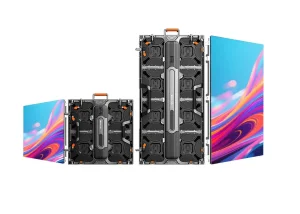
Wholesale High-Quality Modular LED Screens for Events & Backdrops | Rent or Buy Suppliers, Factory
Explore Product
Custom LED Outdoor HD Commercial Video Wall Manufacturers, Supplier
Explore Product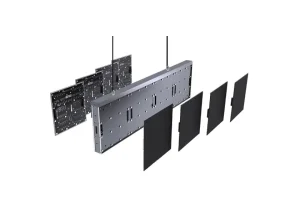
Wholesale Ultra-Thin Double-Sided HD Indoor LED Screen | High-Brightness Display Manufacturers, Exporter
Explore Product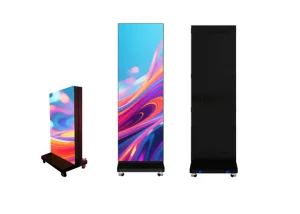
Custom Poster LED Display Movable 4G WIFI USB Control Plug and Play Manufacturers, Exporter
Explore Product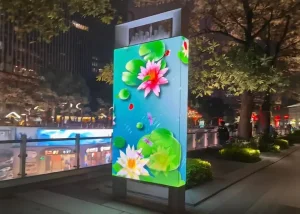
Wholesale Customize Smart LED Display for Fixed Installation | Environmentally Integrated Digital Signage Suppliers, Factories
Explore Product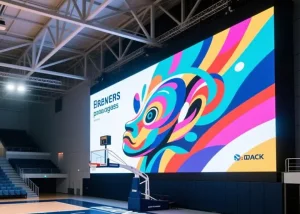
Wholesale P1.25 Indoor Ultra‑Thin Fixed LED Display | IN-A Series Factory, Exporter
Explore Product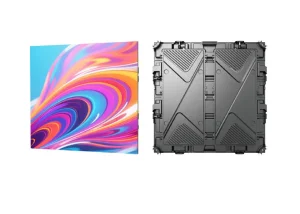
Wholesale Digital LED Billboard for Outdoor Advertising Energy-Saving Supplier, Suppliers
Explore Product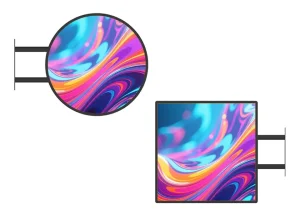
Custom Retail Store LED Display | High Brightness & Waterproof Logo Screen Supplier, Exporter
Explore Product