Industrial Whitepaper & OEM/ODM Engineering Guide

China Led Display Refresh Rate Manufacturers & Exporter

A comprehensive technical analysis on PWM driver IC architectures, high-frame-rate visual optimization, anti-flicker broadcast compliance, and China's global supply chain engineering roadmap for 3840Hz–7680Hz+ display systems.

High Refresh Rate LED Display Solutions (Top Series)

Explore our premium high-refresh LED panels engineered for smooth frame rendering, zero camera scan lines, and high dynamic range display performance.
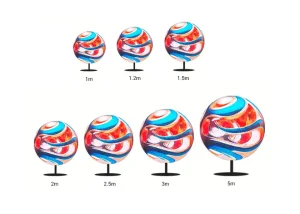
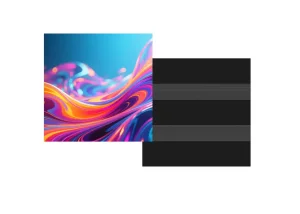
Wholesale Sphere LED Display
Wholesale Sphere LED Display Prices | Direct from Manufacturer Supplier, Exporter
View Product Details
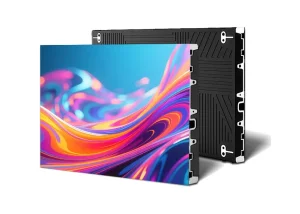
China Indoor LED Video Wall
China Indoor LED Video Wall | LED Display Screen China Factory Manufacturers, Supplier
View Product Details
Custom Tri-Fold LED Poster
Custom Tri-Fold LED Poster Screen Display | Indoor Digital Signage Manufacturer, Factories
View Product Details
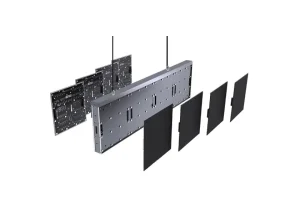
P1.25 Indoor Ultra-Thin Fixed LED Display
Wholesale P1.25 Indoor Ultra‑Thin Fixed LED Display | IN-A Series Factory, Exporter
View Product Details
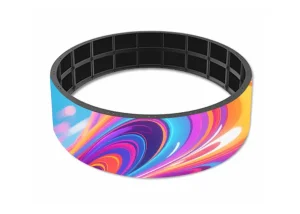
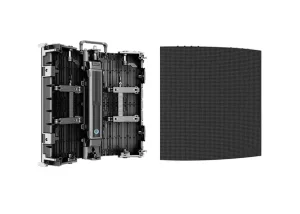
China Custom LED Curved Screen
China Custom LED Curved Screen Manufacturers | Flexible Display Solutions Manufacturers, Factory
View Product Details
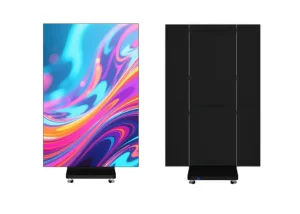
Custom Poster LED Display
Custom Poster LED Display Movable 4G WIFI USB Control Plug and Play Manufacturers, Exporter
View Product Details
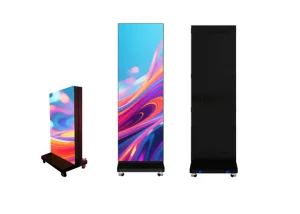
Ultra-Thin Double-Sided HD Indoor LED Screen
Wholesale Ultra-Thin Double-Sided HD Indoor LED Screen | High-Brightness Display Manufacturers, Exporter
View Product Details
Custom Indoor COB Fine Pitch HD LED Screen
Custom Indoor COB Fine Pitch HD LED Screen | Ultra-Smooth 4K Display Factory, Exporter
View Product Details
7680Hz+
Ultra-High Refresh Rate Standard
16-Bit
Grayscale Processing Depth
1/64
High-Density Multiplex Scan Capability
>85%
China's Global LED Module Market Share

Decoding the LED Display Refresh Rate Ecosystem in China

In the contemporary digital display engineering paradigm, the refresh rate (measured in Hertz, Hz) has evolved from a secondary hardware specification into the primary determinant of visual quality, broadcast compliance, and temporal motion fidelity. As professional B2B buyers, AV system integrators, and broadcast engineers evaluate hardware procurement from China, understanding the technical depth behind refresh rate manufacturing becomes crucial for preventing operational failures in high-stakes environments such as broadcast studios, virtual production stages (ICVFX), esports arenas, and mission-critical control centers.

China stands at the absolute epicenter of high-refresh-rate LED screen design, wafer fabrication, driver IC packaging, and final display module manufacturing. Leveraging world-class manufacturing ecosystems in Shenzhen and Guangdong province, leading Chinese LED exporters have redefined display performance standards—transitioning the global industry standard from legacy 1920Hz screens to ultra-high 3840Hz, 7680Hz, and cutting-edge 15360Hz dynamic refresh rates.

Key Engineering Takeaway: Refresh rate is not merely frame rate. While frame rate (fps) dictates how many distinct images a video signal source feeds into a display per second (e.g., 24fps, 60fps, 120fps), the display's refresh rate (Hz) defines how many times the LED driver IC refreshes the physical diode emissions per second to reconstruct those frames without flickering, scan lines, or color banding.

Global Commercial & Industrial Status of High Refresh Rate Displays

Analyzing global demand shifts across broadcasting, virtual production, digital out-of-home advertising, and high-framerate stadium deployment.

XR & Virtual Production (ICVFX)

The explosive rise of In-Camera Visual Effects (ICVFX) has driven the demand for 7680Hz and 15360Hz displays. High shutter speed cinema cameras require total synchronization to eliminate rolling shutter artifacts and Moiré patterns.

  • Genlock sync with camera sensor clock
  • Zero black line artifacts at 1/2000s shutter
  • Extended dynamic color gamut (DCI-P3/Rec.2020)

4K/8K Live Broadcast Studios

Modern television stations require flicker-free LED video walls. With HD/4K cameras capturing at high framerates, display refresh rates below 3840Hz result in visible scan bands across broadcast feeds.

  • Low gray-scale non-linearity correction
  • Seamless integration with broadcast switcher gear
  • Redundant signal power driver topologies

Sports Arena Perimeter Displays

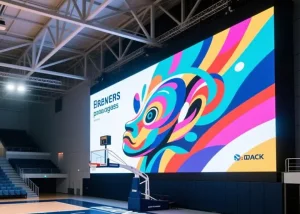
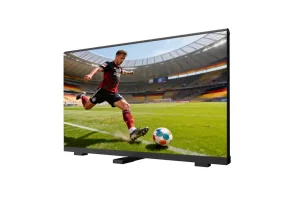
International sports federations (FIFA, UEFA, NBA) mandate minimum refresh rate thresholds (≥3840Hz) for perimeter LED screens to ensure perimeter sponsor branding is crisp during high-speed slow-motion camera replays.

  • Impact-resistant soft mask protection
  • Ultra-fast frame updates for slow-motion cameras
  • High brightness common cathode efficiency

The Engineering Physics of LED Refresh Rates

Understanding how driver ICs, PWM algorithms, clock frequencies, and multiplex scan ratios interplay within Chinese LED display designs.

1. Pulse Width Modulation (PWM) vs. Traditional Driving Methods

The core technology behind modern high-refresh LED displays in China is double-edge PWM (Pulse Width Modulation) driver integrated circuits. In legacy display designs, analog constant current drivers or basic PWM chips controlled LED brightness by maintaining a continuous current pulse per sub-frame. However, under lower gray levels (darker images), the pulse width narrows drastically, forcing the refresh frequency to drop, which causes severe flickering when captured on camera.

Advanced Chinese driver ICs (such as Macroblock MBI5252/MBI5359 or Chipone ICN2053/ICN2065) utilize Scrambled PWM (S-PWM) technology. S-PWM breaks the total visual pulse width into several shorter sub-pulses across a frame period. By multiplying the light pulse firing frequency without demanding unattainable GCLK (Global Clock) speeds, S-PWM elevates the effective refresh rate into the multi-kilohertz range even at 16-bit low grayscale levels.

Technical Parameter Standard Refresh (1920Hz) High Refresh (3840Hz) Ultra-High Refresh (7680Hz+)
Primary Driver IC Generation Basic Constant Current (e.g., ICN2037) Dual-Latch S-PWM (e.g., ICN2053) High-Bandwidth PWM (e.g., MBI5359 / ICN2065)
Camera Shutter Speed Tolerance Up to 1/250 sec Up to 1/1000 sec Up to 1/8000 sec (Broadcast Ready)
Grayscale Performance at Dark Levels Loss of detail & banding below 20% Smooth gray scaling (14-Bit retention) True 16-Bit gray scale preservation
GCLK (Global Clock Frequency) 10 MHz - 15 MHz 20 MHz - 30 MHz 30 MHz - 80 MHz (S-PWM Scrambled)
Typical Scan Ratio Range 1/16 to 1/32 Scan 1/32 to 1/48 Scan 1/1 to 1/64 Scan (with high-layer PCB)
Primary Application Fields Standard Indoor Commercial Signs Rental Staging, Retail, Control Rooms XR Studios, Broadcast TV, Virtual Production

2. The Scan Ratio Mathematical Constraint Formula

A critical engineering compromise in fine-pitch LED display design involves balancing pixel density (pitch), scan ratio (multiplexing), and refresh rate. The maximum achievable refresh rate is constrained by the physical limits of data serialization over the PCB trace infrastructure:

Mathematical Relationship Equation:
Refresh Rate (Hz) = [GCLK Frequency] / [Scan Ratio × Bits of Grayscale × Sub-field Scramble Count]

As pixel pitch shrinks (e.g., from P2.5 to P0.9), display designs require higher scan rates (e.g., 1/64 scan) to keep the number of driver ICs manageable within tiny PCB real estate. Chinese engineering teams overcome frequency bottlenecks by implementing multi-line driver ICs with built-in SRAM memory buffers, allowing pre-fetching of grayscale data locally on the module board.

3. Eliminating Ghosting, Line-Open, and Moiré Effects

High refresh rates alone do not guarantee perfect visual performance. High-speed switching across high multiplex scan lines introduces ghosting (upper and lower line coupling), dark first-line anomalies, and reverse-bias LED leakage. Top-tier Chinese LED display exporters integrate 7th-Generation Ghost-Cancelling Driver Topologies with anti-leakage MOSFET arrays, neutralizing parasitic capacitance across the display circuit board.

Localized Engineering Application Scenarios

Deploying specialized high-refresh LED displays across diverse commercial, industrial, and architectural environments.

Concert Touring & Live Events Staging

Stage backdrops demand fast assembly, heavy touring durability, and camera-ready performance under dynamic LED lighting rigs. Utilizing 3840Hz/7680Hz rental panels prevents black line artifacts on audience smartphones and professional broadcast cameras alike.

  • Curved & dynamic angle locking mechanisms
  • Fast-swap control box modules with NovaStar/Colorlight system support
  • Ultra-lightweight magnesium alloy cabinet frames

Corporate Command Centers & Control Rooms

Operators viewing fine-pitch video walls (P0.93 - P1.56) continuously for 8+ hour shifts require zero-flicker display panels to mitigate visual fatigue and eye strain. 3840Hz displays combined with low-brightness high-gray processing ensure soft visual output.

  • COB (Chip-on-Board) encapsulation with matte surface treatment
  • Common cathode power saving reducing surface heat emissions
  • Redundant signal backup loops for 24/7 mission-critical operational uptime

Flagship Retail & Commercial Digital Out-of-Home

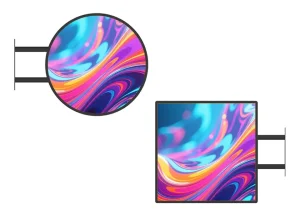
High-end luxury stores require double-sided ultra-thin displays, transparent glass windows screens, and 3D eye-free curved billboards. High refresh rates ensure mobile phone photos taken by shoppers render smooth, vibrant brand creative.

  • High brightness (up to 10,000 nits outdoor) combined with 3840Hz refresh
  • Custom architectural curves, 90-degree right angles, and sphere shapes
  • Remote cloud cluster management via 4G/WiFi media players

Creative Architecture & Spherical Screens

Specialty geometric screens (spheres, flexible rubber modules, tri-fold posters) present unique wiring and signal trace challenges. Advanced Chinese PCB routing maintains high refresh integrity despite complex, non-standard layouts.

  • Flex-PCB substrate designs capable of extreme bending radii
  • Uniform brightness across spherical mesh mappings
  • Synchronized frame buffers preventing visual tear lines

China's Manufacturing Advantage in High-Refresh Display Systems

Why Shenzhen and Chinese manufacturing hubs dominate global exports of state-of-the-art LED video display hardware.

China's strategic dominance in the global LED display export sector is built on an unmatched industrial clustering ecosystem, primarily concentrated in Shenzhen, Huizhou, Dongguan, and the greater Pearl River Delta. This geographic convergence brings silicon driver IC design houses, LED packaging foundries (SMD/COB), high-precision multi-layer SMT surface-mount facilities, power supply manufacturers, and control system software developers within a 50-kilometer supply radius.

Key Structural Pillars of Chinese Manufacturing Competitiveness:

  1. Vertical Integration of SMT Lines: Top Chinese factories operate fully automated high-speed SMT lines equipped with 3D SPI (Solder Paste Inspection), AOI (Automated Optical Inspection), and automated aging test rooms. This guarantees pin-point soldering accuracy for fine-pitch high-frequency driver IC pins.
  2. Custom Driver Chip Co-Development: Leading Chinese LED screen manufacturers work directly with chip designers (such as Chipone, Macroblock, Sonix) to tailor custom IC masks, optimizing chip silicon layout specifically for ultra-high scan rates and reduced thermal footprints.
  3. Common Cathode Energy Efficiency Innovations: High refresh rates historically consumed higher power due to rapid switching frequencies. Chinese manufacturers pioneered the mass implementation of Common Cathode dual-voltage power distribution (supplying independent 2.8V for Red dies and 3.8V for Blue/Green dies), reducing screen operating temperatures by up to 15°C and power usage by 30-40%.
  4. Comprehensive Global Certification Standard Compliance: Chinese exporters engineer high-refresh panels to meet stringent global regulatory standards, including CE, FCC, RoHS, ETL, CB, and EMC Class B compliance, ensuring smooth customs clearance and safe installation worldwide.

Technical Roadmap & Future Outlook (2026–2030)

Forecasting the next decade of display innovations: MicroLED, AI dynamic frame synchronization, and 15360Hz ultra-refresh architectures.

Phase 1: Present Horizon (2026)
3840Hz / 7680Hz Standard Mass Adoption

3840Hz becomes the baseline standard across all commercial displays, with 7680Hz taking over stage rental and broadcast verticals. High-density COB (Chip-On-Board) and MIP (Micro-in-Package) flip-chip architectures fully replace legacy SMD packaging in fine pitch applications below P1.2.

Phase 2: Near Term (2027–2028)
AI-Driven Adaptive Refresh Rate (ARR) & 15360Hz Integration

Incorporate smart AI video signal processors that dynamically adjust the hardware refresh rate based on incoming motion vectors—similar to VRR in gaming monitors. Static content automatically scales down to conserve power, while fast motion instantly scales to 15360Hz with zero latency.

Phase 3: Advanced Future (2029–2030+)
MicroLED Direct-Emissive Monolithic IC Driver Layering

Transition from discrete driver IC chips mounted on multi-layer PCBs to monolithic silicon backplanes where micro-scale LED chips are transferred directly onto driver logic layers. Enables sub-0.3mm pixel pitches with unlimited refresh bandwidth and near-infinite dynamic contrast ratios.

Industrial & Technical Q&A (FAQ)

In-depth technical answers addressing common procurement and engineering queries from international buyers.

How do I verify if an LED display genuinely reaches 3840Hz or 7680Hz during factory inspection?
Verification requires specialized test equipment. While consumer smartphone cameras can reveal basic scan lines on lower 1920Hz screens, professional validation requires a High-Speed Digital Optical Oscilloscope with a fast photodiode sensor or a high-speed camera set to 1/2000s to 1/8000s shutter speeds. By pointing the optical probe at an illuminated LED module pixel under various grayscale test patterns (10%, 50%, 100% brightness), the oscilloscope measures the exact frequency of light emission pulses per second. Authentic high-refresh screens demonstrate stable pulse trains at or above 3840Hz even at 5% low grayscale.
What is the structural difference between Refresh Rate and Frame Rate?
Frame Rate (measured in frames per second, fps) refers to how many complete frames of video data are sent from the media playback source (such as a media server or PC graphics card) to the LED controller per second (typically 24fps, 30fps, 60fps, 120fps, or 240fps). The Refresh Rate (measured in Hertz, Hz) refers to how many times per second the LED display hardware (driver ICs) updates physical diode light output to render those frames. A higher refresh rate ensures that each single frame of video is illuminated hundreds of times in micro-pulses, preventing flicker and ensuring smooth camera capture.
Why is a high refresh rate critical for In-Camera Visual Effects (ICVFX) and Virtual Production?
In Virtual Production, cinema cameras shoot actors directly in front of an LED wall displaying real-time 3D rendered backgrounds (Unreal Engine). If the LED screen refresh rate is insufficient or out of sync with the camera's shutter angle (e.g. 180 degrees at 24fps), visual artifacts such as rolling black scan lines, frame tearing, color shifts, and severe Moiré distortion will appear on camera. 7680Hz+ screens paired with Genlock phase-locking hardware synchronize the display refresh cycles precisely with camera shutter timing, creating photorealistic in-camera backgrounds without requiring expensive post-production clean-up.
Does increasing the display refresh rate increase total power consumption and heat output?
In legacy display architectures using traditional constant current driver ICs, higher refresh rates required higher GCLK speeds, which caused thermal buildup and increased power usage. However, modern high-refresh screens manufactured in China utilize Scrambled PWM (S-PWM) ICs combined with Common Cathode energy-saving circuit designs. By dividing light pulses across sub-fields and supplying optimized voltage directly to Red, Green, and Blue diodes independently, high refresh performance (3840Hz/7680Hz) is achieved while actually reducing overall screen power consumption and lowering operating temperatures by up to 30%.
What role do controller systems like NovaStar, Colorlight, or Brompton play in managing refresh rates?
The LED control system (sending card and receiving card network) acts as the bridge between video input signals and display driver ICs. The receiver card decodes incoming frame data and distributes Global Clock (GCLK) and DCLK timing signals across the LED module circuit board. High-end processors (such as NovaStar Armor/COEX series or Brompton Tessera processors) support high bandwidth bitstreams, low latency frame multiplication, precision phase adjustment, and HDR calibration metadata, allowing driver ICs to operate at maximum refresh frequencies without bit-depth truncation.
Why choose a direct LED display manufacturer from China for high-refresh procurement?
China manufactures over 85% of the world’s LED display panels, providing buyers with direct access to advanced engineering teams, state-of-the-art SMT automation, strict quality control procedures, and factory-direct OEM/ODM pricing. Working directly with established Chinese manufacturers enables full customization of display parameters—including custom IC driver selection, fine pitch calibration, cabinet structural customization, and long-term spare parts support backed by comprehensive multi-year warranties.

Specialized & Rental High Refresh Rate LED Display Catalog (Bottom Series)

Browse additional precision-engineered LED display models available directly from our Shenzhen manufacturing facility.
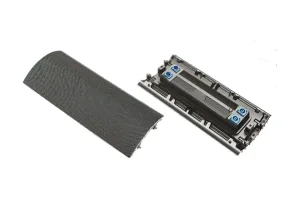
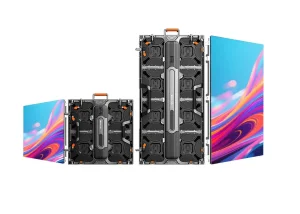
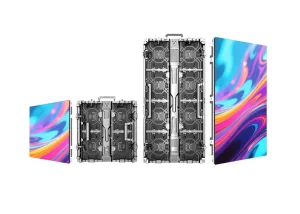
China 90° Rounded Corner LED Screen
China 90° Rounded Corner LED Screen for Concerts | P2.9 Indoor Panel with 3840Hz Refresh Rate Factories, Exporters
View Product Details
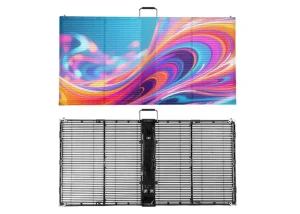
Outdoor rental transparent LED display screen
Wholesale Outdoor rental transparent LED display screen | Transparent LED display screen supplier Manufacturers, Suppliers
View Product Details
Dynamic Angle LED Screens for Concerts
Wholesale Dynamic Angle LED Screens for Concerts | Indoor/Outdoor Rental Displays & Modular Factories, Exporters
View Product Details
High-Quality Modular LED Screens for Events
Wholesale High-Quality Modular LED Screens for Events & Backdrops | Rent or Buy Suppliers, Factory
View Product Details
Stadium Perimeter LED Display
Wholesale Stadium Perimeter LED Display For Football Match Factories, Exporter
View Product Details
Custom Retail Store LED Display
Custom Retail Store LED Display | High Brightness & Waterproof Logo Screen Supplier, Exporter
View Product Details
Modular Event LED Display Front Access
Wholesale Indoor & Outdoor Modular Event LED Display With Front Access Manufacturers, Exporter
View Product Details
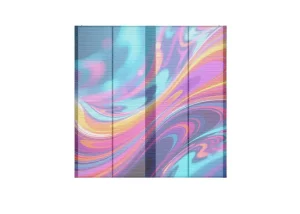
China Indoor Transparent LED Screen
China Indoor Transparent LED Screen | High-Brightness See-Through Display Manufacturers, Suppliers
View Product Details