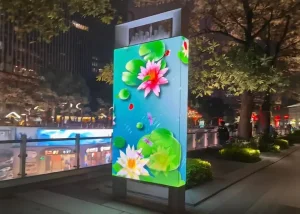
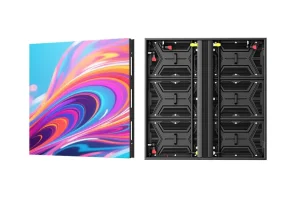
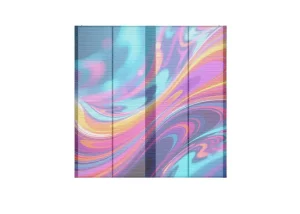
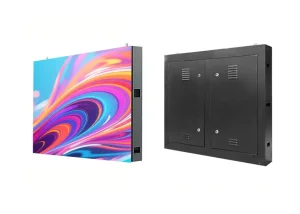
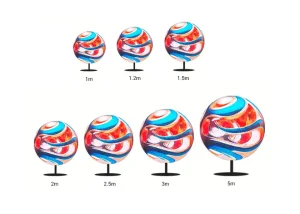
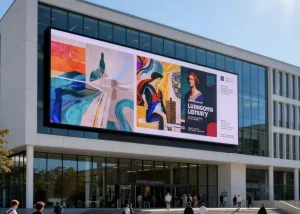
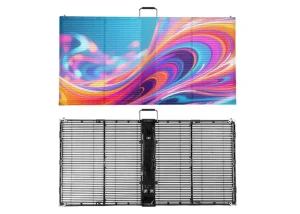
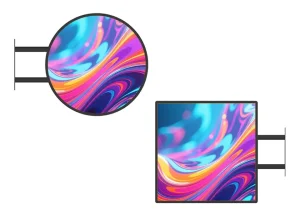
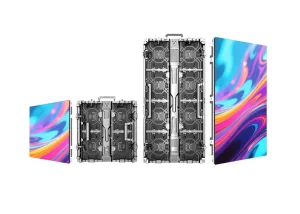
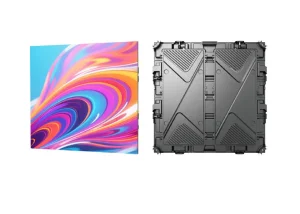
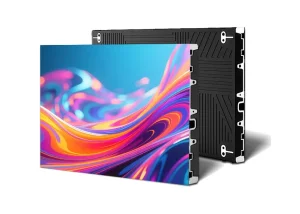
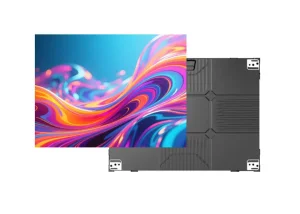
Direct-from-factory engineering solutions tailored for fixed installations, 3D DOOH, transparent architecture, and commercial video walls.
As we navigate through 2026, the global LED display industry is undergoing a profound paradigm shift driven by technological convergence, enhanced energy efficiency mandates, and burgeoning demand for ultra-high-definition visual experiences. No longer confined to basic outdoor billboards or standard indoor video walls, digital display hardware has evolved into an essential medium for interactive retail ecosystems, enterprise control rooms, immersive XR (Extended Reality) virtual production stages, and dynamic architectural integration.
The boundary between traditional LED walls and high-end enterprise LCD monitors has dissolved. Fine-pitch displays (P0.7 to P1.2) utilizing advanced COB and MiP (Micro-in-Package) technologies deliver seamless 4K and 8K visual canvas without bezels, providing superior contrast ratios (>10,000:1) and extended operational lifespans exceeding 100,000 hours.
Environmental regulations across North America, Europe, and Asia-Pacific have accelerated the phase-out of legacy common-anode power architectures. Modern 2026 LED screen manufacturing mandates common cathode technology, which selectively supplies separate voltages to Red, Green, and Blue LED chips, reducing overall power consumption by 30% to 45% while reducing thermal emissions by up to 15°C.
Digital Out-of-Home (DOOH) advertising has transitioned from static 2D images to anamorphic 3D experiences. High-brightness outdoor displays (>8,500 nits) engineered with specialized right-angle curved cabinets allow brands to create breathtaking depth effects that yield up to 4x higher audience retention and engagement rates in high-traffic urban corridors.
When evaluating global suppliers for commercial and industrial LED screens, enterprise procurement directors consistently turn to China—specifically the Bao'an and Guangming districts in Shenzhen, Guangdong. This geographic cluster produces over 80% of the world’s LED displays. The efficiency of China’s LED display factories is rooted not merely in scale, but in an unmatched vertical integration ecosystem that encompasses raw material refinement, LED chip encapsulation, high-speed SMT (Surface Mount Technology) assembly, and rigorous quality validation.
Leading Chinese LED display factories operate multi-line, fully automated SMT cleanrooms equipped with ultra-fast Yamaha and Panasonic pick-and-place machines capable of mounting up to 100,000 components per hour per line. By maintaining in-house SMT production, manufacturers achieve zero component contamination, precise solder paste deposition, and real-time Automated Optical Inspection (AOI).
Furthermore, direct partnerships with top-tier driver IC providers (such as Macroblock, Chipone, and Sunmoon) and LED encapsulation giants (like Nationstar and Kinglight) enable Chinese factories to secure preferential component lot selection. This guarantees precise color binning (wavelength variance within <1.5nm) and consistent brightness calibration across massive production volumes.
| Evaluation Parameter | Legacy Overseas Assembly | China Direct SMT Factory (Shenzhen 2026) | B2B Procurement Advantage |
|---|---|---|---|
| Lead Time (Standard Project) | 6 to 10 Weeks | 2 to 3 Weeks | 70% faster project execution and market entry |
| Color & Brightness Binning | Wide tolerance (±3nm wavelength) | Tight single-bin (±1nm wavelength) | Perfect color uniformity across entire screen surface |
| Custom Cabinet Manufacturing | High tooling costs, limited shapes | Rapid CNC aluminum tooling & custom extrusion | Cost-effective bespoke architectural shapes |
| Cost Per Square Meter (P2.5 IP65) | $1,800 - $2,500 / m² | $650 - $1,100 / m² | Substantial CAPEX savings allocated to control systems |
| Quality Control Testing | Sample batch testing (10-20%) | 100% 72-Hour Module & Cabinet Burn-in | Near-zero Dead Pixel Rate (<0.0001) upon arrival |
To make informed purchasing decisions, systems integrators must understand the technical nuances of modern LED encapsulation and module protection technologies. Below is an engineering evaluation of the dominant technologies defining the 2026 commercial display market.
COB flips traditional SMD mounting by bonding microscopic LED chips directly to the PCB substrate, encapsulated with a protective epoxy resin resin layer. This eliminates wire bonding vulnerabilities, offering unparalleled IP65 surface protection, collision resistance, anti-static safety (ESD > 8KV), and zero pixel loss during cleaning or maintenance.
Ideal for: Control rooms, high-end boardrooms, and close-range command centers needing P0.93 to P1.56 millimeter pitch.
GOB serves as a protective bridge between standard SMD modules and full COB systems. Standard SMD modules are coated with an optical-grade transparent epoxy resin glue layer across the module surface. This delivers high impact resistance, dust-proofing, and moisture protection without the higher manufacturing tooling overhead of pure COB encapsulation.
Ideal for: High-traffic retail poster displays, rental screens, and mobile display applications prone to frequent physical handling.
Transparent LED screens utilize micro-LED PCB strips mounted on ultra-thin acrylic or glass substrates. Achieving transparency rates between 65% and 85% with brightness exceeding 5,500 nits, these displays preserve natural daylight inside retail store windows and architectural glass facades while rendering crisp digital media.
Ideal for: Luxury retail storefronts, auto dealerships, shopping center skylights, and glass curtain walls.
Modern LED display installations require domain-specific configurations tailored to environmental variables, ambient light conditions, operating hours, and viewing angles. Below is a structured review of deployment strategies across primary enterprise verticals.
In critical decision-making environments—such as security command centers, traffic monitoring hubs, and corporate conference rooms—seamless image continuity is vital. Traditional LCD matrix walls suffer from black bezel grid lines that disrupt data visualization. Fine-pitch LED walls (P0.93 to P1.56) utilizing direct-view COB modules provide seamless UHD video canvasses with 178-degree wide viewing angles.
Recommended Configuration: Ultra-fine pitch COB, NovaStar Armor series receiving cards, low latency <1ms, redundant dual power supplies, and front-access magnetic maintenance cabinets.
Virtual production has revolutionized Hollywood and broadcast television by replacing traditional green screens with real-time rendered 3D environments on LED walls. This setup requires displays that eliminate Moiré patterns, resist camera motion blur, and support precise frame synchronization with camera tracking systems.
Recommended Configuration: Refresh rate ≥ 7,680Hz, frame rate up to 240fps, 16-bit grayscale depth, Brompton Tessera S8/SX40 processors, high-contrast black shell LED encapsulation, and sub-1.9mm pixel pitch.
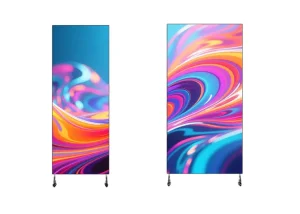
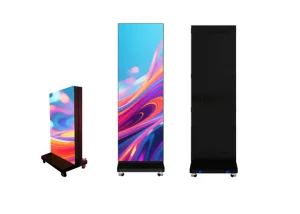
Retail stores rely on visual impact to boost foot traffic and reinforce brand identity. From digital poster screens at entrance doors to floor-to-ceiling column-wrap displays and transparent window screens, digital display hardware must combine vibrant color rendering with low heat emissions to maintain customer comfort.
Recommended Configuration: GOB slim stand posters with 4G/WiFi cloud cluster management, high-transparency holographic glass displays (>75% see-through rate), and integrated brightness sensors for automatic ambient adjustment.
Outdoor digital billboards operate in harsh environmental conditions—ranging from freezing sub-zero winters to blazing desert heat. Screens must withstand intense sunlight while resisting water ingress, dust storms, and corrosion.
Recommended Configuration: IP65/IP68 fully sealed die-cast aluminum cabinets, 6,500 to 10,000 nits high-brightness LEDs, common cathode power saving, and seamless right-angle curved corners for anamorphic 3D visual content playback.
Purchasing LED displays directly from Chinese manufacturers offers massive cost and technical advantages, but it requires a structured verification process to ensure project success. Professional AV integrators and enterprise procurement officers should use the following checklist when evaluating prospective manufacturing partners.
Demand complete transparency regarding core components. Verify that the supplier uses reputable LED encapsulation (Nationstar, Kinglight), reliable driver ICs (Macroblock, Chipone with 16-bit PWM), and certified power supplies (MeanWell, G-Energy with CE/UL certifications).
Inspect cabinet design details. Premium outdoor and indoor video walls utilize die-cast aluminum cabinets rather than iron sheet metal. Aluminum offers superior dimensional accuracy (±0.05mm alignment tolerance), lightweight handling, and fast passive heat dissipation without noisy fans.
Confirm that the factory adheres to strict QA procedures: Incoming Quality Control (IQC) for raw components, Input Process Quality Control (IPQC) during automated SMT, and 100% Final Quality Control (FQC) involving a continuous 72-hour aging burn-in test.
Explore specialized poster displays, ultra-smooth fine pitch COB screens, mobile taxi-top displays, and energy-saving digital billboards.