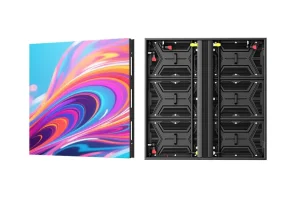
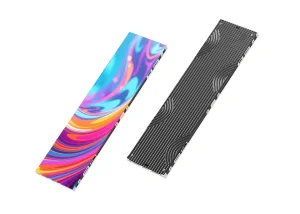
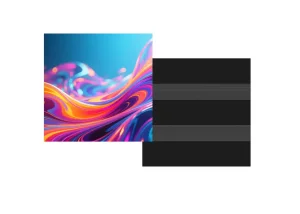
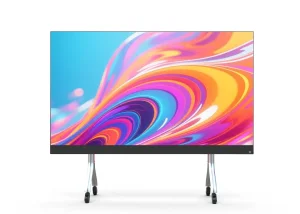
Direct factory engineering outputs optimized for commercial, industrial, rental, and architectural applications worldwide.

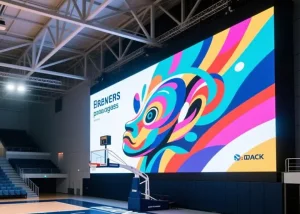
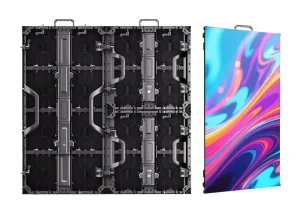

The global visual display ecosystem is undergoing a generational shift. Legacy LCD video walls, projection mapping setups, and discrete legacy signage are rapidly giving way to continuous, seamless Direct-View LED (dvLED) architecture. As digital-out-of-home (DOOH) networks, mission-critical command centers, immersive retail spaces, and virtual production studios demand higher dynamic range (HDR), lower latency, and zero physical bezels, the global role of a certified China LED Display Systems Integrator Manufacturer & Exporter has transitioned from mere hardware assembly to complex system engineering.
Today’s enterprise buyers do not merely buy LED cabinets; they acquire mission-critical visual processing nodes. Enterprise infrastructure projects demand integrated hardware-software ecosystems featuring advanced driver IC architectures (such as PWM control delivering up to 7680Hz refresh rates), energy-efficient common cathode power designs, dynamic visual calibration algorithms, and strict thermal dissipation engineering.
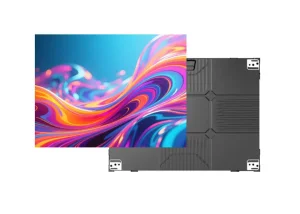
Sub-1.0mm fine pitch COB displays providing 24/7/365 operational stability, redundant power/signal topologies, and real-time multi-source data processing for SCADA, traffic control, and defense rooms.
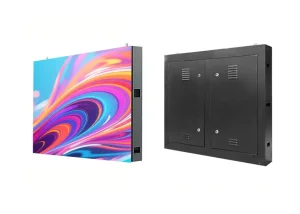
High-brightness outdoor IP65/IP67 systems reaching up to 10,000 nits, integrated with 3D naked-eye anamorphic visual processing and energy-saving common cathode power supplies.
High-frame-rate, ultra-low latency LED walls featuring frame rates up to 240fps, 7680Hz refresh rates, genlock synchronization, and DCI-P3 wide color gamut coverage for real-time camera tracking environments.
A true system integrator Bridges component-level hardware design (SMT line parameters, die selection, PCB routing) with site-level software deployment (processor control, system diagnostic APIs, cloud monitoring). This eliminates integration bottlenecks for overseas procurement teams.
The concentration of LED manufacturing in Shenzhen’s Bao'an and Fuhai industrial corridors creates an unparalleled competitive advantage for international systems integrators. By operating direct, in-house Surface Mount Technology (SMT) production lines, state-of-the-art optical encapsulation facilities, and automated high-temperature aging chambers, tier-1 Chinese manufacturers achieve complete vertical integration.
Unlike regional distributors or white-label assemblers, an integrated OEM/ODM manufacturer controls every link of the supply chain—from raw wafer binning and copper-clad laminate PCB sourcing to automated conformal coating and 72-hour burn-in stress testing. This supply chain density ensures rapid engineering turnaround, precise binning consistency across batch orders, and resilience against component shortages.
Dual-lane high-speed Yamaha and ASM SMT placement machines achieving placement tolerances within ±0.015mm, enabling flawless assembly of 0402 and 0202 micro-LED components for sub-millimeter pitch displays.
Single-bin LED die selection ensures 100% color wavelength uniformity (within ±1.5nm) and strict brightness matching across hundreds of square meters of video wall panels.
3D Automated Optical Inspection (AOI), X-ray solder joint verification, multi-environment thermal cycling, and continuous 72-hour full-white power aging eliminate early component mortality.
The LED industry is rapidly transitioning beyond traditional Surface Mount Devices (SMD). Systems integrators must evaluate encapsulation technologies based on physical durability, contrast ratios, thermal performance, and long-term total cost of ownership (TCO).
Discrete LEDs soldered to PCB. Highly repairable, cost-effective for pitch > P2.0mm. Susceptible to physical impact and moisture penetration in fine pitch applications.
Protective epoxy resin cast over SMD modules. Provides IP65 front protection, anti-collision properties, dust-proofing, and electrostatic isolation for rental and poster screens.
Flip-chip LED dies bonded directly to PCB substrate and encapsulated in epoxy. Eliminates wire bonding, dramatically lowers failure rates (<10 PPM), and provides 170° wide viewing angles.
MicroLED chips encapsulated into microscopic sub-pixel packages. Allows binning and testing before placement, combining MicroLED optical performance with conventional SMT scalability.
| Technology Vector | SMD (Surface Mount Device) | GOB (Glue on Board) | COB (Chip-on-Board) | MIP (MicroLED in Package) |
|---|---|---|---|---|
| Target Pixel Pitch | P1.5 mm – P10 mm | P1.2 mm – P2.5 mm | P0.4 mm – P1.5 mm | P0.6 mm – P1.8 mm |
| Surface Protection | Low (Exposed lamp pins) | High (Epoxy shield) | Extreme (Flat Resin Layer) | High (Individual Micro Coating) |
| Thermal Dissipation | Standard (PCB Thermal Via) | Moderate (Trapped Resin) | Superior (Direct Substrate Heat Sink) | High (Optimized Micro Footprint) |
| Pixel Failure Rate | < 30-50 PPM | < 15-20 PPM | < 5 PPM (Flip-Chip) | < 10 PPM |
| Black State & Contrast | Standard Masking | Glossy or Matte Resin | Ultra-Black Optical Epoxy (1,000,000:1) | Deep Black Sub-Pixel Masking |
Successful LED deployments require tailoring engineering solutions to site-specific environmental conditions, structural weight limits, signal latency constraints, and local electrical codes. As a full-service systems integrator exporter, China manufacturing teams supply custom hardware-software stacks optimized for distinct vertical markets.
Deployment Specs: Fine-pitch COB IN-H Series (P0.93 / P1.25), zero-bezel structural frame, dual power supply backup, Novastar/Colorlight 4K low-latency processors.
Engineered for continuous operation in energy grids, emergency response centers, and traffic management hubs. Delivers pin-sharp text clarity, wide viewing angles without color shift, and low electromagnetic radiation compliant with EMC Class B standards.
Deployment Specs: Aluminum chassis IP65 outdoor series, 6,500–10,000 nits auto-dimming brightness, Common Cathode driver topology, wind load rated structural frames.
Designed to withstand extreme ambient temperatures (-40°C to +60°C), coastal salt-fog environments, and direct solar exposure. Integrated smart monitoring cards report temperature, voltage, door status, and module pixel faults directly to cloud dashboards.
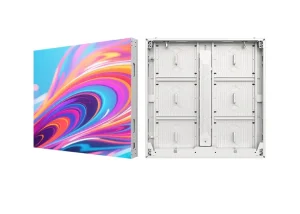
Deployment Specs: Die-cast magnesium alloy cabinets, magnetic fast-lock rigging mechanisms, GOB protective encapsulation, 7680Hz refresh rate.
Enables single-technician setup and teardown in under 10 seconds per panel. Integrated edge protectors prevent corner LED breakage during fast-paced touring operations, while brompton or Novastar processing guarantees flicker-free broadcast recording under high-speed camera shutters.
Exporting industrial LED display systems demands rigorous adherence to international regulatory frameworks and structured post-installation maintenance guarantees. Leading Chinese manufacturers operate comprehensive quality management systems (ISO9001, ISO14001, ISO45001) and provide fully certified export hardware.
Hardware fully certified for North American and European imports, including CE, FCC Class A/B, RoHS, ETL, UL 62368-1, CB, and IECEE compliance schemes. Flame-retardant PCB materials conform to UL94-V0 safety standards.
All system exports include a standardized 3-year factory warranty covering replacement power modules, receiver cards, and LED modules. Orders ship with a 3% to 5% spare part cushion matched to the exact batch binning lot.
Providing remote 24/7 level-3 technical engineering support, 1-on-1 technician training, comprehensive CAD structural drawings, wiring schematics, and optional on-site commissioning through global partner engineer networks.
Key technical insights for AV integrators, procurement directors, and system architects specifying Chinese LED hardware.
In traditional Common Anode architecture, red, green, and blue LED chips share a single positive power rail (typically 5V), requiring voltage dropping resistors that dissipate excess energy as heat. Common Cathode architecture supplies independent electrical rails customized to the precise forward voltage of each LED die (e.g., ~2.8V for Red, ~3.8V for Blue/Green). This reduces overall display power consumption by up to 30-40%, drops operational temperatures by 10°C to 15°C, and doubles driver IC lifespan.
A reliable industry standard for minimum comfortable viewing distance (where discrete pixels blend into a smooth continuous image) is calculated as: Optimal Distance (meters) ≈ Pixel Pitch (mm) × 1.5 to 2.0. For example, a P1.25 fine-pitch display reaches visual blend at approximately 1.8 to 2.5 meters, making it ideal for corporate boardrooms. For outdoor billboards viewed from 15+ meters, P6.67 or P8.0 delivers full HD visual fidelity at a lower structural and hardware cost.
Standard displays running at 1920Hz or 3840Hz show dark scan lines, visual tearing, or moiré patterns when captured by high-speed broadcast cameras operating at high shutter speeds. A 7680Hz refresh rate, coupled with a 16-bit grayscale driver IC (such as MBI5359 or ICN2065), ensures that the LED sub-pixels cycle millions of times per second. This eliminates camera shutter artifacts, preserves shadow details, and provides stable in-camera visual effects (ICVFX).
Direct manufacturer production eliminates trading intermediaries, granting integrators access to direct factory engineering teams, custom PCB routing designs, tailored cabinet dimensioning, and strict single-bin LED chip control. Furthermore, if expansion modules or replacement panels are needed years later, direct manufacturers maintain original batch calibration data and die bin records to ensure complete color and optical matching.
Outdoor displays require an IP65 front and IP54/IP65 rear ingress rating, achieved through dual-silicone module sealing gaskets, conformal-coated driver circuit boards, waterproof IP67 aviation power connectors, and anti-corrosion die-cast aluminum or aluminum-profile cabinets. Passive cooling chassis designs without external fans prevent dust, humidity, and salt corrosion from degrading internal electronics.
Explore additional certified LED display systems designed for specialized indoor, outdoor, commercial, and creative integrations.