Direct factory OEM/ODM solutions tailored for US legacy display maintenance, architectural retrofitting, and high-performance digital signage upgrades.
Across North America, thousands of commercial venues, sports arenas, corporate boardrooms, digital-out-of-home (DOOH) networks, and municipal transportation hubs operate LED video walls installed between 2015 and 2021. As these display infrastructures age, facilities management and procurement directors face a critical dilemma: complete system tear-out vs. precision LED module retrofitting and replacement.
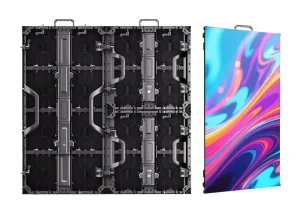
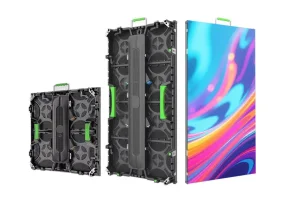
US manufacturers, AV integrators, and field service technicians increasingly turn to top-tier Chinese LED manufacturing hubs—specifically Shenzhen's high-density optoelectronics ecosystem—to secure exact-match replacement modules. Modern replacement modules integrate modern driver ICs, higher-efficiency LEDs (such as Micro-SMD and COB technology), and backwards-compatible receiving card interfaces (NovaStar, Colorlight, Brompton) to seamlessly drop into legacy cabinets.
Replacing an LED module within an existing display matrix requires deep technical synchronization across mechanical dimensions, electrical impedance, hub pinouts, driver IC protocols, and optical chroma/luma calibration. Below is the technical breakdown utilized by leading Chinese OEM factories to manufacture direct-fit replacement modules for US clients.
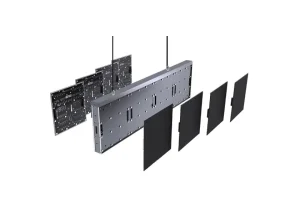
Custom PCB design ensures 100% mechanical registration with existing mounting screw pillars, magnetic alignment posts, and ribbon cable headers (HUB75, HUB75E, HUB320). Custom mold tooling replicates exact bevels and module dimensions down to ±0.05mm tolerance, preventing physical seam gaps.
Modern replacement modules shift legacy Common Anode architectures to energy-efficient Common Cathode designs. By driving Red, Green, and Blue diodes with separate precision voltages (e.g., 2.8V for Red, 3.8V for Blue/Green), thermal output drops by up to 35%, drastically lowering HVAC cooling load in indoor installations.
To avoid "checkerboard" color mismatches when placing new modules into old video walls, factories utilize wavelength-sorted Nationstar, Kinglight, or Cree LEDs. Sub-binning selection within a narrow ±1.5nm dominant wavelength band guarantees smooth visual uniformity after per-pixel calibration.
Standard 3-in-1 encapsulation (SMD1515, SMD2020, SMD3535). Ideal for direct like-for-like maintenance of outdoor billboards and venue screens with pixel pitches from P2.5 to P10.
Flip-chip LED dies encapsulated directly onto the PCB substrate with epoxy resin. Eliminates wire bonding failures, boosts contrast ratio to 10,000:1, and provides IP65 front-face protection against impact, dust, and moisture for fine-pitch displays (P0.93 - P1.56).
MicroLED chips packaged into discrete micro-carriers, allowing single-pixel repairability while retaining COB-grade visual performance, ultra-wide viewing angles (>170°), and HDR10+ broadcast compatibility.
For US hardware engineers, enterprise procurement managers, and operations directors, evaluating Total Cost of Ownership (TCO) is essential. The matrix below outlines operational tradeoffs:
| Evaluation Parameter | Direct Chinese LED Module Retrofit | Full System Tear-out & Replacement |
|---|---|---|
| Capital Expenditure (CapEx) | Low ($100 - $350 / module) | High ($2,500 - $6,000 / sqm) |
| Labor & Installation Downtime | 1 to 3 Days (Hot-swappable front access) | 2 to 4 Weeks (Structural rebuilds & cabling) |
| Structural / Electrical Permits | Unnecessary (Reuses existing structure/UL power) | Required (Structural recalculations & city permits) |
| Visual Uniformity | High (Achieved via NovaStar Chroma Calibration) | Perfect (100% new batch LEDs) |
| Energy Consumption Reduction | 20% - 35% (Upgrade to Common Cathode driver) | 30% - 40% (New system electronics) |
| Environmental Impact (Scope 3 E-Waste) | Minimal (Cabinets, steel, power kept) | High (Scraps hundreds of lbs of metal/electronics) |
Sourcing replacement LED modules from certified Chinese factories fulfills specialized enterprise procurement demands across multiple North American vertical markets:
For nationwide digital out-of-home networks operating thousands of roadside billboards and mall poster displays, keeping 99.9% uptime is mandatory to preserve ad revenue. Rapid replacement modules engineered with high-brightness (up to 10,000 nits) and IP65 weatherproofing ensure continuity without complete display replacement.
Utilities, traffic monitoring centers, and emergency response facilities require sub-millimeter fine pitch displays (P0.93 - P1.25). Replacement modules integrated with low-latency receiving cards and 16-bit grayscale drivers deliver smooth pixel-level clarity without dropping frames or introducing color banding.
Hollywood soundstages and broadcast studios require replacement panels capable of high-frame-rate tracking, 7680Hz refresh rates, motion capture compatibility, and low scan-line distortion under cinema cameras. Advanced SMT production facilities in Shenzhen supply camera-ready modules engineered specifically for Virtual Production (VP) environments.
Procuring replacement hardware across international borders requires stringent adherence to North American electrical standards, electromagnetic compatibility rules, and comprehensive post-sale engineering support.
All exported LED module replacements undergo strict electrical safety isolation testing, flame-retardant polycarbonate/aluminum testing (UL94-V0 compliance), and FCC Class A/B electromagnetic radiation screening to guarantee seamless inspection by local US building authority officials.
Top-tier factories operate fully automated high-speed SMT lines (Yamaha/Fuji), 3D Automated Optical Inspection (AOI), Solder Paste Inspection (SPI), and 72-hour continuous burn-in aging tests under elevated ambient temperatures before vacuum-sealed anti-static packaging and export shipment.
Leading OEM manufacturers establish regional spare-part stockpiles across North America, maintaining 3% to 5% extra batch-matched LED modules and spare driver ICs for immediate overnight dispatch to maintain SLA uptime guarantees.
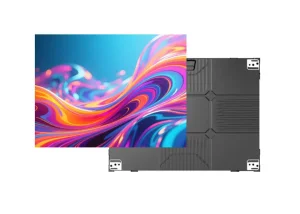
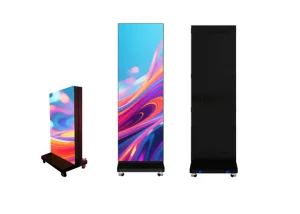
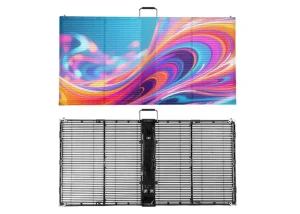
Explore our full engineering portfolio of indoor, outdoor, transparent, rental, and creative specialized LED replacement products.
Comprehensive technical and commercial answers tailored for AV integrators, purchasing officers, and field service technicians.
To achieve a perfect match, our engineering team requires three key data points: (1) exact physical dimensions of the module down to 0.1mm, (2) the HUB interface pinout diagram (e.g., HUB75B, HUB75E, HUB8), and (3) driver IC component part numbers. US clients can send a single physical sample module to our Shenzhen factory for precise reverse-engineering, custom PCB layout design, and chromatic batch matching.
Standard prototype sample manufacturing takes approximately 5 to 7 business days. Full batch production runs (100 to 2,000 modules) typically require 10 to 14 days, followed by air freight (5–7 days) or ocean shipping (18–25 days) directly to US job sites or regional distribution warehouses.
Yes. Replacement modules are engineered to be backwards-compatible with existing sender/receiver card protocols. We populate the replacement modules with driver ICs supported by legacy RCG/RCFFG configuration files, ensuring seamless integration without forcing expensive control box upgrades.
Because legacy LEDs experience brightness decay over thousands of operating hours, installing brand-new modules at 100% factory output can create visual brightness gaps. We resolve this by performing factory radiometric calibration and pre-configuring coefficient data files. Technicians can adjust screen-wide chroma/luma calibration via NovaLCT or Colorlight software to instantly align old and new modules.
We offer a standard 3-year factory direct warranty on all replacement modules, covering free component replacement, repair labor, and lifetime remote engineering consultation. We also provide 1-on-1 video call engineering assistance during commissioning to support local field technicians.
Common Cathode technology delivers independent, optimized voltage power supplies to Red, Green, and Blue diodes. This eliminates excess energy dissipated as heat in conventional Common Anode setups, reducing overall operating temperature by up to 20°C. Lower heat reduces IC failure rates, prevents PCB warping, and extends operational lifespan significantly.