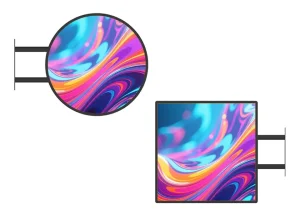
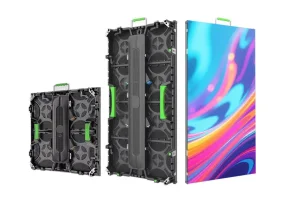
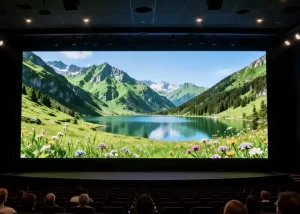
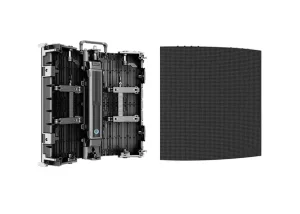
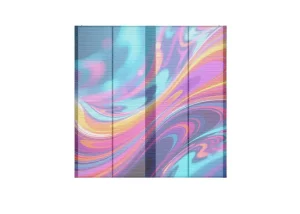
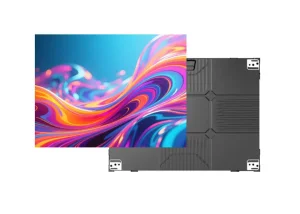
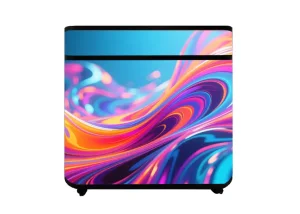
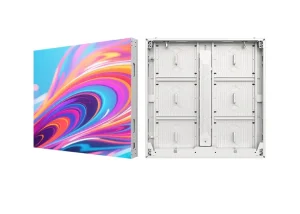
Explore our top-tier commercial display series manufactured in Shenzhen, featuring fine pixel pitch, ultra-high refresh rates, and robust structural engineering.
In the realm of large-scale commercial visualization, enterprise procurement decision-makers face a critical crossroad: selecting between Liquid Crystal Display (LCD) Video Tiling grids and Direct-View LED (dvLED) Video Walls. While LCD video walls historically dominated command centers, boardrooms, and digital signage due to initial cost metrics, recent advancements in Chinese fine-pitch LED manufacturing have dramatically altered the total cost of ownership (TCO) and visual performance equations.
Traditional LCD tiling suffers from physical bezels (even ultra-narrow bezels ranging from 0.88mm to 3.5mm), creating distracting grid lines across critical data visualizations. Direct-View LED panels interlock seamlessly, creating a unified, bezel-free canvas of infinite dimensions.
LCD panels are constrained to 450–700 nits of brightness with reflective glass filters. Direct-View LED video walls easily output between 800 and 10,000+ nits, maintaining vibrant color saturation and high contrast even under direct sunlight or intense ambient architectural lighting.
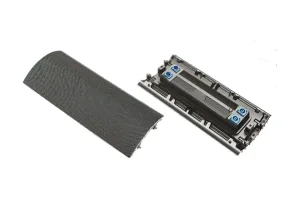
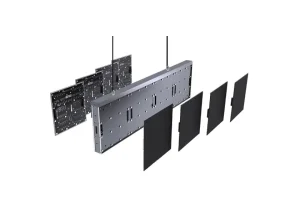
When an LCD tile fails, replacing the full 55-inch panel is cost-prohibitive and leads to color mismatches due to backlight aging. LED video walls utilize front-serviceable, magnetic sub-modules, allowing swift 60-second replacements at micro-fraction costs.
To provide complete technical clarity for system architects and engineering consultants, the table below compares core performance metrics across Direct-View LED (dvLED) arrays and professional LCD display tiles.
| Evaluation Parameter | Direct-View LED (dvLED) Video Wall | LCD Video Tiling Matrix | Operational & Business Impact |
|---|---|---|---|
| Visual Bezel / Gap | 0.00 mm (100% True Seamless Canvas) | 0.88 mm to 3.5 mm Mechanical Bezel | LED eliminates fractured text, maps, and cross-screen video alignment gaps. |
| Peak Luminance (Brightness) | 800 to 1,500 nits (Indoor) / Up to 10,000 nits (Outdoor) | 450 to 700 nits maximum | LED cuts through ambient glass glare and intense architectural sunlight effortlessly. |
| Operational Lifespan (MTBF) | 100,000 Hours (Approx. 11+ Years of continuous 24/7 use) | 30,000 – 50,000 Hours (Backlight degradation occurs early) | LED provides double the operational lifespan, extending CapEx depreciation curves. |
| Color Uniformity & Contrast Ratio | Up to 10,000:1 (Deep Blacks with COB/GOB technology) | 1,200:1 to 4,000:1 (Backlight bleed in dark rooms) | LED delivers cinematic HDR10 visual performance and pixel-level dimming. |
| Refresh Rate Capabilities | 3,840 Hz to 7,680 Hz (Flicker-free for cameras) | 60 Hz to 120 Hz maximum | LED displays prevent scanlines during broadcast filming, live streaming, or XR studios. |
| Maintenance & Repairability | Pixel/Module-level repair; 100% front-access magnet maintenance | Full 55”/65” panel replacement mandatory upon failure | LED drastically cuts down spare-parts holding costs and field service labor hours. |
| Custom Form Factor Flexibility | Infinite non-standard ratios (Curved, 90° corners, Spheres, Columns) | Fixed 16:9 rectangular grid constraint only | LED unlocks limitless architectural and spatial digital experience designs. |
Over 90% of the world’s LED displays originate from the Guangdong-Hong Kong-Macao Greater Bay Area, specifically Shenzhen. The ecosystem’s vertical integration grants Chinese manufacturers unmatched cost-to-performance efficiencies, rapid prototyping agility, and cutting-edge packaging innovations.
From raw wafer fabrication and encapsulation (SMD/COB flip-chip) to precision CNC die-cast aluminum cabinet machining and driver IC integration, Chinese suppliers manage every manufacturing node in-house. This minimizes supply chain latency and drastically lowers bill-of-materials (BOM) overheads.
Leading Chinese exporters adhere to stringent international compliance frameworks including CE, FCC, RoHS, ETL, and ISO9001 certifications. Advanced quality control involves 72-hour continuous thermal burn-in, vibration testing, and precise optical calibration (chromaticity/luminance uniformity adjustments).
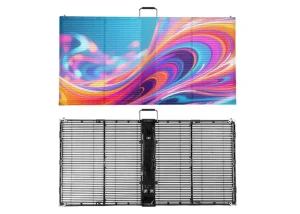
Global clients benefit from flexible original equipment design choices. Whether your project demands ultra-lightweight carbon fiber rental cabinets, IP68 underwater outdoor screens, high-transparency glass LED facades, or specialized curved 90-degree corner displays, Chinese factories deliver custom solutions efficiently.
Different industrial sectors require distinct visualization specs. Below is a detailed breakdown of how LED video walls outperform LCD tiling arrays across mission-critical environments.
In traffic management, emergency operations centers (EOC), defense, and utility monitoring networks, continuous 24/7 reliability is paramount. LED video walls eliminate grid bezels that obscure small telemetry data, map coordinates, or CCTV grid lines, enabling Operators to make split-second decisions without visual distortion.
Modern enterprise boardrooms require high-definition data rendering and video conferencing integration. All-in-One fine pitch LED displays (P0.93 to P1.56) replace legacy projectors and LCD arrays, delivering seamless 4K/8K resolution with native 16:9 aspect ratios, ultra-wide viewing angles, and instant wireless screen casting.
High-end retail storefronts rely on immersive visual impact to drive foot traffic. Brightness levels on traditional LCD displays wash out near sunlit windows. High-brightness LED screens, transparent displays, and flexible curved modules integrate directly into interior architecture, showcasing vibrant 3D anamorphic content that drives customer engagement.
Television broadcasting and virtual film production demand camera-friendly displays. LCD screens suffer from severe moiré patterns, glare, and low 60Hz refresh rates. LED video walls engineered with high-grade ICs deliver up to 7,680Hz refresh rates, HDR color accuracy, and low latency, enabling realistic virtual backgrounds on camera.
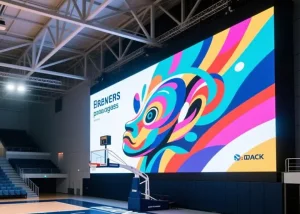
Large assembly spaces require massive screen canvases so attendees in back rows maintain visual connection. Expanding an LCD grid to massive scale introduces intrusive grid crosshairs across sacred imagery or presentation slides. Modular LED panels scale endlessly to match any architectural wall height and width.
Outdoor Digital-Out-Of-Home (DOOH) billboards face harsh ambient weather, humidity, and extreme temperature fluctuations. Sealed IP65/IP68 aluminum LED cabinets with high-efficiency common cathode power management ensure year-round operation while lowering electrical operational bills by up to 40%.
The display industry is rapidly transitioning past traditional Surface Mounted Device (SMD) encapsulation into Chip-on-Board (COB) and MicroLED packaging. This technological evolutionary leap addresses historical SMD vulnerabilities and renders LCD tiling completely obsolete in commercial markets.
COB technology mounts micro-LED chips directly onto the PCB substrate, eliminating wire-bonding failures. Encapsulated in a smooth protective resin layer, COB displays offer superior impact resistance (anti-collision), dustproofing, moisture resistance, and higher black-surface ratios, delivering contrast ratios up to 10,000:1.
For high-traffic environments such as touch interactive video walls, trade shows, and schools, GOB applies a transparent epoxy shield over standard SMD modules. This innovation renders fine-pitch LED screens waterproof, anti-static, anti-scratch, and easily washable without risking fragile LED lamp damage.
Modern Chinese LED exporters are replacing legacy common-anode power architectures with precision common-cathode IC driving. By supplying independent, optimized electrical voltages directly to Red, Green, and Blue diodes, operating temperatures drop by 10-15°C, reducing thermal expansion stress and power usage by up to 35%.
When issuing a Request for Proposal (RFP) or evaluating Chinese LED wall suppliers and exporters, international buyers should systematically audit technical parameters beyond simple price-per-square-meter quotes.
Calculate viewing distance: Minimum Viewing Distance (meters) ≈ Pixel Pitch (mm). For example, a P1.25 screen delivers optimal clarity at distances of 1.25 meters and beyond.
Specify high-refresh driver ICs (e.g., ICN2153, MBI5252, or NovaStar systems) to guarantee 3840Hz+ refresh rates, 16-bit grayscale depth, and zero ghosting effects.
Demand die-cast aluminum cabinets rather than sheet metal frames to ensure tight structural tolerances (<0.1mm gap error) for perfectly flat seamless wall assembly.
Ensure the supplier provides 3% to 5% spare modules, power supplies, and receiving cards, backed by a minimum 3-to-5 year factory warranty with lifetime maintenance support.
Addressing the most critical technical, operational, and logistics inquiries from global procurement managers and AV integrators.
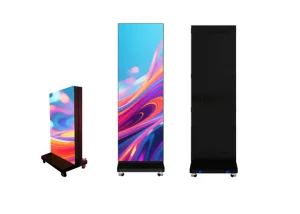
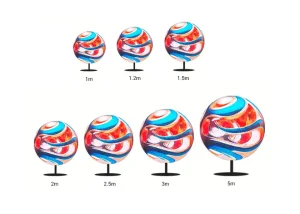
From ultra-thin double-sided displays to spherical creative LED installations, explore our versatile factory lineup engineered for worldwide distribution.