
Analyzing the Technological Supply Chain, SMT Reliability, and Cost-to-Performance Leadership of Shenzhen’s Display Infrastructure Cluster.
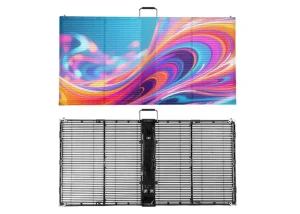
In the global Digital Out-of-Home (DOOH) advertising ecosystem and large-scale public display sector, the P10 LED display (10mm pixel pitch) remains an undisputed workhorse. Engineered specifically for long-distance viewing environments—such as highway billboards, stadium scoreboards, commercial plaza facades, and transit terminals—P10 LED screens strike an optimal balance between visual clarity, thermal durability, and capital expenditure (CapEx). As global procurement managers, system integrators, and media owners evaluate suppliers, China—and specifically the Shenzhen industrial corridor—emerges as the world's primary hub, producing over 90% of global P10 LED displays.
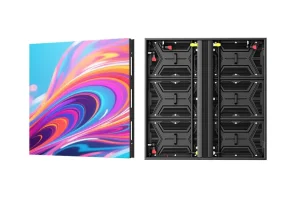
Partnering directly with a tier-one China P10 LED display manufacturer and factory offers distinct technical and financial advantages. Modern manufacturing facilities in Shenzhen operate fully automated High-Speed SMT (Surface Mount Technology) lines equipped with 3D SPI (Solder Paste Inspection), AOI (Automated Optical Inspection), and automated conformal coating applications. This direct industrial integration eliminates intermediate markups while guaranteeing strict quality control over critical components, including LED encapsulation (Nationstar, Kinglight), constant current driver ICs (MBI, ICN), and industrial-grade Mean Well power supplies.
Comparing DIP vs. SMD Encapsulation, Constant Current IC Architectures, and Waterproof Structural Design.
Understanding the hardware engineering behind a P10 LED screen is vital for procuring equipment that tolerates extreme climatic variations—ranging from freezing sub-zero winter temperatures in Northern Europe to scorching, humid environments in the Middle East and Southeast Asia.
| Technical Parameter | P10 Outdoor SMD Series | P10 Outdoor DIP Series | P10 Common Cathode Energy-Saving |
|---|---|---|---|
| Pixel Pitch & Density | 10mm / 10,000 dots/m² | 10mm / 10,000 dots/m² | 10mm / 10,000 dots/m² |
| LED Encapsulation Type | SMD3535 (3-in-1 RGB) | DIP346 (1R1G1B Oval LED) | Custom SMD3535 Gold Wire |
| Calibrated Brightness | 6,500 – 8,000 nits (cd/m²) | 8,500 – 10,500 nits (cd/m²) | 7,500 – 9,000 nits (cd/m²) |
| Refresh Rate Options | 1,920 Hz – 3,840 Hz | 1,920 Hz | 3,840 Hz High Refresh |
| Driver IC Type | MBI5124 / ICN2038S | MBI5024 Standard Driver | MBI5359 / ICN2055 Common Cathode |
| Average Power Consumption | 220W – 300W / m² | 350W – 450W / m² | 120W – 180W / m² |
| Ingress Protection Rating | Front IP65 / Rear IP54 (or IP67) | Front IP65 / Rear IP54 | Front IP68 / Rear IP67 Submersible |
| Viewing Angle (H/V) | 140° Horizontal / 140° Vertical | 120° Horizontal / 60° Vertical | 160° Horizontal / 160° Vertical |
| Optimal Viewing Distance | 10m to 300m | 12m to 500m | 10m to 300m |
SMD (Surface Mount Device) integrate Red, Green, and Blue chips within a single 3535 package, providing seamless color blending, wider 140° viewing angles, and superior visual aesthetics. DIP (Dual In-line Package) uses three separate lamp beads, delivering extreme brightness upwards of 10,000 nits for harsh direct sunlight environments.
Traditional common anode screens power RGB diodes with a unified 5V supply, converting excess voltage into wasted heat. Modern Common Cathode P10 displays supply precise separate voltages to Red (2.8V) and Green/Blue (3.8V) diodes, reducing operational temperature by up to 15°C and slashing energy consumption by 30-45%.
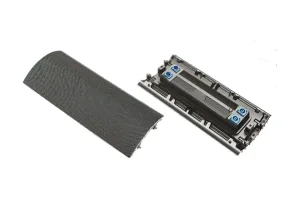
High-quality China P10 factories utilize anti-UV PC mask designs with anti-glare geometry. Coupled with double-sided polyurethane conformal coating and silicone sealant gaskets around the module frame, the assemblies withstand heavy torrential rain, salt fog, and dust penetration.
From 3D Anamorphic Displays to 5G Smart City Pole Integration.
The outdoor display industry is rapidly transitioning from passive static billboards to dynamic, intelligent, and sustainable media terminals. Leading Chinese LED factories are driving four key technical shifts:
By engineering seamless 90° curved corner cabinets and combining high-grayscale driver ICs (16-bit) with high-contrast P10 modules, factories produce massive outdoor screens capable of rendering stunning anamorphic 3D optical illusions without specialized eyewear.
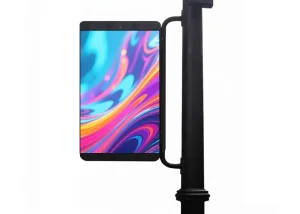
Modern P10 modules are increasingly deployed in compact light-pole displays equipped with 5G micro base stations, environmental IoT sensors, surveillance cameras, and automated cloud content management systems for smart city infrastructure.
Next-generation P10 displays incorporate PWM driver ICs that achieve 3,840Hz refresh rates and HDR10 support, eliminating scan lines during live television broadcasts and high-speed camera capture.
Key Verification Benchmarks for Evaluating China P10 LED Suppliers.
When sourcing P10 LED displays from China, enterprise procurement managers must look beyond unit pricing to audit the factory's quality assurance framework. Reliable manufacturers enforce strict multi-stage testing:
Evaluating an outdoor P10 screen project requires calculating initial capital expenditure against long-term operational expenditures (OpEx):
Investing in Common Cathode P10 modules with gold wire LED lamps reduces electricity consumption by ~40%, recovering the initial hardware price difference within 14–18 months of continuous commercial operation.
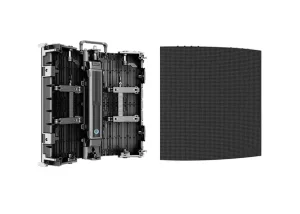
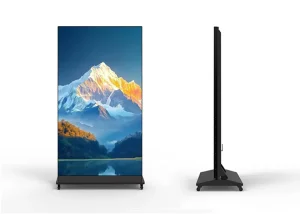

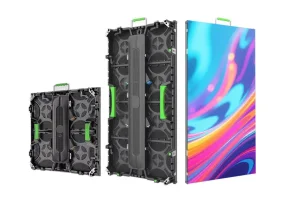
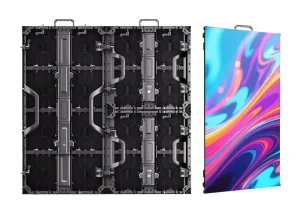
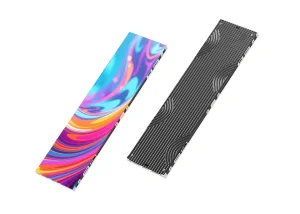
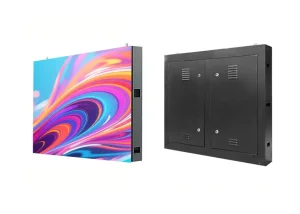
In-depth technical answers regarding P10 LED displays, installation metrics, maintenance protocols, and sourcing directly from Chinese manufacturers.
The P10 LED screen provides an optimal balance between pixel resolution, maximum brightness, power efficiency, and cost per square meter. At viewing distances of 10 meters or greater, the human eye cannot discern individual pixels on a P10 screen, yielding a crisp visual image. Because larger pixels accommodate higher-power LED chips (such as SMD3535 or DIP346), P10 screens easily achieve brightness levels of 6,500 to 10,000 nits—making them fully sunlight-readable where finer pitch displays would wash out or overheat.
Rear Maintenance: Requires a service catwalk or access door behind the LED display structure. Technicians unbolt modules and replace power supplies or receiver cards from the back. This is common for highway billboards and freestanding pole structures.
Front Maintenance: Uses magnetic module seats or front-screw locking mechanisms. Modules are removed directly from the front face using a vacuum tool or Allen key. Front service is essential for building facade installations where space behind the cabinet is limited.
Standard P10 modules measure 320mm (W) x 160mm (H) with a module resolution of 32 x 16 pixels. Cabinet dimensions are engineered as multiples of module sizes (e.g., 960mm x 960mm cabinets containing 3x6 modules). To calculate total screen resolution:
For example, a 9.6m x 5.76m P10 screen has a display resolution of 960 x 576 pixels, delivering high-definition video content for viewing distances past 10 meters.
A direct manufacturer can customize nearly every layer of hardware architecture:
In a standard common anode LED display, a uniform 5V power supply powers Red, Green, and Blue diodes. Red diodes only require approximately 2.8V to operate; the remaining 2.2V is converted into excess heat. Common Cathode architecture separates the power rails, supplying 2.8V directly to Red diodes and 3.8V to Green and Blue diodes. This eliminates thermal waste, reduces overall screen temperature by 10-15°C, extends component lifespan, and reduces power consumption by 30% to 45%.
For North America, screens require ETL / UL 48 (Standard for Electric Signs) or UL 1433 compliance, alongside FCC Class A / Class B electromagnetic compatibility certification. For the European Union, products must carry CE-EMC, CE-LVD (Low Voltage Directive), RoHS compliance for hazardous materials, and EMC EN55032 / EN55035 testing reports. Top-tier Chinese factories provide full lab test reports to ensure smooth customs clearance.
Consult directly with our LED application engineers for custom P10 module design, full structural CAD drawings, optical simulation, and factory-direct pricing for your upcoming display projects.
Contact Factory Engineers