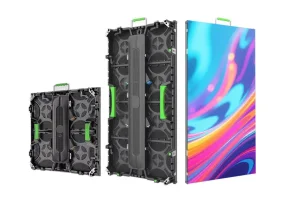
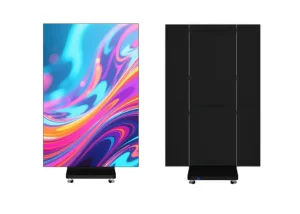
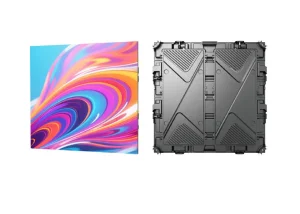
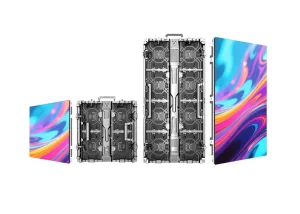
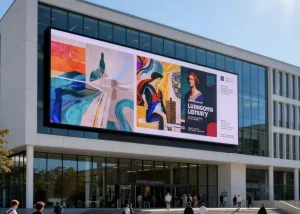
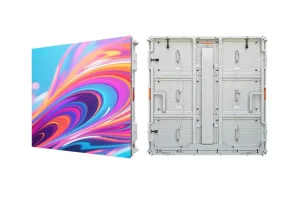
Explore our engineered indoor fixed, fine-pitch, and rental LED video wall products tailored for educational assemblies and performing arts venues.
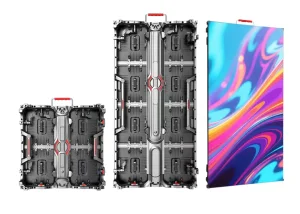
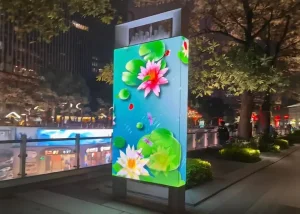
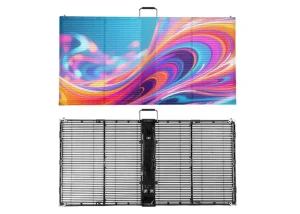

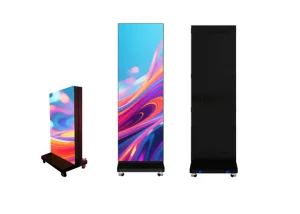
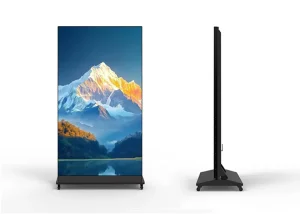
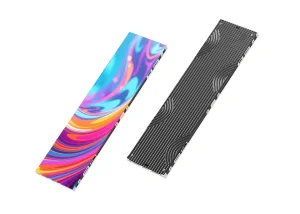
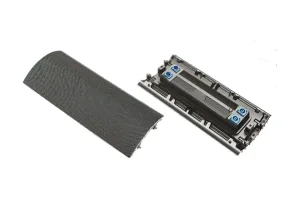
Transitioning from legacy projection setups to Direct-View LED (DVLED) video walls in modern academic facilities.
For decades, K-12 school auditoriums and university lecture halls relied on overhead projection units or motorized screen drops. However, modern educational spaces suffer from ambient light wash-out due to high architectural glass facades, deteriorating lamp brightness over time, and continuous maintenance costs associated with bulb replacements and filter cleanings.
Overhead projection systems fail to meet modern educational presentation standards, where crisp text, multi-source video feeds, and high contrast under full room lighting are non-negotiable requirements for effective learning.
Today, educational institutions globally are allocating infrastructure budgets toward seamless Direct-View LED video walls. Offering self-emissive technology with brightness levels ranging from 600 to 1,200 nits, LED walls eliminate ambient light interference completely.
With life spans exceeding 100,000 hours, zero bezels, and seamless scaleability (16:9, 21:9, or immersive custom ratios), school auditorium video walls are now the benchmark for campus assemblies, theatrical productions, hybrid learning, and community engagement hubs.
How direct manufacturing partnerships deliver unparalleled cost efficiency, custom engineering, and component quality control.
Our Shenzhen manufacturing facilities house high-precision Surface Mount Technology (SMT) lines capable of mounting micro-sized LED chips (SMD 1010, SMD 1515, and COB encapsulation) with sub-micron accuracy. In-house SMT ensures strict control over thermal dissipation, solder paste consistency, and batch-to-batch color uniformity.
By sourcing raw LEDs, IC driver chips, die-cast aluminum cabinets, and power supplies directly at industrial scale, China manufacturers provide up to 40%–60% cost savings compared to Western branded markups, while utilizing identical high-tier componentry (e.g., NovaStar processors, Macroblock ICs, MeanWell power units).
School auditoriums frequently require unique spatial integration—curved backdrops, 90-degree corner trims, ultra-thin wall mounts, or front-accessible magnetic maintenance structures. Factory-direct engineering allows customized cabinet dimensions and frame designs built directly to architectural blueprints.
A deep dive into acoustic ratings, pixel pitch mathematics, high refresh rates, and anti-glare protection required for educational excellence.
Auditorium acoustics require low background noise levels (Noise Criteria NC-25 to NC-30) to preserve speech clarity and microphone pickup. Modern LED panels for schools utilize fanless aluminum heat sink cabinets combined with silent power supplies operating under 15dB. This eliminates HVAC-like fan hum from interfering with choir performances or academic presentations.
Choosing the correct pixel pitch (distance between LED centers) prevents visual pixelation for front-row students while optimizing cost efficiency.
Formula: Minimum Viewing Distance (Meters) = Pixel Pitch (mm) × 1.0 to 1.5.
For auditoriums where the first row sits 2.5 meters from the stage, a P1.86 or P2.0 pitch guarantees seamless retina-grade clarity.
School events are continuously filmed, live-streamed, or broadcast to remote classrooms. Low refresh rate screens display scan lines and flickering on camera lenses. High PWM IC drivers with 3840Hz to 7680Hz refresh rates ensure crystal-clear video recording without moiré patterns or frame drops during hybrid events.
School auditoriums double as high-traffic student spaces. Standard SMD LEDs can be damaged by accidental physical impacts during stage setup or sports events. Applying GOB (epoxy resin surface coating) provides IP65 front-side waterproofing, dustproofing, anti-static safety, and high-impact resistance.
Customized visual deployment configurations across diverse educational architecture.
Used for daily morning announcements, student assemblies, theatrical plays, and parent-teacher meetings. The video wall serves as a dynamic backdrop, replacing static physical scenery with high-definition digital sets that change instantly per performance.
Designed for multi-source data visualization, medical or engineering lectures, and global video conferences. Displays utilize picture-in-picture (PiP) and video matrix switching to display presenter feeds, lecture slides, and audience Q&A concurrently.
Demands professional color accuracy (99% DCI-P3 wide color gamut), deep contrast ratios (10,000:1), and DMX/ArtNet lighting protocol sync for theatrical stage backdrops and orchestra musical visuals.
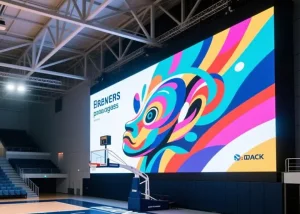
Requires rugged GOB protective encapsulation, reinforced aluminum structures, and shatterproof front masks to withstand impact from balls during athletic activities while functioning as high-impact video displays during ceremonies.
Use this technical guideline to select the appropriate specification based on hall capacity and seating distance.
| Auditorium Type | Optimal Pixel Pitch | Recommended Resolution | Min. Viewing Distance | Key Hardware Features |
|---|---|---|---|---|
| Small Lecture Hall (100–300 seats) | P1.25 / P1.53 | 4K UHD (3840 × 2160) | 1.2m – 1.8m | Fine-Pitch COB, Low Blue Light, Front-Maintenance |
| Medium School Auditorium (300–800 seats) | P1.86 / P2.0 | Full HD / 4K Seamless | 1.8m – 2.5m | SMD/GOB Coating, 3840Hz Refresh, Silent Power |
| Large University Performing Arts Center (800+ seats) | P2.5 / P2.97 | Custom Ultra-Wide (8K) | 2.5m – 4.0m | High Contrast, DMX/ArtNet Sync, Redundant Power |
| Gymnasium-Auditorium Hybrid | P2.5 GOB / P3.0 GOB | 1080p / 2K Modular | 2.5m + | GOB Epoxy Surface Coating, Anti-Collision Mesh Frame |
Technological innovations transforming how educational institutions deploy visual technology.
Next-gen school video walls utilize Common Cathode IC driving technology, controlling R, G, and B LED chips with independent precise voltage. This reduces heat emission by 35% and cuts power consumption by up to 45%, drastically lowering campus electricity bills and carbon footprints.
The industry is transitioning from traditional surface-mount diodes (SMD) to Chip-on-Board (COB) flip-chip packaging. COB offers higher black-surface ratios (100,000:1 contrast), superior heat dissipation, and zero exposed solder joints, eliminating LED diode failure points.
Modern China factory controllers integrate cloud-connected telemetry. School IT administrators can remotely monitor cabinet temperature, voltage health, signal integrity, and automatically dim display brightness based on real-time ambient daylight sensors via centralized web dashboards.
Essential checklist for institutional buyers, school boards, and AV system integrators.
School procurement requires strict compliance certifications to ensure campus safety and zero electromagnetic interference with local audio equipment:
While Direct-View LED video walls carry a higher initial hardware investment than budget projectors, their 10-year Total Cost of Ownership (TCO) is vastly superior:
Direct answers from our senior engineering team to common institutional purchasing questions.
Explore our full line of outdoor billboards, tri-fold posters, transparent displays, and custom table screens.