Factory-direct precision engineered displays designed for architectural elegance, commercial advertising, and fixed installations.
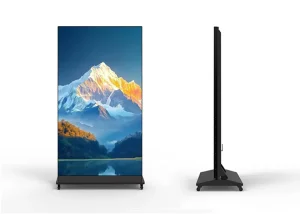
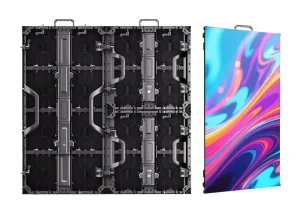
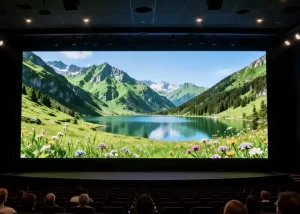
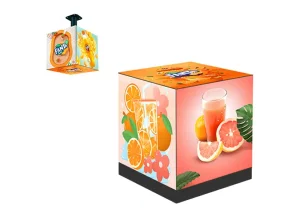
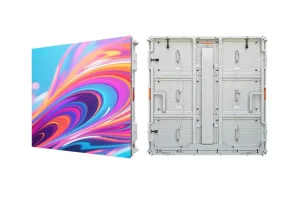

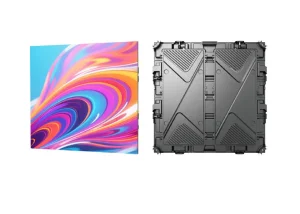
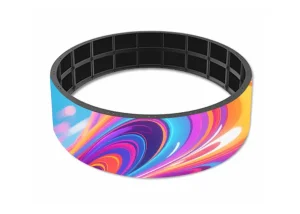
How structural die-casting, high-density SMT, and advanced thermal management redefine display performance.
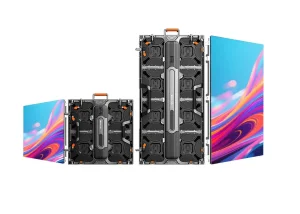
CNC machining tolerances under ±0.05mm eliminate visible seam lines across large video walls. The structural rigidity of die-cast aluminum prevents panel warping during long-term operational thermal cycles.
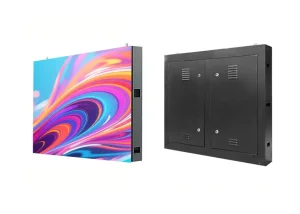
Chip-on-Board (COB) technology encapsulates raw LED chips directly onto the PCB substrate, delivering IP65 front protection against moisture, dust, static electricity, and physical impacts, with anti-glare optical matte finishes.
By utilizing aluminum substrates directly as heat sinks, ultra-slim cabinets achieve silent, fanless operation. Heat dissipation efficiency is improved by 40%, extending driver IC lifespans beyond 100,000 hours.
| Performance Specification | Legacy Steel Frame Displays | Standard Slim Aluminum Panels | Next-Gen Ultra Slim COB Displays |
|---|---|---|---|
| Cabinet Depth (mm) | 90 mm – 150 mm | 45 mm – 60 mm | 22 mm – 28 mm |
| System Weight (kg/m²) | 30 kg/m² – 45 kg/m² | 14 kg/m² – 20 kg/m² | 6.8 kg/m² – 9.5 kg/m² |
| Pixel Pitch Range | P3.91 – P10.0 | P1.86 – P3.07 | P0.78 – P1.56 (Fine Pitch) |
| Power Consumption (Avg) | 280 W/m² – 450 W/m² | 180 W/m² – 260 W/m² | 95 W/m² – 140 W/m² (Common Cathode) |
| Maintenance Profile | Rear access required (cutout space) | Dual (Front & Rear magnetic) | 100% Front Vacuum Service (<3 sec) |
| Acoustic Noise (dB) | >35 dB (Active cooling fans) | <20 dB (Low fan noise) | 0 dB (Totally Fanless Silent Operation) |
Why leading global system integrators and AV distributors source directly from Shenzhen factories.
Leading Chinese exporters operate fully automated, dust-free Class-10,000 SMT cleanrooms equipped with high-speed Yamaha and ASM placement machines. Integrated 3D SPI (Solder Paste Inspection) and 3D AOI (Automated Optical Inspection) systems ensure that micro-LED chiplets down to 0404 size are placed with sub-micron precision, preventing cold solder joints and pixel dead rates.
Direct procurement agreements with Tier-1 component providers allow top factories to integrate high-efficiency Nationstar or Kinglight LEDs, Macroblock or Chipone high-refresh driver ICs (ICN2069/MBI5253 series), and MeanWell power supplies. This supply chain consolidation guarantees color binning consistency across batch orders spanning multiple years.
Emerging innovations redefining visual fidelity, sustainability, and intelligent display control.
Unlike traditional Common Anode driving systems that supply uniform voltage to Red, Green, and Blue diodes (wasting extra power as heat on Red diodes), Common Cathode tech precisely allocates independent voltage (2.8V for Red, 3.8V for Green/Blue). This reduces operational temperatures by 15°C and cuts power bills by 30-45%.
High-end ultra slim screens now feature 7680Hz refresh rates with 16-bit to 22-bit grayscale depth. This suppresses scan lines and moiré patterns when captured by HD broadcast cameras or film equipment, rendering rich dark-level details in low-brightness environments without color shifts.
Next-generation video walls integrate smart cloud controllers with IoT telemetry sensors. Operations teams can remotely monitor cabinet temperature, voltage spikes, ambient light levels, and individual pixel diagnostics via web portals, triggering automated predictive maintenance alerts.
Engineering tailored visual solutions for high-impact environments worldwide.
In corporate headquarters and mission-critical NOC (Network Operations Centers), seamless fine-pitch COB displays (P0.93 to P1.25) replace conventional LCD video walls with distracting bezels. Ultra-thin profile wall-mounting ensures low thermal output and zero acoustic noise, while 4K/8K native resolution delivers pin-sharp data visualization, GIS mapping, and video conferencing capabilities.
Modern luxury storefronts utilize ultra-lightweight slim posters, transparent displays, and curved panels integrated into interior architecture. With high contrast ratios (up to 10,000:1) and brightness levels reaching 1,500 to 4,500 nits, these displays draw visual engagement from street level even in sunlit glass atrium settings.
Virtually replacing green screens in film production, ultra-slim rental displays with fast magnetic interlocks enable rapid stage setup. Featuring camera-ready 7680Hz refresh rates, low-latency processing (<1 frame), and wide viewing angles (160°/160°), actors interact naturally with real-time rendered 3D background environments.
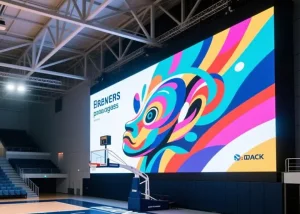
Airports, train terminals, and sports stadiums require continuous 24/7/365 operational uptime. Ultra-slim displays built with dual-signal and dual-power back-up redundancy automatically switch input streams if a primary cable fails, guaranteeing uninterrupted passenger notifications and digital revenue advertising.
A 5-step strategic checklist for global purchasing directors and AV engineering teams.
Verify color uniformity using spectroradiometers. Ensure module brightness variation remains under ±2.5% and target color gamut reaches 110% NTSC or DCI-P3 standards.
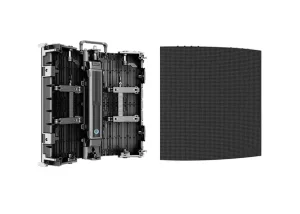
Check cabinet die-casting dimensional tolerance with coordinate measuring machines (CMM). Insist on corner protection mechanisms to shield corner LEDs from installation impact damage.
Require thermal imaging test reports during full white burn-in aging. Confirm power factor (PF) exceeds 0.95 and electromagnetic compatibility complies with Class B EMC limits.
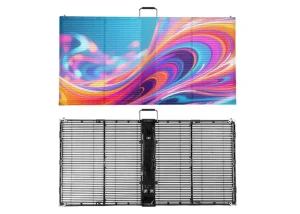
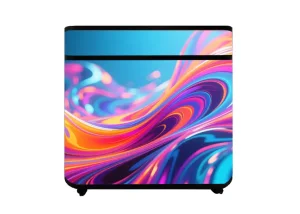
Explore flexible, transparent, rental, and specialty outdoor high-brightness LED screen series.

Expert technical insights regarding LED display selection, maintenance, calculation formulas, and factory partnerships.
Ultra slim LED displays utilize precision CNC-machined die-cast aluminum alloys rather than traditional sheet metal steel frames. This engineering shift reduces cabinet depth from 80-120mm down to 22-28mm while cutting total system weight by up to 65%. Furthermore, internal wiring is integrated directly into wireless hub boards, eliminating messy ribbon cables and enhancing thermal conductivity across the aluminum frame.
The baseline rule of thumb for optimal viewing distance is Optimal Viewing Distance (Meters) = Pixel Pitch (mm) × 1.5 to 2.5. For instance, a P1.25 ultra-fine pitch display provides visual continuity and discrete pixel-free clarity starting at approximately 1.8 to 2.5 meters distance. For boardroom environments where viewers sit close to the screen, pitch ranges between P0.93 and P1.25 are recommended.
SMD (Surface Mounted Device) solders individual packaged LED bulbs onto the PCB. GOB (Glue on Board) applies an epoxy shield over SMD modules to improve impact protection. COB (Chip on Board) directly mounts raw LED micro-chips onto the PCB substrate and encapsulates them in resin, yielding superior thermal dissipation, wider viewing angles (160°+), anti-collision durability, and ultra-fine pixel pitches below P1.0.
Common Cathode driver architecture controls power distribution to Red, Green, and Blue diodes independently. Because Red diodes require lower voltage than Green and Blue, Common Cathode technology prevents excess energy from dissipating as heat. This lowers screen operational temperatures by 10-15°C, extends component lifespan, and reduces power consumption costs by 35% to 45% over years of continuous use.
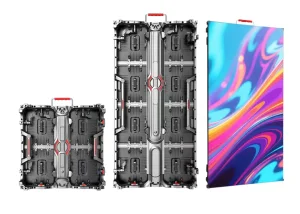
Ultra slim displays equipped with magnetic front-service modules allow technician teams to detach individual LED modules, power supply boxes, and receiving cards within 3 seconds using a vacuum extraction tool. This eliminates the requirement for rear access maintenance hallways, saving valuable architectural real estate in retail and corporate environments.
Qualified enterprise exporters must provide CE (EMC Class B for residential/indoor compliance), FCC Part 15 Class A/B, RoHS, ETL/UL electrical safety certifications, and IP65 ingress protection test reports for outdoor models. Additionally, ISO9001 factory quality management compliance guarantees standardized manufacturing processes.