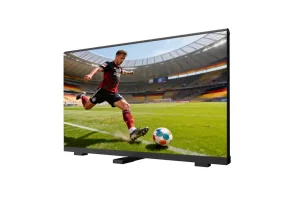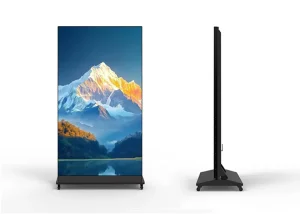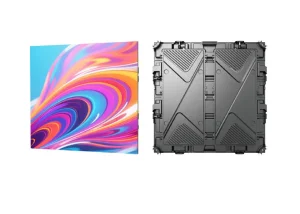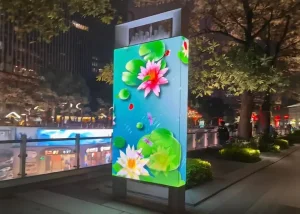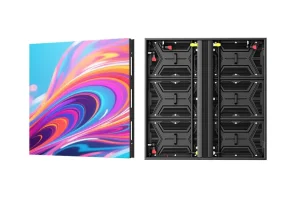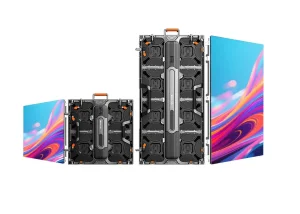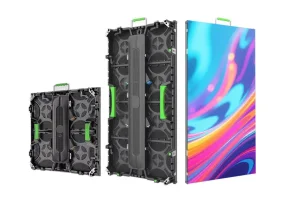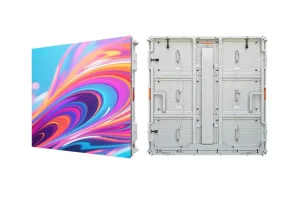
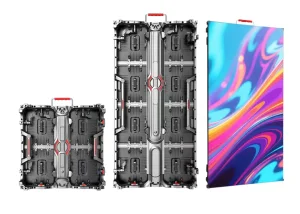
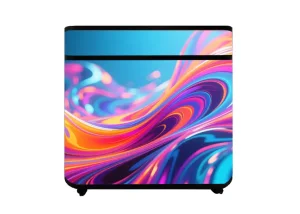
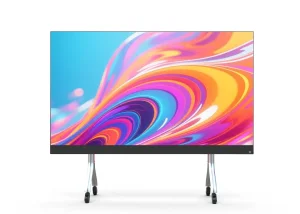
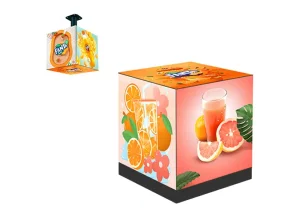
Transitioning higher education spaces from legacy projection systems to seamless, high-brightness LED video walls.
Global universities are phasing out high-maintenance bulb projectors and fragile LCD videowalls in favor of fine-pitch indoor LED displays. Direct-view LED eliminates ambient light washout, offers limitless scalability, and ensures uniform color clarity across large multi-tiered lecture halls.
Post-hybrid learning requires lecture hall screens capable of rendering sub-millimeter text, complex mathematical models, live remote student video grids, and multi-window presentations without grid lines, flicker, or optical distortion.
Leading Chinese LED suppliers provide tier-1 universities with factory-direct LED engineering that delivers over 100,000 operational hours. Low thermal dissipation and solid-state encapsulation dramatically reduce maintenance overhead compared to traditional visual displays.
Operational Hours Lifetime
Min. Refresh Rate for Camera Capture
Ultra-Fine COB Pixel Pitch Capabilities
Energy Savings via Common Cathode ICs
Understanding encapsulation, pitch selection, and eye-safety ergonomics in large-scale visual engineering.
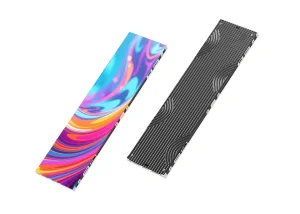
For close-distance viewing in lecture halls, traditional Surface Mount Devices (SMD) are rapidly upgrading to COB technology. COB bonds flip-chips directly onto the PCB substrate, encapsulated under an epoxy protective resin. This results in superior impact resistance, dustproof/waterproof resilience (IP65 front surface), zero pixel failure, and a wider 178° viewing angle that prevents color shifting for students seated in corner seats.
Lecture halls subject students and faculty to extended visual exposure. Premium university LED video walls incorporate surface matte processing and non-reflective anti-glare nano-coatings. Combined with low blue-light emissions certified under ISO 9241-307 and flicker-free PWM driving ICs, these screens protect audience eyesight while minimizing fatigue during multi-hour lectures.
SEO Information Gain Insight: Calculating the optimal pixel pitch ($P$) for a university auditorium follows the formula: $P \approx D / 1000$, where $D$ is the distance to the first row of student seating in millimeters. For a 1.5-meter minimum distance, a P1.25 to P1.56 fine-pitch COB screen maintains optimal textual sharpness without visible pixelation.
Custom visual solutions engineered specifically for distinct university environments.
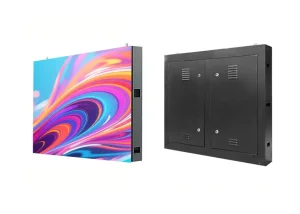
Large-format seamless main displays (typically spanning 200 to 400 inches diagonally) equipped with 16:9 ultra-HD aspect ratios. Integrates seamlessly with automated lecterns, ceiling microphones, and Crestron/Extron control processors.
Demands exceptional 10,000:1 contrast ratios and 16-bit color depth to display intricate CAD models, 3D anatomical cross-sections, and high-frequency wave graphics with chromatic precision.
Dual-purpose venues requiring high-refresh rental/fixed hybrid screens (up to 7,680Hz). Perfect for broadcast lectures, theatrical productions, and campus commencement livestreams with zero moiré effect under broadcast cameras.
Interactive LED walls featuring ultra-low latency (<1 frame processing delay) and custom PIP (Picture-in-Picture) matrix integration for simultaneous remote student interaction and content sharing.
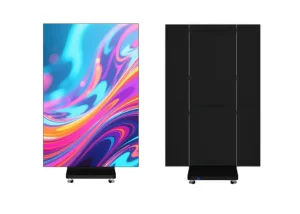
Sleek All-in-One (AIO) Smart LED displays mounted on mobile motorized carts or wall mounts, featuring built-in Android/Windows OS, wireless screen casting, and digital whiteboarding capabilities.
Why Shenzhen LED manufacturing hubs lead the world in cost efficiency, quality control, and custom engineering.
Leading Chinese LED manufacturers utilize high-speed Yamaha and Fuji Surface Mount Technology (SMT) lines. Operating in Class 100,000 cleanroom environments, automated SMT ensures high pixel placement accuracy, minimal soldering defects, and rapid batch volume output.
Every university lecture hall display panel undergoes strict 72-hour burn-in tests, visual vibration tests, and thermal cycling inspections prior to export. Automated optical inspection (AOI) detects color inconsistencies and dead pixels before assembly.
Proximity to Shenzhen and Hong Kong shipping hubs enables fast air freight and reliable ocean container shipping. Standardized custom flight-case or vacuum plywood packaging protects panels against humidity, salt fog, and transit shock.
Anticipating optical shifts, green technology mandates, and AI integration in campus displays.
Transitioning from standard SMD to MIP and COB fine-pitch modules. Lower manufacturing costs allow universities to deploy sub-P1.0 displays in standard classrooms, offering 8K native visual resolution.
Widespread integration of common-cathode driver ICs and dynamic power reduction algorithms. Power consumption is reduced below 120W per square meter, aligning with global campus Net-Zero sustainability goals.
Embedded AI visual processors automatically calibrate brightness, color temperature, and contrast according to real-time ambient lighting and content types. MicroLED displays enable holographic-grade remote lectures.
Comparing Fine-Pitch LED Video Walls, Laser Projection, and LCD Video Walls.
| Key Evaluation Metric | Direct-View COB Fine-Pitch LED | 3-LCD / Laser Projection | Narrow-Bezel LCD Video Wall |
|---|---|---|---|
| Seamlessness | 100% Bezel-Free (0mm) | 100% Seamless | Visible Bezel Grid (0.88 - 3.5mm) |
| Ambient Light Performance | High Brightness (600 - 1200 nits) | Low Contrast (Washed out by sunlight) | Moderate (350 - 500 nits) |
| Operational Lifespan | 100,000 Hours | 20,000 Hours (Laser diode decay) | 50,000 Hours |
| Color Accuracy & HDR | Ultra-High (16-Bit, HDR10+) | Moderate (Room dimming required) | Standard Rec.709 Coverage |
| Long-term Maintenance | Module Level Front Service | Bulb/Laser Unit Replacement | Full Panel Unit Replacement |
Full compliance with international safety, electromagnetic, and structural standards.
Export products carry CE (EMC & LVD), FCC Class A/B, RoHS, and ETL/UL certifications, ensuring immediate acceptance by university safety officers and local electrical inspectors in North America, Europe, and Asia-Pacific.
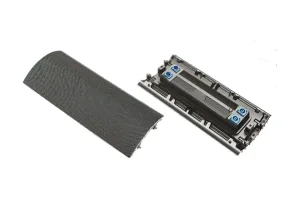
University maintenance personnel receive magnetic and vacuum front-service tools. Modules can be hot-swapped in under 30 seconds without dismantling the structural framing or rear cabling.
We supply AV system integrators with structural CAD drawings, power consumption calculation sheets, heat load specifications, and NovaStar/Colorlight RCFG configuration files for seamless installation.
Addressing key B2B decision criteria for university AV directors and integrators.
For a standard 300-seat lecture hall where the front row of students sits approximately 2.5 to 3 meters from the screen, a pixel pitch between P1.56 and P1.875 is ideal. If the venue hosts complex mathematical coding, medical imaging, or fine text, upgrading to P1.25 COB provides crisp, razor-sharp legibility without eye strain.
We provide comprehensive engineering support, including customized CAD structural frame drawings, power distribution schematics, and signal flow diagrams. Furthermore, we offer 1-on-1 video commissioning support, step-by-step installation documentation, and on-site engineering dispatch options for large-scale institutional projects.
COB (Chip-on-Board) encapsulates LED chips in epoxy resin directly on the PCB. This provides physical protection against impact (students touching or bumping the screen), renders the surface anti-dust and waterproof (front IP65), eliminates glares through a matte finish, and ensures a wider 178° visual angle with lower operational heat emission.
Yes. Our displays utilize industry-standard control systems (such as NovaStar, Colorlight, or Linsn) that support RS232, IP, and LAN commands. Integrators can easily link power switching, source selection, preset scene layouts, and brightness controls directly to Crestron, Extron, or Q-SYS touch panels.
Standard indoor fine-pitch production takes approximately 12 to 18 working days from initial drawing approval and SMT scheduling. Rapid air shipping requires 5-7 days, while ocean freight takes 20-35 days depending on the destination port.
Every shipment includes a 3% to 5% spare parts kit, including spare LED modules, power supplies, receiving cards, and ribbon cables. We provide a full 3 to 5-year factory warranty. Faulty components can be serviced locally using spare stock and returned for factory repair under our rapid RMA protocol.