Explore our core engineering product portfolio manufactured in Shenzhen SMT facilities, engineered for global enterprise installations across North America, Europe, and Asia-Pacific.
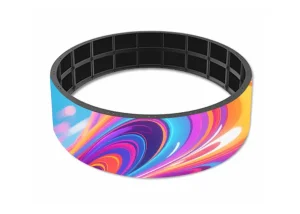
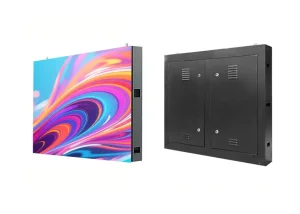
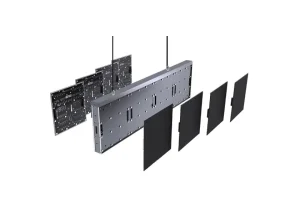

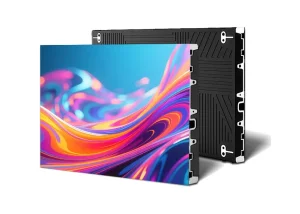
The global market for visual display technology is undergoing a paradigm shift. Architectural design in major metropolitan hubs—from New York, Los Angeles, and Chicago to London, Tokyo, and Dubai—increasingly favors expansive structural glass facades. Traditional solid LED cabinets obstruct natural sunlight, strain HVAC systems, add prohibitive structural weight, and violate urban aesthetic codes. This environment has driven rapid market expansion for transparent LED screens across North America and Europe.
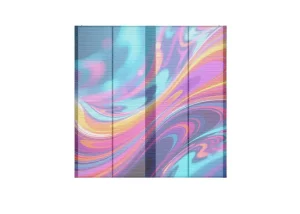
In the United States, commercial real estate developers, flagship retail brands (such as automotive showrooms and luxury fashion houses), and Digital Out-of-Home (DOOH) media companies require high-impact visual media solution without sacrificing indoor ambient daylight. Transparent LED screens achieve optical permeability between 65% and 88%, transforming standard glass windows into dynamic multimedia canvasses without altering the architectural integrity of the building envelope.
Maintains indoor natural daylighting standards, allowing retail environments to remain open, airy, and daylight-compliant while displaying high-contrast brand media outward.
Open hollow-bar structure promotes passive air ventilation, reducing screen operating temperatures and cutting commercial HVAC cooling loads by up to 35% in glass curtain installations.
In many US municipalities where external solid billboards are restricted by zoning codes, indoor glass-mounted transparent displays operate fully within interior signage ordinances.
While commercial demand and creative architectural design are prominently driven by Western buyers, China—specifically the Shenzhen electronics manufacturing cluster in Guangdong province—holds over 90% of the worldwide engineering and manufacturing capacity for transparent LED displays. Understanding this cross-border dynamic is essential for enterprise procurement teams.
The efficiency advantage of Chinese manufacturers stems not merely from raw labor economics, but from complete vertical industrial integration. From high-precision surface-mount technology (SMT) lines and micro-pitch driver IC wafer packaging to customized die-cast aluminum frame extrusion, China's ecosystem enables unmatched production turnaround and cost optimization.
In-house placement of side-emitting (Side-SMD) and Chip-on-Board (COB) LEDs directly onto narrow PCB strips ensures microscopic alignment precision down to ±0.02mm, vital for keeping structural transparency uniform.
Direct OEM partnerships with tier-1 driver IC suppliers (such as Macroblock, Chipone, and NovaStar control ecosystems) yield lower bill-of-materials (BOM) costs that translate to competitive wholesale export pricing.
Shenzhen engineering hubs iterate custom cabinet designs (including 3D curved glass, right-angle corner, and ultra-light hanging frames) within 7–10 days, compared to multi-month cycles elsewhere.
Top Chinese exporters implement 72-hour continuous burn-in aging tests, thermal imaging analysis, vibration testing, and optical calibration prior to ocean or air freight dispatch.
Achieving an optimal balance between optical transparency and visual resolution requires deliberate hardware architecture. Transparent LED displays utilize specialized PCB strip engineering. Rather than mounting LEDs on a solid fiberglass backing, LEDs are placed onto ultra-thin vertical or horizontal structural bars, leaving wide air gaps through which light passes unimpeded.
A primary distinction in transparent display design lies in the encapsulation method. Modern high-transparency panels employ Side-Emitting SMD (Side-LED) technology. By orienting the light diode package along the side edge of the PCB strip, the front profile width of the PCB bar is minimized to under 1.5mm. This increases overall visual transparency by 15-20% compared to standard front-emitting configurations while expanding horizontal viewing angles up to 160 degrees.
For window-facing applications exposed to direct sunlight in North American sunbelt states or coastal cities, display brightness must override ambient solar glare. Exporters configure displays with dual-tier brightness specifications:
To guide procurement decisions, the following matrix compares engineering metrics between Transparent LED screens, Traditional Solid Outdoor LED Displays, and Film/Mesh Transparent LED products.
| Performance Metric | Rigid Transparent LED (PCB Bar) | Flexible LED Film (Adhesive) | Traditional Outdoor LED Display |
|---|---|---|---|
| Transparency Range | 70% – 88% | 80% – 92% | 0% (Opaque) |
| Peak Luminance | 4,500 – 7,500 Nits | 1,000 – 3,000 Nits | 5,500 – 10,000 Nits |
| Pixel Pitch Range (mm) | P2.6 x P5.2 / P3.9 x P7.8 / P10.4 | P3.9 / P6.2 / P10 | P1.5 to P16 |
| Cabinet Weight | 9 – 14 kg / m² | 3.5 – 6 kg / m² | 30 – 45 kg / m² |
| Structural Frame Support | Hanging Truss / Floor Base / Glass Frame | Direct Glass Paste | Heavy Steel Sub-Frame Needed |
| Serviceability | Modular Single-Bar Front/Rear Access | Difficult Panel Replacement | Rear/Front Cabinet Module Access |
| Expected Lifespan (L70) | 100,000 Hours | 50,000 Hours | 100,000 Hours |
Across North America, Latin America, Europe, and the Middle East, transparent displays are deployed across diverse sectors to drive consumer engagement while respecting space efficiency.
High-end boutiques along Fifth Avenue (New York) or Rodeo Drive (Los Angeles) install fine-pitch P2.8/P3.9 transparent displays behind storefront glass. Passersby see high-definition floating 3D product animations while interior floor merchandise remains fully visible.
Multinational tech and financial firms utilize see-through video walls in multi-story glass lobbies. These systems showcase corporate messaging, real-time visual data, and dynamic branding without cutting off architectural natural light.
Automotive showrooms feature floor-to-ceiling glass facades. Installing high-brightness transparent displays enables full-screen vehicle unveilings and dynamic spec promotions visible from neighboring highways, operating effectively day and night.
Transportation hubs deploy transparent screens for dynamic flight updates, directional wayfinding, and premium advertising displays mounted on glass security partitions and terminal walkways.
The transparent display industry continues to evolve through advanced micro-electronics, materials science, and intelligent control protocols. Exporters and manufacturers are driving innovation along three main vectors:
Transitioning from traditional PCB strips to microscopic LED chips directly integrated onto conductive tempered glass (Active Matrix Micro-LED). This pushes transparency above 90% while achieving ultra-fine pixel pitches below P1.2 for close-up viewing.
Adopting dual power-supply paths that feed red, green, and blue chip dies with their specific required voltages. This reduces thermal dissipation, extends LED chip lifespans, and cuts operational electricity expenses by 30-40%.
Integrating 5G IoT clusters, automated sensor-based brightness dimming, and remote diagnostics, allowing multi-location screen networks across North America to be managed seamlessly from central software hubs.
Procuring custom transparent LED displays directly from Chinese manufacturers requires careful evaluation across technical, regulatory, and logistical considerations. System integrators and enterprise buyers should utilize a structured qualification checklist:
Verify that the manufacturer provides fully certified hardware models conforming to local market standards: UL 48 / UL 8750 (USA electrical safety), FCC Class A/B (electromagnetic compliance), CE-EMC / CE-LVD (European Union), and RoHS (hazardous substance restrictions).
Distinguish true manufacturers from pure assembly trading vendors. Direct manufacturers operate high-speed automated SMT lines, maintaining quality control over solder paste thickness, chip alignment, and potting compound application.
Work with logistics partners familiar with US Harmonized Tariff Schedule (HTS) classifications for LED displays (such as HTS Code 8528.59). Confirm whether shipments move via DDP (Delivered Duty Paid), FOB Shenzhen, or CIF terms to accurately calculate total cost of ownership.
Ensure sales agreements include a minimum 3-year warranty backed by a 3% to 5% spare parts package—including reserve LED light bars, receiving cards, power supply units, and IC modules—for immediate localized maintenance.
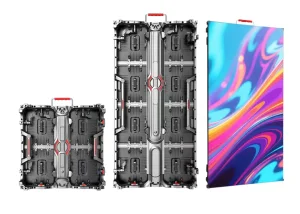
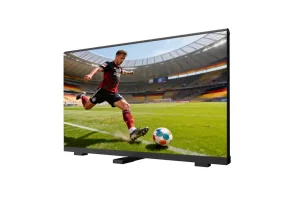
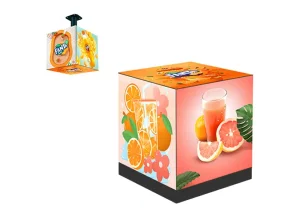
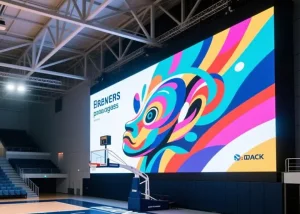
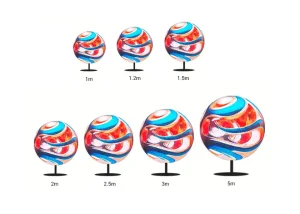
Discover specialized display hardware—including stadium perimeter systems, transparent see-through panels, rental touring screens, and custom geometric displays.
Detailed technical and logistical answers compiled by senior display engineers for project managers and global buyers.