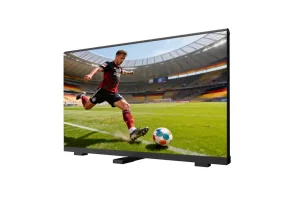
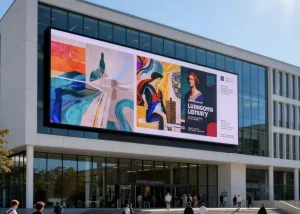
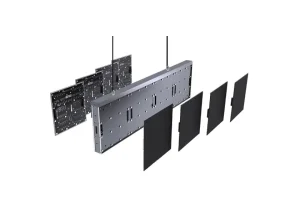
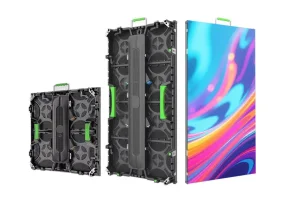
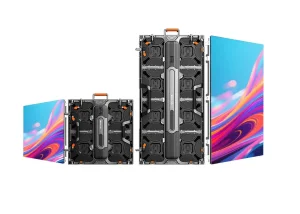
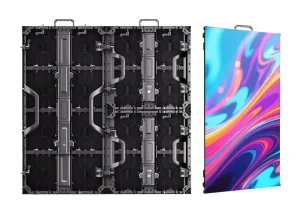
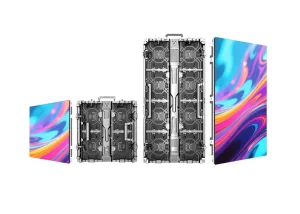
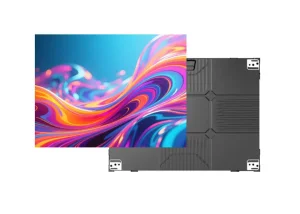
Explore our flagship factory-direct LED solutions engineered for high durability, ultra-high refresh rates, and custom architectural integrations.
Understanding the transition from standardized rectangular displays to spatially integrated, organic digital architecture.
The global commercial display sector has undergone a fundamental paradigm shift. Traditional flat, rigid 16:9 aspect ratio LED video walls, while remaining a staple for control rooms and standard corporate signage, are no longer sufficient to fulfill the visual demands of modern experiential architecture, high-end retail environments, and luxury brand storytelling. B2B procurement vectors—encompassing AV system integrators, media architectural firms, and global experiential designers—are increasingly demanding custom creative LED solutions that conform dynamically to structural geometry rather than restricting design vision to standard boxy form factors.
As premier custom creative LED display manufacturers and suppliers operating directly out of advanced manufacturing hubs such as Bao'an, Shenzhen, our engineering focus encompasses the design, SMT fabrication, and integration of non-standard display topologies. Creative LED displays represent a convergence of specialized electronic engineering, micro-mechanics, heat dissipation science, and advanced video processing algorithms. From hyper-flexible silicone-substrate PCB modules capable of wrapping around 360-degree interior columns to 90-degree seamless corner displays designed for naked-eye 3D spatial illusions, creative dvLED technology bridges the gap between digital content and physical space.
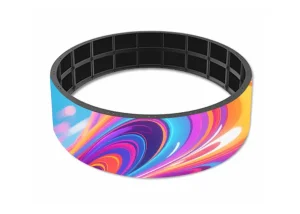
Constructed utilizing high-durability flexible printed circuit boards and customized elastomeric silicone housing. These panels achieve minimum bending radii down to 40mm without mechanical fatigue or pixel trace rupture.
Specially engineered right-angle edge modules featuring seamless beveling (45-degree module edge cuts) that completely eliminate the vertical seam line traditional video walls produce at 90-degree intersections.
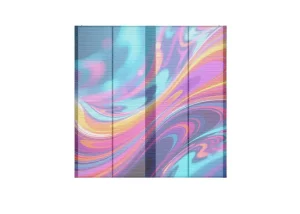
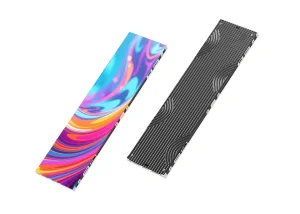
Spatially integrated see-through LED screens engineered with side-emitting SMD or MicroLED chips mounted on ultra-narrow PCB strips, delivering up to 80% transparency while preserving full daytime visibility.
From Surface Mount Device (SMD) to Chip-on-Board (COB) and Glue-on-Board (GOB) packaging technology.
The operational longevity, optical fidelity, and mechanical tolerance of custom creative LED displays directly stem from the underlying semiconductor packaging methodology and surface treatment technologies employed during SMT (Surface Mount Technology) assembly. Modern procurement directors must evaluate manufacturers not merely on cabinet aesthetics, but on raw wafer selection, driver IC topography, thermal conductivity coefficients, and encapsulation methods.
Below is a comparative engineering matrix detailing the technical distinctions between dominant LED packaging technologies utilized in custom creative displays:
| Technology Parameter | SMD (Surface Mount Device) | GOB (Glue on Board) | COB (Chip on Board) |
|---|---|---|---|
| Packaging Integration | Discrete LED lamps soldered to PCB pads | SMD LED lamps coated with polyurethane epoxy resin | Bare flip-chip diodes directly bonded to PCB substrate |
| Min Pixel Pitch Capabilities | P1.5mm to P10mm | P1.2mm to P3.9mm | P0.4mm to P1.2mm Ultra Fine Pitch |
| Protection Index (Impact/Water) | Low impact resistance; susceptible to pixel shedding | Extreme protection (Anti-collision, Waterproof, Dustproof) | Highest structural integrity; IP65 surface seal |
| Thermal Dissipation Rate | Moderate (Heat trapped in lamp package) | Good (Resin distributes heat across surface) | Superior (Direct substrate heat transfer) |
| Optical Contrast Ratio | 10,000:1 (Standard black mask) | 15,000:1 (Matte resin surface option) | 20,000:1+ (Full black epoxy matrix) |
| Moisture / Anti-Static Grade | MSL Level 3 | MSL Level 1 (Complete Environmental Seal) | MSL Level 1 (Ultimate Reliability) |
To ensure flawless performance under professional broadcasting, cinema camera capture, and high-speed photography, custom creative displays require top-tier driver integrated circuits (ICs). Traditional static driver ICs suffer from lower refresh frequencies, causing scanning lines, moiré patterns, and color banding during live event broadcasts. Our high-performance manufacturing pipeline integrates advanced 16-bit to 22-bit grayscale PWM (Pulse Width Modulation) driver ICs offering refresh frequencies scaling up to 7,680 Hz.
Furthermore, dynamic visual installations require rigorous low-brightness, high-grayscale performance. Standard displays lose color fidelity when dimming in low-ambient lighting conditions (such as indoor luxury retail or museums). By leveraging custom gamma curve calibration and low-current drive technology, our displays preserve 100% color gamut expression (DCI-P3 & Rec.2020 compliance) even at 10% brightness operational levels.
A rigorous systematic approach ensuring structural stability, power efficiency, and long-term operating safety.
Engineering teams analyze physical structural load-bearing limits, ambient illumination curves (lux levels), viewing distance vectors, and power distribution infrastructure before final CAD modeling.
Unlike standard suppliers off-loading stock cabinets, we engineer custom aluminum die-cast frames, CNC-machined curved cabinets, or custom-molded silicone substrates tailored to precise millimeter radii.
Fabrication occurs within static-controlled Class 100,000 cleanroom environments utilizing high-speed Yamaha and Panasonic SMT lines. Assembled modules undergo intensive environmental stress screening.
Every creative LED display requires per-pixel brightness and chromaticity calibration (chroma calibration) to eliminate color variance across batch modules before shipment.
For installations in tropical coastal regions, desert climates, or frigid alpine environments, standard commercial displays rapidly fail due to salt-spray corrosion, thermal throttling, or moisture ingress. Our custom outdoor creative displays incorporate anti-corrosive conformal coatings, gold-wire bonded LED encapsulation, IP68 rated quick-lock power connectors, and thermal-regulated smart fans, guaranteeing operational stability from -40°C to +65°C.
Deploying bespoke visual media solutions across high-value global commercial and industrial sectors.
Creative LED displays act as functional media canvases that elevate interior architecture, strengthen corporate identity, and maximize audience engagement in high-traffic urban ecosystems. Below are key commercial deployment environments where custom-built dvLED systems yield maximum return on investment (ROI):
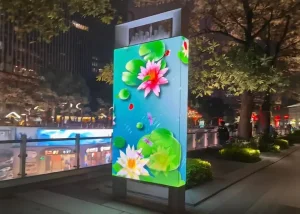
Large-scale 3D naked-eye corner billboards mounted on urban retail plazas transform city skylines into dynamic media spectacles, delivering unprecedented advertising impressions and brand prestige.
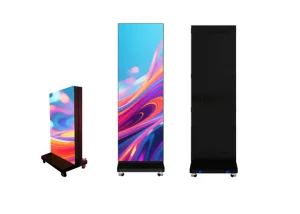
Transparent LED glass walls, double-sided ultra-thin poster screens, and floor-to-ceiling curved column displays immerse shoppers in high-definition visual narratives without blocking natural sunlight.
High-refresh-rate (7680Hz), low-latency fine-pitch LED volumes featuring high color fidelity and camera-tracking alignment replace traditional green screens for real-time film production and TV broadcasting.
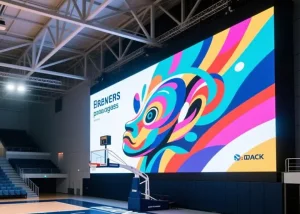
Impact-resistant stadium perimeter displays engineered with soft rubber masks and top cushions protect athletes while presenting seamless, high-brightness sponsor advertisements to live broadcast audiences.
Spherical LED globes, immersive 5-sided 360-degree CAVE display rooms, and interactive touch-integrated floor displays deliver captivating educational experiences through spatial digital immersion.
Sub-millimeter COB fine-pitch video walls provide seamless 4K/8K resolution for real-time telemetry monitoring, executive video conferencing, and mission-critical decision making.
Key technological breakthroughs driving the next era of direct-view LED innovation.
As display technology evolves, the boundaries between physical structural materials and active digital display surfaces continue to blur. Over the next half-decade, five strategic technical vectors will define the competitive positioning of custom creative LED display manufacturers and suppliers globally:
The transition from MiniLED (chip sizes ~100-200μm) to true MicroLED (<50μm chips) coupled with active-matrix TFT glass backplanes will enable ultra-fine pixel pitches down to P0.2mm, matching consumer OLED clarity while retaining LED's superior brightness and 100,000-hour operational lifespans.
Integration of real-time AI processing units within receiving cards enables intelligent dynamic pixel driving (Common Cathode architecture coupled with real-time brightness zoning). This yields up to a 45% reduction in thermal generation and power consumption without sacrificing peak luminance.
Replacing traditional aluminum die-cast cabinets with structural carbon-fiber composites reduces cabinet weight to under 4.5kg per 500x500mm panel. This dramatically lowers mechanical rigging loads for touring concerts, live events, and high-altitude building facades.
Answering crucial technical, manufacturing, and operational questions for global AV integrators and procurement directors.
Discover our comprehensive inventory of fine-pitch COB, transparent, rounded-corner, and ultra-thin fixed indoor/outdoor LED hardware.