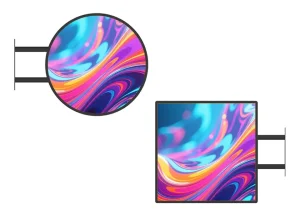
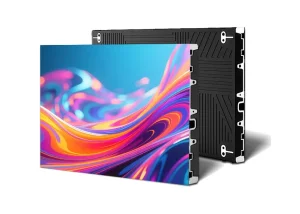
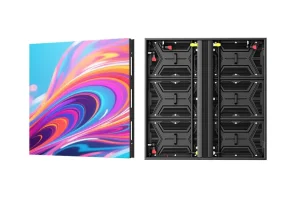
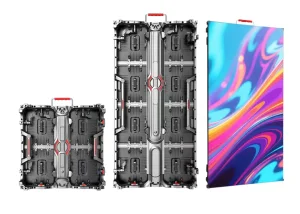
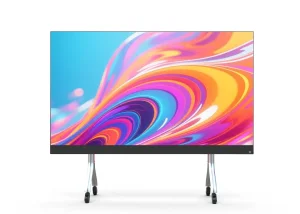
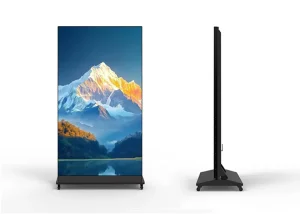
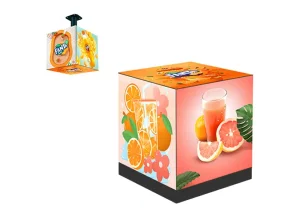
Explore our precision-engineered fine-pitch, rental, poster, and creative LED screens manufactured under strict ISO9001 and TUV quality management protocols.
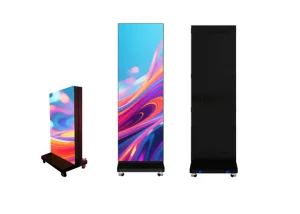
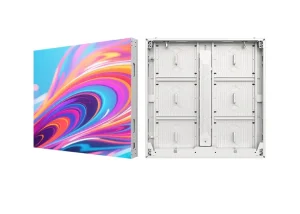
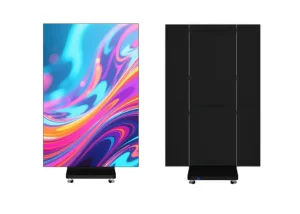
The global digital display market is undergoing a seismic paradigm shift. As visual telemetry demands intensify across command-and-control centers, executive boardrooms, broadcast virtual production studios (XR/VP), and immersive flagship retail, the industry has pushed beyond standard resolution boundaries into sub-1.0mm pixel pitch domains. In this micro-pitch landscape, two dominant packaging technology paths define modern procurement strategies: Custom Fine Pitch SMD (Surface Mounted Device) and COB (Chip-on-Board) Encapsulation.
Choosing between Fine Pitch SMD and COB is no longer merely a matter of comparing initial unit price per square meter. It represents a fundamental engineering decision impacting optical performance, physical durability, thermal management, failure rates, total cost of ownership (TCO), and long-term serviceability. As a premier LED display manufacturer and OEM/ODM supplier operating out of Shenzhen's high-tech manufacturing core, JINGRUNS delivers this whitepaper to provide system integrators, AV consultants, and corporate buyers with an objective, data-driven framework for evaluation.
To understand the operational divergent points between SMD and COB fine pitch displays, one must evaluate the structural manufacturing process at the microscopic silicon diode level.
In standard Fine Pitch SMD (typically ranging from P1.2 to P2.5), individual RGB LED chips are wire-bonded inside a plastic bracket, encapsulated with epoxy resin to form discrete lamp beads (e.g., SMD1010, SMD0808). These packaged beads are subsequently surface-mounted onto the Printed Circuit Board (PCB) via High-Speed SMT reflow soldering.
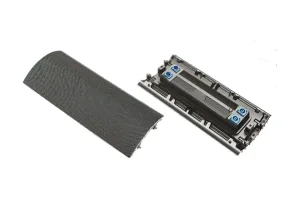
COB bypasses the individual lamp bead packaging stage completely. Bare microscopic LED die chips are attached directly onto the PCB substrate using automated high-precision pick-and-place matrix positioning. The entire module surface is then coated with an optical-grade epoxy or silicone resin encapsulation layer.
Glue-on-Board (GOB) acts as a structural bridge technology. It takes a conventional SMD LED panel and applies a transparent epoxy glue across the exposed SMD beads post-reflow. While GOB improves physical protection and moisture resistance compared to standard SMD, it does not match the thermal efficiency or optical pixel density of native Flip-Chip COB.
| Performance Parameter | Custom Fine Pitch SMD | GOB Hybrid Tech | Direct Flip-Chip COB |
|---|---|---|---|
| Available Pixel Pitch Range | P1.2mm – P2.5mm | P1.2mm – P2.0mm | P0.4mm – P1.2mm |
| Physical Protection Grade | IP30 (Exposed SMT Solder Joints) | IP54 (Front Resin Seal) | IP65 (Full Surface Encapsulation) |
| Impact / Collision Resistance | Low (Vulnerable to bead knock-off) | High (Surface Shielded) | Ultra-High (>10kg/cm² Impact Rating) |
| Contrast Ratio | 3,000:1 – 5,000:1 | 4,000:1 – 6,000:1 | 10,000:1 – 20,000:1 (Deep Black Mask) |
| Thermal Dissipation Route | PCB -> Solder Lead -> Bracket | PCB -> Solder Lead -> Glue Layer | Direct Die-to-Substrate Thermal Path |
| Operational Surface Temp | High (45°C – 60°C at module face) | Medium (40°C – 50°C) | Low (32°C – 38°C Cool Touch) |
| Pixel Failure Rate (PPM) | <20 PPM annual failure | <10 PPM annual failure | <2 PPM annual failure |
| Viewing Angle (H/V) | 140° / 120° | 150° / 140° | 170° / 170° Continuous Surface Wave |
When global enterprise procurement directors evaluate display investments, upfront purchasing cost (CapEx) represents less than 40% of the display’s Total Cost of Ownership (TCO) over a standard 7-to-10-year operational lifecycle. Operational Expenditure (OpEx), power consumption, climate conditioning loads, and maintenance downtime dominate the true cost equation.
Selecting the wrong pixel pitch leads either to over-specifying budget or introducing pixelation for viewers. Calculate your Minimum Comfortable Viewing Distance (MVD) using the engineering formula:
For example, in a 4K Control Room where operators sit 2.5 meters away from the video wall, a COB P0.93mm or SMD P1.25mm panel provides seamless retinal resolution without visible screen-door grid lines.
Direct Flip-Chip COB architecture operates on Common Cathode power distribution driver ICs. Unlike conventional Common Anode SMD systems that waste excess voltage as heat across RGB channels, Common Cathode supplies independent precise voltage to Red, Green, and Blue diodes.
A critical procurement consideration is field repair protocol:
SMD Fine Pitch: Allows single-pixel replacement on-site using standard micro-soldering irons by trained technicians. However, frequent physical contact carries the risk of damaging neighboring beads.
COB Micro Pitch: Because pixels are encapsulated under a uniform resin mask, single-bead field soldering is impossible. Repairs are managed at the modular level—swapping out magnetic front-access modules within seconds using vacuum extraction tools, while damaged modules are returned to JINGRUNS' clean-room service centers for laser micro-repair.
Traffic control centers, security operations centers (SOCs), and energy grids require continuous 24/7/365 uptime with static telemetry graphics. Flip-Chip COB P0.9mm / P1.2mm displays are recommended due to zero burn-in risks, cold-surface operational comfort for operators sitting close to screens, and redundant power/signal loop topology.
Film studios and broadcast newsrooms demand extreme refresh rates, wide color gamuts, and anti-aliasing. High-end Fine Pitch SMD or COB with 7680Hz high refresh rates, Genlock synchronization, 16-bit grayscale depth, and DCI-P3 color spectrum compliance eliminate camera Moiré patterns and frame tearing during high-speed tracking shoots.
Replacing legacy projectors and LCD video walls with thin-bezel gaps, 136-inch and 163-inch COB All-in-One LED Smart Displays feature integrated Android/Windows dual OS, wireless screen casting, interactive touch layers, and front-access plug-and-play installation for corporate environments.
As the LED encapsulation landscape evolves, new hybrid technologies are emerging to bridge cost and performance gaps across micro-pitch markets.
Mini/Micro LED in Package (MIP) decouples MicroLED chip testing from module assembly. Micro-scale RGB chips are packaged into miniature discrete carriers before SMT placement, lowering yield loss costs for sub-P0.7mm applications.
Transitioning from traditional multi-layer PCB substrates to active-matrix Thin-Film Transistor (AM-TFT) glass backplanes. This enables seamless zero-bezel tiling, sub-P0.3mm pixel densities, and extreme energy efficiency.
Real-time, AI-driven per-pixel brightness and color calibration algorithms embedded directly into receiving card FPGA processors. Automatically corrects optical degradation over long operational lifespans.
Full adoption of RoHS-compliant lead-free, halogen-free epoxy resins, recyclable aluminum alloy cabinet structures, and ultra-low standby power modes (<0.5W/m²) meeting international Net-Zero building targets.
As a global OEM/ODM manufacturing partner based in Bao'an District, Shenzhen, JINGRUNS operates over 10,000 square meters of high-precision automated SMT clean-room lines. We support international system integrators with comprehensive manufacturing transparency and compliance certifications.
Contact our LED display engineering consultants to receive a customized structural drawing, pixel pitch calculation, and factory-direct quotation for your project.
Clear engineering responses to common technical questions asked by enterprise buyers and AV integrators.
The primary difference lies in packaging structure. Fine Pitch SMD uses surface-mounted individually packaged lamp beads soldered onto a PCB, making it cost-effective for pixel pitches between P1.2mm and P2.5mm. COB (Chip-on-Board) attaches bare silicon LED die directly onto the PCB substrate and encapsulates the entire surface with an epoxy resin layer. COB enables ultra-fine pixel pitches below P1.0mm, offers IP65 front surface protection, superior contrast, and lower failure rates.
While the initial capital expenditure (CapEx) for COB displays is approximately 15% to 30% higher than standard SMD displays at equivalent pixel pitches, COB offers a significantly lower Total Cost of Ownership (TCO). COB consumes up to 40% less power via common cathode drivers, generates less heat, has a much lower failure rate (<2 PPM), and eliminates costly single-pixel field repairs, making it more economical over a 5 to 10-year period.
Because COB LED panels feature a continuous surface epoxy mask, individual pixel micro-soldering cannot be performed in the field. Instead, maintenance is managed via hot-swappable magnetic modules. Integrators swap damaged modules in seconds using a front-access vacuum tool. Damaged modules are returned to JINGRUNS' clean-room factory facility, where dedicated laser micro-welding equipment replaces the bare die chip and restores the epoxy mask to factory standards.
Pixel pitch selection depends on the viewing distance of operators or participants. A general engineering rule is that the viewing distance in meters roughly equals the pixel pitch in millimeters. For control room operators sitting 1.5 to 2.5 meters away from the video wall, COB P0.93mm or P1.25mm is recommended to ensure smooth 4K/8K resolution with zero visible pixelation.
Yes, provided the display specifies high-refresh driver ICs (3840Hz to 7680Hz), 16-bit grayscale depth, and a high scan rate. Furthermore, choosing COB technology or adding optical diffusion filters/GOB coatings helps scatter directional light emissions, significantly mitigating Moiré camera interference during live television broadcasts or XR virtual production shoots.
Yes. JINGRUNS is a direct Shenzhen LED display manufacturer with complete in-house SMT lines. We offer end-to-end OEM/ODM custom engineering, including bespoke cabinet dimensions, 90-degree corner module beveling, flexible/curved PCB structures, custom branding, and custom video controller firmware integration.
Explore additional custom manufacturing series engineered for outdoor commercial, high-end retail, and conference spaces.