Explore our factory-direct customized high-brightness LED screen portfolios tailored for concerts, commercial DOOH, 3D advertising, and smart city infrastructure.
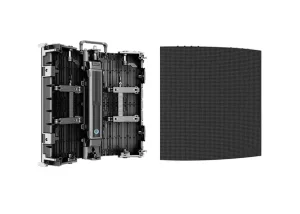
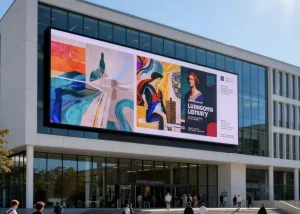
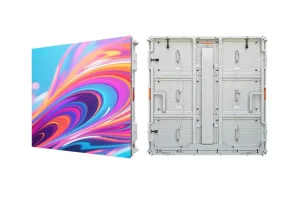
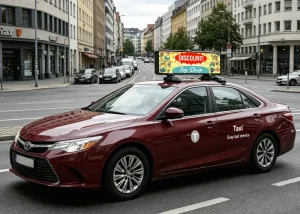
In the contemporary global digital display ecosystem, high-brightness LED technology has transitioned from a niche architectural luxury into a critical infrastructure requirement for Digital Out-of-Home (DOOH) advertising, smart city transportation hubs, broadcast virtual production, and high-impact commercial retail. As direct sunlight ambient illumination routinely exceeds 80,000 to 100,000 lux during peak daytime hours, legacy display systems suffer from severely compromised contrast ratios, washed-out color saturation, and catastrophic loss of visual legibility.
To overcome solar irradiance challenges, a professional OEM/ODM custom high brightness LED screen manufacturer must engineer system architectures capable of delivering sustained luminance output ranging from 4,500 nits ($cd/m^2$) for semi-outdoor window displays up to an astounding 10,000 to 12,000 nits for direct sunlit equatorial billboard networks. However, achieving high nit ratings is not merely a matter of driving higher current through LED die chips; it demands an integrated system engineering approach combining advanced semiconductor packaging, common-cathode power distribution, dynamic thermal management, and optical physics optimization.
From an enterprise procurement perspective, operational failure in high-brightness screens stems primarily from heat generation ($T_j$ junction temperature elevation), thermal degradation of epoxy encapsulants, and unoptimized power consumption leading to prohibitive operational expenditure (OpEx). As global energy regulations enforce tighter carbon neutrality mandates (such as the EU's ErP Directive and US Energy Star specifications), the industry standard has shifted decisively toward Common Cathode LED driver technology. By delivering independent voltage rails specifically tailored to Red (2.8V), Green (3.8V), and Blue (3.8V) die chips, common-cathode architectures eliminate excess voltage dissipation as heat, reducing cabinet operational temperatures by up to 15°C while trimming total power draw by 35% to 45% compared to traditional common-anode topologies.
Evaluating optical efficiency, structural durability, and thermal thresholds across leading LED packaging methodologies.
Surface Mount Device (SMD) encapsulation remains the dominant choice for outdoor DOOH billboards ranging from P3.91 to P10. Utilizing gold-wire or copper-wire bonding with high-contrast black frame masks, outdoor SMD LEDs achieve optical luminance above 8,500 nits with wide 160° horizontal viewing angles.
GOB technology applies a transparent, optical-grade epoxy shield across the SMT module surface. This provides IP68 dust/water protection, micro-impact resistance, anti-collision safeguards, and zero moisture penetration—making it ideal for high-traffic retail, portable displays, and taxi top signage.
COB mounts flip-chip LED dies directly onto the PCB substrate, eliminating wire bonds completely. Delivering ultra-high pixel density (P0.93 to P1.56), superb contrast ratios ($10,000:1$), and high thermal dissipation efficiency, COB is the benchmark for indoor command centers, home theaters, and fine-pitch video walls.
| Performance Parameter | Common Anode Outdoor SMD | Common Cathode Outdoor SMD | GOB Encapsulated Modular | Flip-Chip COB Fine Pitch |
|---|---|---|---|---|
| Peak Luminance Range | 5,000 – 6,500 Nits | 8,000 – 12,000 Nits | 4,000 – 7,500 Nits | 1,500 – 3,500 Nits |
| Average Power Consumption | ~350 W/m² | ~180 - 220 W/m² | ~240 W/m² | ~120 - 160 W/m² |
| Operating Temperature ($T_c$) | 65°C – 80°C | 40°C – 52°C | 45°C – 58°C | 38°C – 48°C |
| Ingress Protection Rating | IP65 Front / IP54 Rear | IP66 Front / IP65 Rear | IP68 Surface Seal | IP65 Surface Seal |
| Refresh Rate & Driver IC | 1920Hz (Standard) | 3840Hz – 7680Hz (PWM) | 3840Hz (PWM) | 7680Hz (High-Gray PWM) |
| Mean Time Between Failures (MTBF) | 50,000 Hours | 100,000 Hours | 100,000 Hours | 120,000 Hours |
Different global deployment environments present wildly varying operational constraints. As a custom high brightness LED screen supplier, JINGRUNS tailors cabinet alloy metallurgy, circuit topology, and optical mask geometry to match localized mechanical and environmental realities.
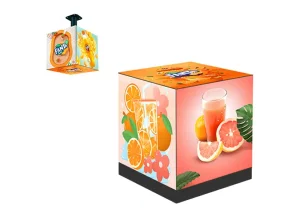
Outdoor digital billboards on high-speed arterial highways and coastal city squares demand unfailing solar visibility under raw direct sunlight (100,000+ lux). Utilizing CNC-machined die-cast aluminum cabinets, specialized anti-UV optical louvers, and 10,000-nit high-efficiency LED packages, our outdoor 3D displays deliver hyper-realistic anamorphic visual effects without ghosting or color shift under extreme thermal swings (-40°C to +60°C).
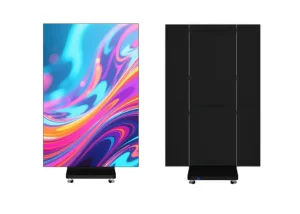
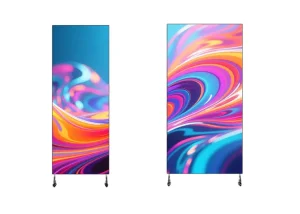
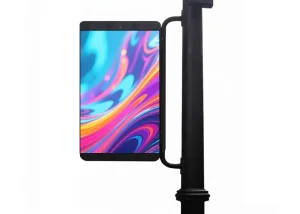
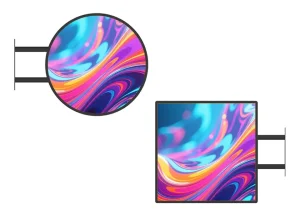
Modern smart cities integrate lightweight, double-sided high-brightness LED screens onto street light infrastructure. Connected directly via 5G IoT telemetry, these displays automatically adjust screen brightness in real-time according to ambient light sensors, presenting critical public transit guidance, air quality metrics, and localized commercial advertising while operating continuously 24/7/365.
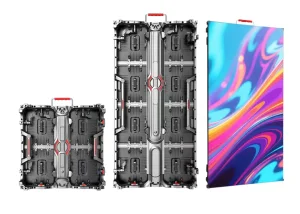
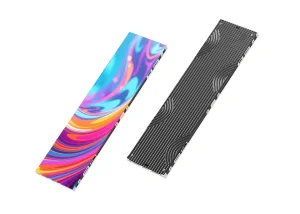
Concerts and major stadium tours require lightweight, high-strength aluminum structural frames with fast-locking mechanisms enabling 10-second panel installations. Equipped with 7680Hz ultra-high refresh rates, high-frame-rate (HFR) driver ICs, and dynamic angle curves (concave/convex ±15°), these screens perform flawlessly under broadcast television cameras without rolling scan lines, flicker, or Moiré interference patterns.
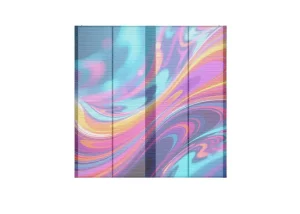
Flagship luxury retail stores and automotive showrooms face a unique challenge: communicating brand messages through glass storefront windows exposed to direct daylight. High-brightness transparent LED screens provide up to 75% structural optical transparency and 5,500 nits output—preserving interior ambient daylight while rendering high-contrast holographic visual content on the exterior facade.
SEO Information Gain Insight: Optical Distance Calculation Formula for Procurement Directors
To compute optimal pixel pitch ($P$) for target viewing distance ($D_{min}$): $D_{min} \text{ (meters)} \approx P \text{ (mm)} \times 1.0$. For broadcast quality or seamless image cohesion without visible pixel structure: $D_{optimum} \approx P \text{ (mm)} \times 2.5$. Selecting lower pitch than mathematically necessary inflates capital cost without providing perceived visual gain.
Deploying high-brightness outdoor video walls in North American, European, Middle Eastern, and Asia-Pacific markets requires strict adherence to international safety, electromagnetic compatibility (EMC), and environmental resilience standards. JINGRUNS operates an ISO9001:2015-certified manufacturing complex featuring automated SMT lines, high-precision optical calibration suites, and environmental stress testing chambers.
Full compliance with FCC Part 15 Class A/B and CE-EMC EN55032/EN55035 directives ensures zero high-frequency radio frequency interference with municipal telemetry, airport navigation systems, or commercial wireless networks.
Certified under UL 48 / UL 1433, ETL, and CB (IEC 62368-1), utilizing V-0 flame-retardant PCB substrate materials, halogen-free wiring harnesses, and redundant low-leakage power supplies to guarantee absolute operational safety.
Rigorous 72-hour salt-spray corrosion testing, thermal cycling shock tests (-40°C to +85°C), high-humidity resistance testing (95% RH), and hurricane-grade wind load resistance modeling for total structural peace of mind.
As a leading supplier, our commitment extends beyond factory shipment. We provide enterprise clients with end-to-end engineering support:
The high-brightness LED screen industry is experiencing a profound technological convergence driven by artificial intelligence, Micro-LED substrate scaling, and advanced optics. Looking ahead toward 2025-2030, several core engineering breakthroughs are redefining commercial expectations:
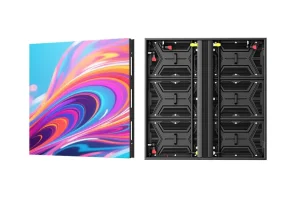
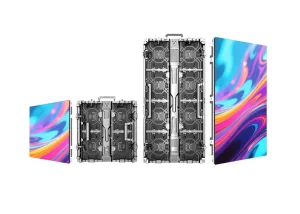
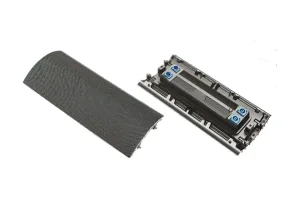
From smart 5G light poles to high-refresh rounded corners and transparent displays—explore tailored hardware solutions.
Detailed answers to critical engineering, installation, and procurement questions regarding high-brightness LED video walls.