Explore our flagship modular and custom high-frequency visual engines designed for ultra-low latency, zero camera scan lines, and high-contrast performance.
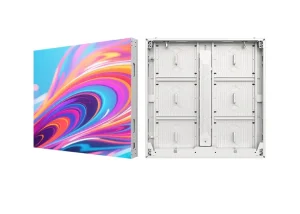
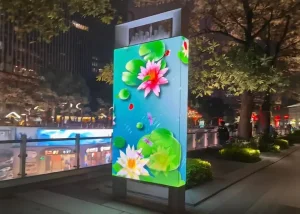
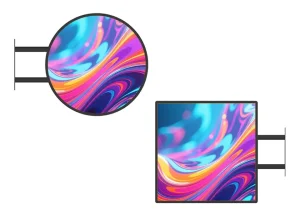
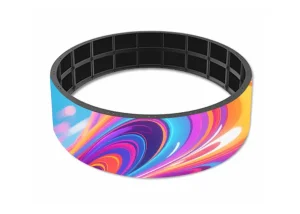

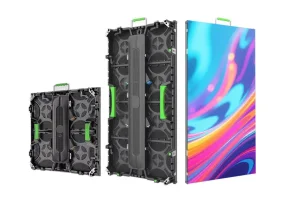
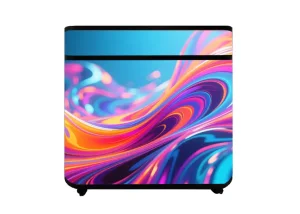
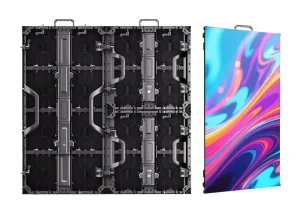
In contemporary digital broadcasting, esports arenas, and virtual production (XR) environments, the refresh rate of an LED panel is no longer just a secondary parameter—it is the core determinant of visual fidelity, camera compatibility, and audience engagement.
A standard display refreshes at 60Hz to 120Hz, which is acceptable for human eyes but causes massive distortion under high-speed video camera capture. Professional high refresh rate LED displays leverage advanced Pulse Width Modulation (PWM) dual-latch Driver ICs. Instead of turning LEDs on and off at low audio-frequency bands, our specialized driver architecture splits the refresh cycle into tens of thousands of sub-pulses per second.
This eliminate the dread "scan-line effect" (flicker band artifacts across shutter speeds reaching 1/8000s). For camera operators, live broadcast directors, and stage production crews, utilizing a 7680Hz high refresh rate LED screen guarantees seamless broadcast capture without black lines, color shifts, or frame dropping.
Historically, increasing the refresh rate forced a technical trade-off: display loss at low brightness levels (grayscale loss). When LED screens drop to 10%–20% brightness for indoor dark-room operations—such as command control centers or planetariums—cheap driver ICs lose detail in shadows, resulting in pixelation and severe banding.
As a premiere high refresh rate LED display supplier, our proprietary custom engineering integrates Grayscale Enhancement Technology (GET). By dynamically balancing current output via precision-matched resistors and high-bandwidth processing cards, our screens maintain true 16-bit to 22-bit equivalent grayscale depth even under ultra-low luminosity, ensuring deep blacks and subtle gradient transitions.
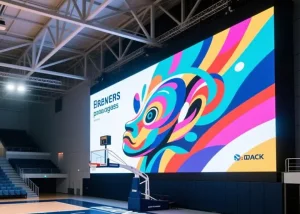
High-speed shutter cameras (up to 1/8000s) capture perfectly stable imagery. Essential for XR studios, live broadcasts, sports events, and virtual set backgrounds.
Sub-millisecond pixel response times completely eliminate dynamic trailing edge ghosting during fast-paced content playback, such as automotive commercials and esports gameplay.
Common-cathode driver topologies lower total system thermal dissipation by up to 35%, drastically extending diode lifespan while maintaining maximum peak brightness output.
From North America to Europe and the Asia-Pacific region, enterprise migration toward high-refresh visual infrastructure is accelerating across high-value sectors.
Film studios replace green screens with high refresh rate curve LED walls. Directors review final visual effects live in-camera, cutting post-production timelines by up to 50%. High refresh rate avoids Moiré patterns and frame desynchronization.
Touring live event companies demand rapid-lock aluminum die-cast cabinets paired with 7680Hz refresh capability. Mobile stages require high frame rates to sync seamlessly with ultra-HD broadcast vans and live-streaming platforms.
Mission-critical monitoring centers (utilities, military, security) run 24/7. Fine pixel pitch (P0.93 - P1.56) combined with flicker-free technology prevents operator eye strain and ensures instant data readability from any viewing angle.
| Technical Parameter | Standard Commercial LED | Professional Broadcast (3840Hz) | Enterprise/XR Grade (7680Hz) |
|---|---|---|---|
| Refresh Rate Index | 1,920 Hz | 3,840 Hz | 7,680 Hz |
| Driver Chip Class | Basic Latch IC | PWM High-Gain IC | Dual-Latch Ultra-PWM IC |
| Camera Shutter Sync | Visible Scan Lines (<1/250s) | Clear Capture (<1/2000s) | Flawless Capture (<1/8000s) |
| Grayscale at Low Brightness | 8-Bit to 10-Bit (Lossy) | 14-Bit Stable | 16-Bit to 22-Bit Precision |
| Thermal Dissipation | Standard Anode Heat Generation | Optimized Aluminum Backplane | Common-Cathode Cool Driver |
| Primary Application | Basic Outdoor Billboards | Retail, Malls, Worship Halls | XR Studios, Stadiums, NOCs |
Deploying high-end display hardware requires rigorous regulatory compliance and a robust global engineering support network to eliminate downtime risk.
All custom LED display systems are fully certified with CE, FCC, RoHS, ETL, and EMC Class B standards. Modules undergo stringent electromagnetic interference testing to ensure zero disruption to adjacent broadcast equipment.
We provide 1-on-1 engineer dispatcher services, structural design reviews, front-access maintenance training, and rapid spare-part fulfillment centers strategically positioned across North America, Europe, and the Middle East.
Backed by in-house SMT production lines, our structural quality control includes 72-hour aging tests, vibration simulations, and IP65 waterproof immersion tests. We provide free component replacement and lifetime technical maintenance support.
As a leading Custom High Refresh Rate LED Display Supplier, quality control begins at the semiconductor wafer selection stage. Diode encapsulation utilizes gold wire bonding to prevent oxidation, while automated High-Precision SMT lines guarantee zero pin misalignments.
Every module undergoes dual-coat conformal coating (anti-salt spray, anti-static, anti-moisture) before assembly. This comprehensive process allows our outdoor high-refresh displays to withstand severe weather environments—from humidity-heavy coastal regions to freezing arctic operating conditions (-40°C to +60°C).
Where LED display technology is headed over the next decade—advancing beyond basic SMD encapsulation toward micro-scale integration and artificial intelligence frame interpolation.
COB technology directly mounts flip-chip LED micro-dies onto the PCB substrate, eliminating wire bonds. The result is superior impact resistance, dust-proof surfaces, enhanced contrast ratios, and pitch capability below P0.78.
Integrating real-time AI image engines into sending cards dynamically analyzes incoming frame content. High-speed neural networks upscale SDR video signals to dynamic HDR10+, optimizing color gamuts frame-by-frame.
As display bandwidth expands to 100Gbps optic trunks, next-gen control architectures will support scan frequencies beyond 15,360Hz, supporting zero-latency virtual reality environments and spatial computing displays.
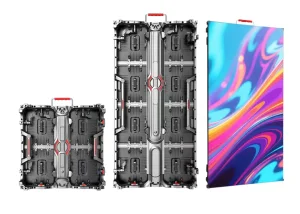
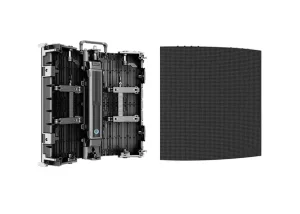
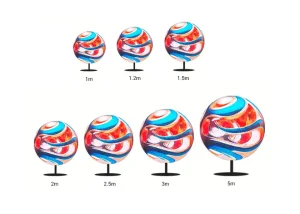
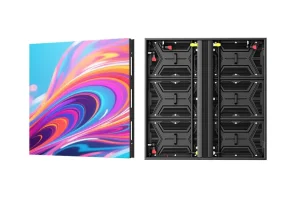
Browse our specialized rental, curved, spherical, and ultra-thin fine pitch display solutions engineered for complex architectural integration.
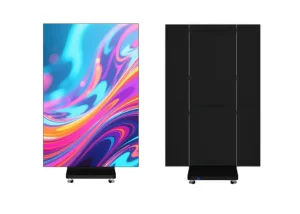

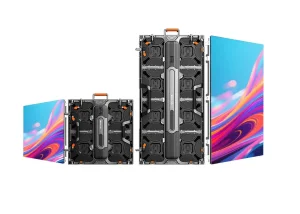
Expert answers regarding refresh rate selection, driver hardware, pixel pitch matching, and project procurement guidance.