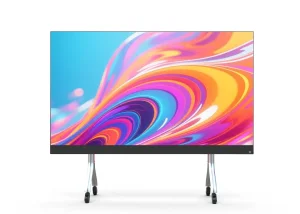
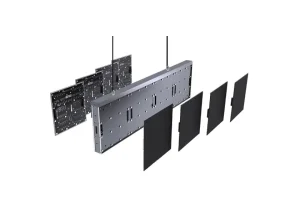
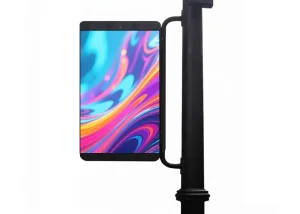
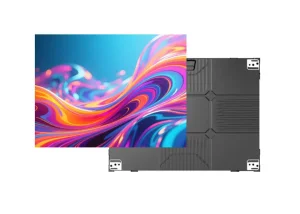
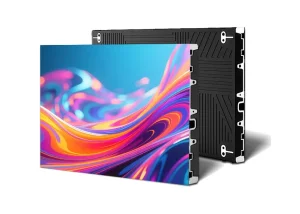
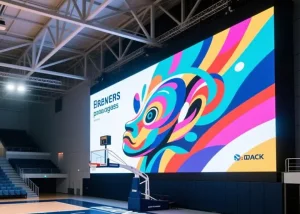
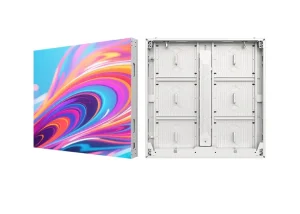
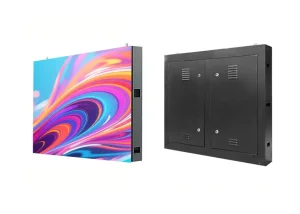
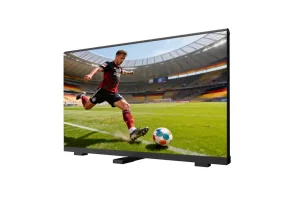
High-durability indoor, outdoor, and rental LED displays engineered for high MTBF, modular front/rear access, and low MTTR maintenance operations.
Shift from reactive module replacement to predictive telemetry, hot-swappable architectures, and factory-level SMT component recalibration.
As global enterprise buyers transition to Ultra-HD Micro LED and COB (Chip-on-Board) video walls, traditional site repair is impossible. Component-level repair requires specialized factory encapsulation equipment and optical chamber calibration.
Procurement officers no longer prioritize upfront visual hardware cost alone. Up to 65% of lifetime expenditures stem from post-warranty thermal degradation, driver IC burnout, ambient ingress, and high Mean Time to Repair (MTTR).
Factories exporting directly to overseas distributors must maintain strict batch-consistent diode binnings (wavelength within ±1nm) and matching IC drive profiles to guarantee seamless long-term maintenance replacement.
The worldwide market for commercial LED displays is undergoing an unprecedented shift toward operational longevity. In high-stakes environments—such as airport flight information display systems (FIDS), nuclear power plant control rooms, broadcast virtual studios, and DOOH (Digital Out-of-Home) high-brightness billboards—a single pixel cluster failure or driver board shutdown leads to immediate operational disruption and brand damage. Custom LED display maintenance factories and technical exporters serve as the vital operational backbone ensuring continuous visual reliability.
Historically, commercial maintenance was handled reactively: a LED module failed, an on-site technician unbolted the chassis, and a spare module from a heterogeneous manufacturing batch was inserted. This resulted in the infamous "checkerboard effect," where mismatching LED brightness (measured in nits) and color coordinates (x, y chromaticity) created visible patchworks across the display matrix. Today, tier-one LED display maintenance exporters integrate advance-calibration metadata directly into receiver card EEPROMs, enabling true plug-and-play module swapping with instant pixel-level chromatic correction.
Key criteria evaluated by system integrators, government contractors, and enterprise procurement executives when auditing LED display factories.
Procuring LED display hardware across international borders requires a comprehensive evaluation of factory engineering capabilities, component origin transparency, and spare parts lifecycle guarantees. Technical buyers must audit exporters based on four critical structural pillars:
Comparing mechanical access methodologies, thermal dissipation designs, and component-level repair capabilities.
| Maintenance Dimension | Front-Access Vacuum / Magnetic | Rear Cabinet Mechanical Service | COB Flip-Chip Integrated Repair |
|---|---|---|---|
| Primary Application | Recessed Wall Mounts, Boardrooms, Retail | Outdoor Billboards, Stadium Perimeter | Control Centers, 4K/8K Command Hubs |
| Mean Time to Repair (MTTR) | Ultra-Fast (< 3 Minutes) | Moderate (15 – 30 Minutes) | Factory Rework Required for Diodes |
| Physical Space Required | Zero Rear Clearance Needed | Requires 60cm–100cm Rear Catwalk | Zero Rear Clearance (Front Vacuum) |
| Environmental Protection | Indoor IP30 – IP40 Typical | Outdoor IP65 / IP67 Sealed Cabinet | IP65 Front Surface (Impact & Water Resistant) |
| Skill Level Required | Basic On-Site Field Technician | Industrial Electrician / Certified Tech | Factory Cleanroom Micro-Soldering Tech |
Over 70% of non-diode LED display failures originate in the switch-mode power supply (SMPS) or excessive heat concentration inside the cabinet chassis. High-end display factories mitigate maintenance overhead by embedding high-efficiency Aluminum PCB substrates and copper heat-sink bridges directly behind the driver ICs (such as ICN2053, MBI5153, or PWM drive ICs).
Furthermore, dynamic cathode power distribution technologies reduce overall thermal dissipation by delivering individual voltage rails for Red (2.8V) and Green/Blue (3.8V) diodes. By eliminating energy wasted as heat, internal cabinet temperatures drop by 10°C to 15°C, effectively doubling the lifespan of electrolytic capacitors and reducing annual maintenance call-outs by over 40%.
Standard operating procedures for diode replacement, mask restoration, and optical calibration.
SMD maintenance allows field or local factory technicians to replace individual RGB LED packages (e.g., SMD1010, SMD1515, SMD2020) using hot-air rework stations set to precise temperature profiles (260°C peak). The technician replaces the damaged diode, re-applies conformal coating, and re-attaches the anti-glare louver mask.
COB displays eliminate traditional wire bonding and plastic packaging by flip-chip mounting bare LED dies directly onto the PCB, covered by a monolithic epoxy resin layer. COB diode failure rates are extremely low (<10 PPM), but when damage occurs, the entire module must undergo laser-ablation resin removal and micro-die replacement in a cleanroom environment.
Whenever an LED module is repaired or replaced during field maintenance, its luminance (cd/m²) and chromaticity coordinates must be aligned with surrounding modules. Custom maintenance exporters provide computerized calibration cameras and dedicated software tools (e.g., NovaLCT, Colorlight LEDVision) that execute full-screen radiometric calibration:
Navigating international compliance standards, electromagnetic compatibility, and emergency response frameworks.
UL62368-1, CE-LVD, and ETL certifications ensure power supplies and PCBs utilize V-0 flame-retardant materials, preventing electrical fires during component degradation.
FCC Part 15 and CE-EMC compliance guarantee that high-frequency refresh rates (3840Hz to 7680Hz) do not cause electromagnetic interference with aviation, telecommunications, or medical frequencies.
Global exporters partner with regional AV service centers to offer 24/7 technical helpdesk support, 48-hour advanced hardware replacement (RMA), and on-site engineering dispatch.
Compliance is not merely a formality for export clearance; it dictates long-term maintenance overhead. Displays lacking robust Electromagnetic Compatibility (EMC) shielding frequently experience data corruption on long cables, leading to image flickering and unexplained receiver card resets. By insisting on factory-certified shielding and differential signal transmission (LVDS/RJ45 Gigabit Ethernet), system integrators protect their installations against costly troubleshooting cycles.
How predictive diagnostics, MIP (Micro-in-Package) technology, and robotic maintenance are reshaping display longevity.
Next-generation receiver cards track real-time voltage drops, module temperature gradients, fan RPMs, and individual diode resistance. Cloud-based AI algorithms analyze operating metrics to predict power supply degradation 30 days before total operational failure.
MIP bridges the gap between COB and traditional SMD by packaging microscopic LED chips into standardized testable carriers. This allows micro-pitch displays (P0.6 – P0.9) to be repaired at local service stations using standard SMT equipment, drastically reducing return-to-factory lead times.
Emerging glass-based Micro LED architectures incorporate transparent thin-film transistor (TFT) backplanes with automated red-line bypass circuits. If a drive line fractures, current automatically re-routes around the break, self-healing the signal path without manual technician intervention.
Expert answers to critical procurement, warranty, and engineering inquiries regarding custom LED maintenance.
High-performance OEM LED display solutions designed for global deployment, longevity, and low operational maintenance overhead.