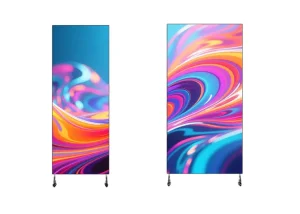
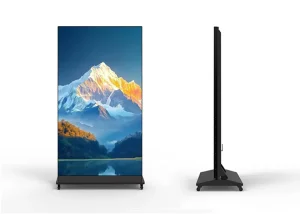
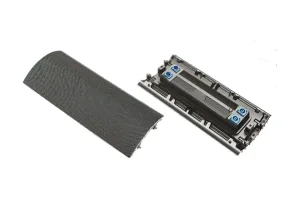
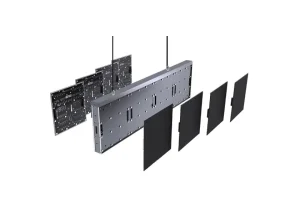
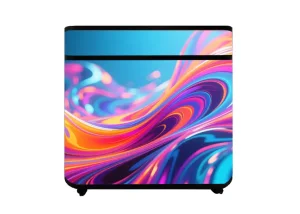
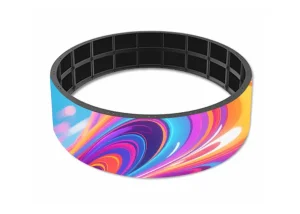
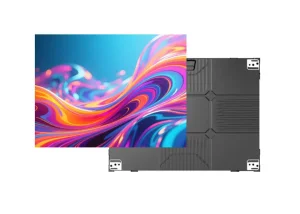
Engineered for high brightness, structural versatility, and high refresh rates under broadcast conditions.
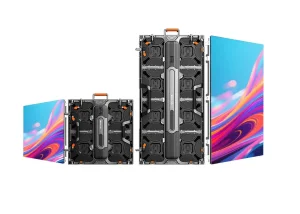
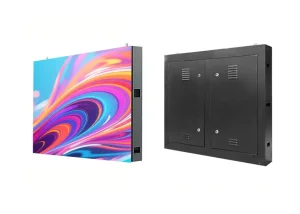
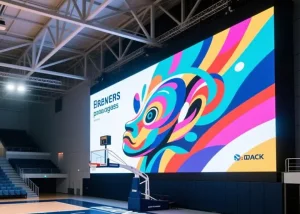
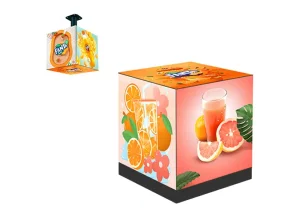
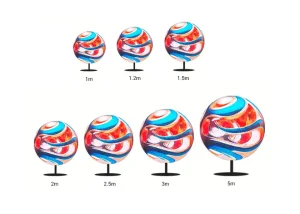
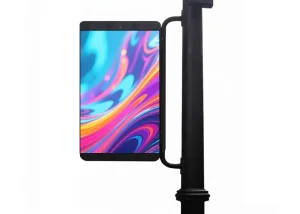
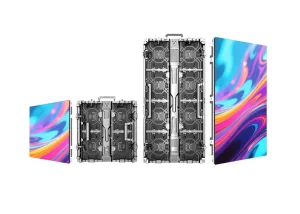
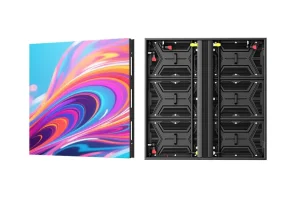
In the rapidly evolving ecosystem of commercial digital signage, spatial architecture, and experiential entertainment, project developers, systems integrators, and AV procurement executives face a pivotal technology choice: Custom Direct-View LED Displays versus Spatial Projection Mapping. Both display methodologies offer compelling visual formats, yet their optical physics, structural engineering, total cost of ownership (TCO), and operational viability diverge substantially across different ambient environments.
As a leading China-based custom LED display manufacturer and global exporter with deep expertise in SMT assembly, fine-pitch COB encapsulation, and bespoke structural framing, our engineering team presents this comprehensive technical evaluation. This document breaks down the photometric realities, installation challenges, compliance standards, and long-term economic profiles of both display technologies to empower data-driven B2B procurement decisions.
Understanding the fundamental physical differences between direct self-emissive light sources (LED pixels) and indirect light reflection (Projection mapped onto a substrate) is essential for selecting the correct display medium.
| Evaluation Parameter | Custom LED Display Systems | Projection Mapping Systems |
|---|---|---|
| Optical Brightness | Direct emission: 800 to 10,000+ nits (cd/m²). Unaffected by direct sunlight. | Reflected light: Measured in ANSI Lumens. High attenuation; requires low ambient light environments. |
| Ambient Contrast Ratio (ACR) | Ultra-high (10,000:1+). Black face SMDs/COB substrates absorb ambient spill light. | Poor in high ambient light. Black levels are limited by the reflective color of the projection surface. |
| Surface & Spatial Flexibility | Requires structural mounting frames. Can be custom-curved, spherical, or corner-angled. | Projects onto complex 3D non-planar objects, historical facades, and uneven surfaces without physical screens. |
| Calibration & Alignment | Factory module calibration; zero pixel-drift once installed. Plug-and-play maintenance. | Requires periodic software warp/blend re-alignment due to thermal shifting and projector vibration. |
| Operational Lifespan | 80,000 to 100,000 hours to 50% initial brightness (L70 standard). | 20,000 to 30,000 hours for laser light engines; lamp-based systems require bulb changes every 3,000 hours. |
| Power Efficiency & Heat | High energy conversion efficiency. Common cathode technology reduces power draw by up to 40%. | High heat concentration at projector lens head; intensive HVAC/cooling requirements for projector enclosures. |
| Daytime Visibility | Full high-contrast clarity 24/7 in indoor bright spaces and direct outdoor sunshine. | Near-zero contrast during daylight. Operational window strictly limited to dusk and night hours. |
| Spatial Footprint & Throw | Ultra-thin cabinet depth (from 25mm to 80mm). Zero throw distance required. | Requires clear line-of-sight and substantial throw distance; vulnerable to shadow cast by passing crowds. |
Custom LED screens act as self-emissive semiconductor arrays. Each pixel generates RGB light independently. This allows indoor video walls to effortlessly achieve 800-1500 nits, while outdoor billboards hit 5,500-10,000 nits. Projection mapping, by contrast, relies on light throwing onto a surface. The light degrades exponentially according to the inverse-square law ($E = I / d^2$) and suffers from ambient scattering.
Projection mapping excels when project guidelines mandate zero physical modification to historical structures or complex architectural landmarks. Laser projectors cast pixels precisely over stone relief work or statue contours. However, for dedicated visual venues, customized LED screens—incorporating flexible PCB substrates and aluminum cabinets—deliver seamless, high-density, touchable display surfaces without line-of-sight blockage or audience shadow occlusion.
While multi-projector mapping rigs may present lower initial hardware costs for ultra-large non-flat areas, their 5-year TCO escalates rapidly due to laser phosphor degradation, lens replacement, climate-controlled protective enclosures, and constant software re-calibration. Modern LED displays feature modular front-access serviceability, low power consumption (common-cathode ICs), and 100,000-hour lifespans, delivering a much lower operational cost over time.
As a tier-one Shenzhen-based LED display manufacturer and global exporter, our facility leverages China's complete industrial supply ecosystem to provide unprecedented customization speed, rigorous quality control, and direct-factory pricing economics.
Equipped with high-speed Yamaha and Fuji Surface Mount Technology (SMT) lines, achieving microscopic placement precision for sub-millimeter fine-pitch COB and GOB LED modules (P0.9, P1.25, P1.56).
Every LED module undergoes 48 hours of module-level aging followed by 72 hours of full video wall assembly burn-in testing, ensuring zero cold-solder defects or early diode failures before export shipment.
Direct CNC die-cast aluminum manufacturing allows fully tailored cabinet dimensions, 90-degree right-angle beveling, curved locks, and custom logo silkscreening for global distributors and rental fleet operators.
Streamlined export packaging including custom flight cases and sea/air freight-ready wooden crates, backed by complete customs declaration clearance, DDP/FOB terms, and insurance coverage.
When drafting Request for Proposals (RFPs) for large-scale visual infrastructure projects, enterprise procurement managers must evaluate several critical technical variables to avoid costly field retrofits.
Deploying digital displays across North America, the European Union, the Middle East, and Asia-Pacific requires strict adherence to international electrical safety, electromagnetic compatibility, and structural safety codes.
Our entire manufacturing catalog holds direct export certifications including CE-EMC, CE-LVD, FCC Class A & B, UL 62368-1, RoHS, and CB standards. This guarantees frictionless customs clearance and full compliance with municipal building codes worldwide.
For outdoor billboard and roof-mounted custom LED installations, our engineering office provides detailed CAD structural drawings and FEA wind-load calculation sheets (withstanding up to Class 16 typhoons) to support local engineer-of-record stamp approvals.
We provide 24/7 multi-language remote engineering assistance, dedicated field engineer dispatch for major commissionings, and established local spare-part hubs with partner AV integrators across Europe, North America, and the GCC region.
Determining whether a project requires custom LED screen panels or high-lumen projection mapping depends entirely on physical venue geometry, ambient lux conditions, content interaction, and operational schedules.
Best Choice: Custom Outdoor IP65 LED Display
Commercial plazas and high-rise exteriors require 24/7 continuous advertising visibility under direct sunlight. Outdoor LED displays (such as 3D naked-eye corner screens) offer 7,500+ nits brightness and IP65 weatherproofing, driving high ad revenue that projection systems cannot achieve during daylight hours.
Best Choice: Spatial Projection Mapping
When physical mounting, drilling, or screen attachment is legally prohibited on heritage architecture or dynamic artistic sculptures, projection mapping offers a non-invasive optical overlay that transforms building surfaces without structural modification.
Best Choice: Fine Pitch High-Refresh LED Walls
Film studios and broadcast newsrooms require high frame rate in-camera visual effects (ICVFX). P1.56 to P1.8 COB LED walls equipped with 7680Hz refresh rates and camera-tracking sync deliver true depth-of-field graphics without moiré patterns or projection shadow interference.
The convergence of advanced semiconductor packaging and computational optics is reshaping the digital display industry. Enterprise buyers must align their investments with upcoming technical trajectories.
Chip-on-Board (COB) technology replaces traditional SMD wire bonding by encapsulating flip-chips directly onto the PCB. This yields exceptional impact resistance, dust/moisture proofing (IP65 front side), high pixel density (sub-P0.7mm), and extended energy efficiency.
Ultra-thin, highly transparent flexible LED film screens (up to 85% transparency) can be applied directly to store-front glass windows and atrium railings without obstructing natural lighting, merging retail architecture with dynamic video content.
Leading immersive experience designers are increasingly blending high-contrast backdrop custom LED video walls with foreground spatial projection mapping. This hybrid approach delivers deep black levels alongside immersive ambient environmental coverage.
Clear engineering answers to technical queries raised by AV integrators, project architects, and procurement officers.
Explore specialized display series engineered for seamless installation, high transparency, and high refresh rates.