Explore our high-performance display systems designed for architectural glass, commercial retail, indoor fine-pitch control rooms, and outdoor rental environments.
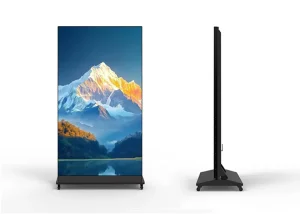
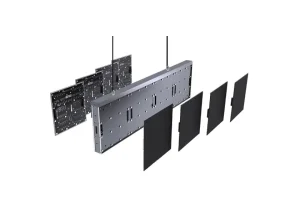
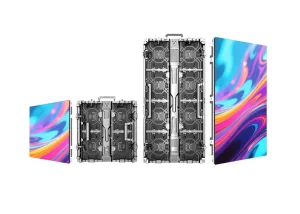
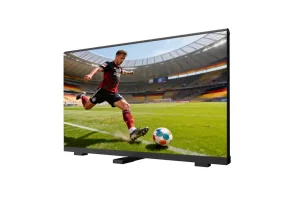
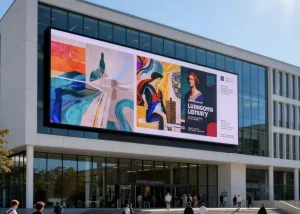
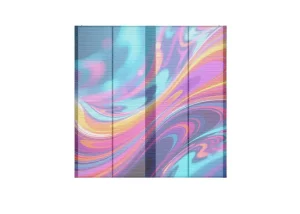
Engineered to meet the stringent demands of global B2B procurement, smart city architectural facades, and luxury retail installations.
An in-depth analysis of transparent media integration across architectural infrastructure, enterprise real estate, and high-end retail sectors.
The global commercial display market is undergoing a seismic architectural transformation. Traditional opaque LED video walls—while capable of high contrast—introduce severe structural penalties: they block natural daylight, obscure exterior architectural aesthetics, impose massive dead weight on curtain wall frameworks, and consume prohibitive amounts of HVAC cooling energy. In response, modern commercial real estate developers, airport authorities, flagship retail brands, and urban planning committees are rapidly standardizing on Transparent LED Glass Displays and architectural media facades.
According to current market intelligence, the transparent display ecosystem is expanding at a CAGR exceeding 28.4%, driven primarily by the global demand for dynamic digital glass facades that balance high-definition digital signage with architectural preservation. By replacing passive glass with active visual displays, commercial properties convert standard building envelopes into high-yielding digital media assets without compromising interior spatial lighting.
Seamless mounting onto existing structural glass mullions. Light-bar PCBs engineered with minimal profile ensure daylight penetration remains above 80%, satisfying municipal urban light-flow regulations.
Deploying specialized high-candela SMD LEDs (up to 7,500 nits) allows clear readability even under direct, high-angle solar irradiance on south-facing glass facades.
Lightweight aluminum alloy die-cast frames weigh under 7.5 kg/m², reducing structural engineering load requirements and enabling rapid front/rear maintenance access.
Understanding the balance between pixel pitch, optical transparency, drive IC architecture, and thermal dissipation.
A premier Custom LED Glass Display Supplier must balance optical transparency with spatial resolution. The physics of transparent displays relies on horizontal or vertical strip-module engineering. By mounting ultra-miniature Surface Mount Devices (SMDs) or Chip-on-Board (COB) LEDs onto micro-thin PCB strips, the open area between PCB lines allows natural light to pass unimpeded.
The inverse mathematical relationship between resolution and transparency dictates product selection for architectural installations. A finer pitch (e.g., P2.8 or P3.9) provides high-definition clarity for close viewing (within 3 to 5 meters), yielding approximately 55%–65% transparency. Conversely, structural facade pitches (such as P7.8, P10.4, or P15.6) deliver up to 85% transparency, enabling glass walls to remain virtually invisible from an interior distance of two meters.
Modern displays utilize high-refresh dynamic drive ICs with common-cathode power distribution. Unlike traditional common-anode topologies that feed equal voltage to Red, Green, and Blue LED chips (resulting in excess heat dissipated through R-channel resistors), common-cathode systems deliver tailored voltage levels to each individual diode. This cuts operational power consumption by up to 35-45%, drastically reducing heat output behind architectural glass and mitigating thermal stress on structural silicon seals.
| Pixel Pitch Spec | Transparency (%) | Optimal Viewing Distance | Brightness Range (Nits) | Primary Application Scenario |
|---|---|---|---|---|
| P2.8 / P3.91 | 55% - 65% | 2m - 8m | 1,200 - 2,500 Nits | Luxury Retail Windows, Indoor Atriums, Museums |
| P3.91 / P7.81 | 70% - 78% | 4m - 15m | 3,500 - 5,500 Nits | Auto Showrooms, Corporate Glass Walls, Commercial Malls |
| P7.81 / P7.81 | 80% - 85% | 8m - 30m | 5,000 - 7,500 Nits | High-Rise Building Facades, Airport Media Walls |
| P10.4 / P10.4 | > 85% | 10m - 50m+ | 6,000 - 8,500 Nits | Large-Scale Urban Media Glass Facades |
Capitalizing on the world's most concentrated display ecosystem in Shenzhen and Guangdong Province.
Fully automated High-Speed SMT (Surface Mount Technology) assembly lines ensure sub-micron component placement accuracy, zero-defect LED soldering, and high batch-to-batch uniformity across multi-thousand square meter projects.
Direct integration with component suppliers (Nationstar, Kinglight, NovaStar, Colorlight) eliminates intermediary markups, allowing global B2B buyers to acquire premium display infrastructure at factory-direct pricing.
With localized R&D engineering teams, custom cabinet dimensions, curved glass adaptations, and specialized IP65 outdoor waterproofing treatments can be prototyped within 7 to 10 days.
How leading global enterprises deploy transparent glass display technology to create high-impact visual experiences.
Flagship fashion storefronts utilize high-resolution P2.8 transparent glass screens to display dynamic video campaigns over physical mannequin arrangements, driving foot-traffic conversions without blocking store interior views.
Car dealerships suspend light-bar glass displays behind floor-to-ceiling glass facades. Vehicles inside remain fully visible while dynamic spec overlays and high-octane marketing media capture highway traffic attention.
Integrated into concourse glass railings and passenger waiting lounges, transparent displays deliver real-time flight information and contextual advertising while keeping architectural concourses open and airy.
Key technological shifts redefining the future of structural glass and LED visual integration over the next decade.
As digital architecture merges with sustainable building design, display suppliers are pioneering advancements that move beyond standard strip-PCB assemblies. Buyers should evaluate suppliers based on their technical roadmap alignment:
Utilizing ultra-thin flexible substrate materials with sub-millimeter micro-LED chips, transparent film displays can be applied directly onto pre-existing glass windows like a window tint film. Offering up to 90% transparency, these flexible displays eliminate structural mounting hardware entirely.
By laminating LED circuits directly between double-glazed tempered structural glass layers (IGU - Insulated Glass Units), manufacturers produce structural building glass that functions as a full-color video wall while serving as load-bearing architectural curtain walls with full thermal insulation (Low-E ratings).
Advanced controllers now leverage spatial perspective rendering to deliver 3D visual depth without specialized glasses. When combined with curved glass corners, transparent displays create stunning floating volumetric illusions for urban audiences.
Next-gen display networks incorporate environmental light sensors, automated thermal throttling, cloud-based diagnostic telematics, and 5G connectivity, permitting zero-latency remote management across thousands of distributed display nodes globally.
Essential technical parameters procurement teams must specify when evaluating OEM LED display suppliers.
When drafting Request for Proposals (RFPs) for enterprise-scale glass displays, specifying pixel pitch and resolution alone is insufficient. Procurement managers should enforce the following engineering criteria to avoid project failure, premature diode degradation, or compliance rejections:
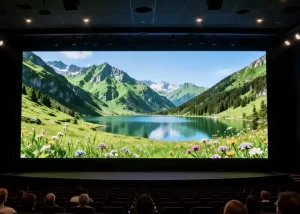
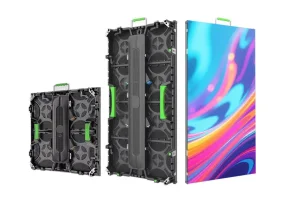
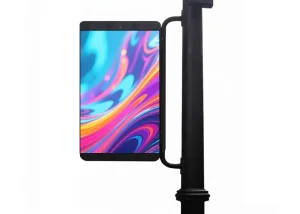
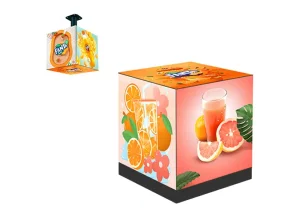
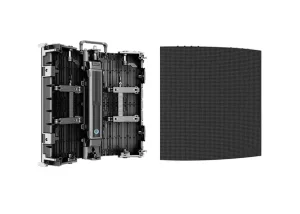
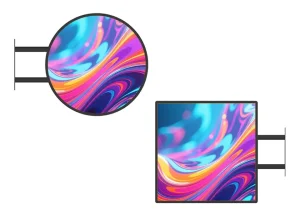
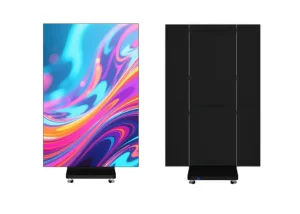
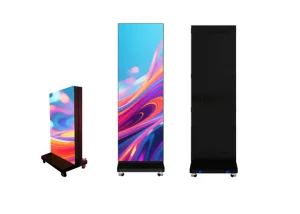
Explore our broader line of indoor COB video walls, outdoor P3.91 event panels, 5G smart pole displays, and creative geometric shapes.
Expert engineering answers to critical operational, structural, and procurement inquiries.