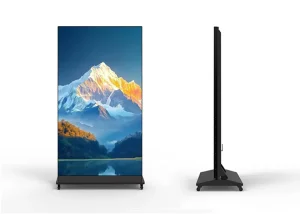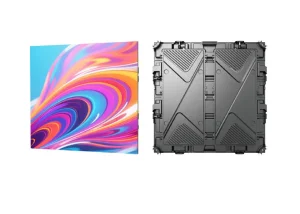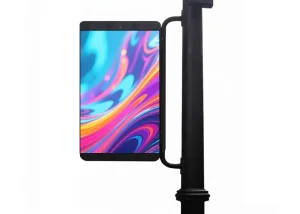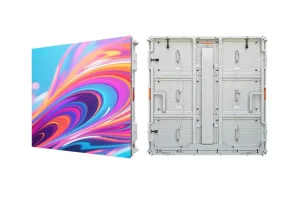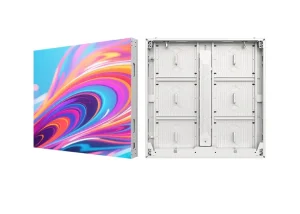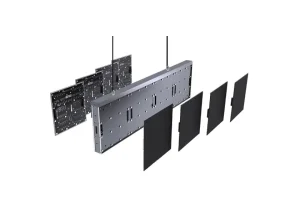
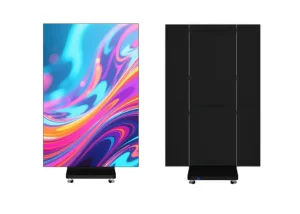
Featured commercial and industrial LED screens engineered for extreme reliability, high refresh rates, and superior color fidelity.
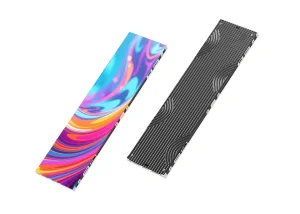
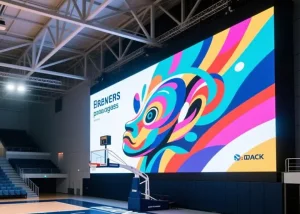
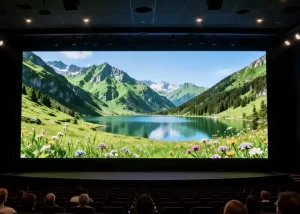
Analysis of architectural integration, high-density pixel packaging, and total cost of ownership (TCO) shifts in international B2B procurement.
The global direct-view LED display landscape is undergoing a structural transition. Legacy Liquid Crystal Display (LCD) video walls—historically hampered by visible bezels, backlight degradation, and color uniformity drift—are rapidly being phased out across high-impact enterprise, control room, and digital out-of-home (DOOH) environments. Modern engineering requirements demand seamless multi-megapixel surfaces capable of delivering uninterrupted high-dynamic-range (HDR) imagery, zero panel-to-panel color variance, and operational lifespans exceeding 100,000 hours.
As premier custom LED screen installation manufacturers and exporters, leading facilities in Shenzhen's tech corridor have redefined how custom display hardware is engineered, verified, and exported worldwide. Sourcing decisions now hinge on comprehensive Total Cost of Ownership (TCO) evaluation rather than initial capital expenditure alone. Factors such as power dissipation per nit, thermal cycling management, component-level repairability, and physical cabinet structural tolerances directly impact the long-term ROI of commercial display assets.
Core Architectural Shift: Micro-pitch LED packaging (COB & MIP) coupled with common-cathode power distribution has reduced power consumption by up to 45% while driving operational pixel pitches below 0.9mm. This enables true 4K and 8K native visual walls within compact boardroom and command center footprints.
Overseas procurement directors and system integrators face complex engineering trade-offs when selecting display hardware. Brightness limits, pixel pitch selection relative to viewing distance, IP rating requirements, and controller redundancy must be carefully balanced. Below is an engineering overview comparing target applications with optimal LED installation architectures:
| Installation Class | Target Pixel Pitch (mm) | Brightness (Nits) | Packaging Technology | Key Architectural Metric |
|---|---|---|---|---|
| Mission-Critical NOC / SOC | P0.93 - P1.25 | 600 - 1,000 | COB / Flip-Chip SMD | N+1 Hot-swappable Controller & Power Redundancy |
| Enterprise Boardrooms & XR | P1.56 - P1.90 | 800 - 1,200 | SMD 1010 / COB | 7680Hz Refresh Rate, DCI-P3 Color Gamut Coverage |
| Outdoor DOOH Facades | P2.50 - P5.95 | 5,500 - 10,000 | SMD 2727 / Gold Wire | IP65 Front/Rear Waterproofing, Aluminum Cabinets |
| Architectural Transparent | P3.91 - P7.81 | 4,000 - 6,500 | Side-Emitting SMD | >70% Transparency, Minimal Wind Load Resistance |
Tailored structural, mechanical, and electrical configurations engineered for specialized global environments.
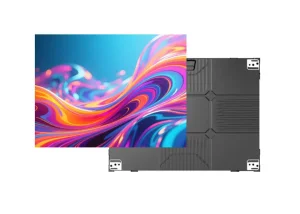
Ultra-fine pitch COB displays designed for 24/7 continuous operations with zero visual fatigue. Featuring front-access magnetic servicing, low radiation heat, and silent passive cooling.
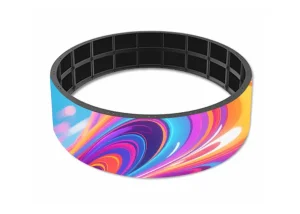
Creative geometric, curved, and tri-fold poster displays integrated directly into modern architectural facades to transform commercial spaces into high-converting visual destinations.
Integrated micro-displays designed for outdoor municipal light poles, transit stops, and highway billboarding. Engineered to endure extreme thermal variations and high humidity.
Heavy-duty rental and fixed video walls built for high camera frame capture. Delivering anti-moire surface treatments, high refresh rates, and precise genlock synchronization.
High-brightness structural billboards constructed with die-cast aluminum cabinets, specialized anti-corrosion coatings, and hurricane-rated mounting bracketry.
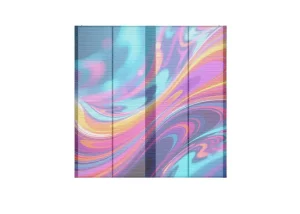
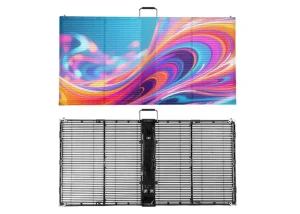
Lightweight transparent mesh screens that allow natural daylight to penetrate retail interiors while delivering high-impact video imagery to exterior foot traffic.
Why Shenzhen’s fully integrated manufacturing ecosystem delivers superior price-to-performance and rapid lead-time execution.
The global competitive edge of Chinese LED screen manufacturers stems from the dense industrial convergence situated in Shenzhen’s Bao'an and Guangming districts. Unlike regional assemblers who outsource critical components, top-tier exporters operate complete, end-to-end SMT (Surface Mount Technology) facilities with fully automated optical inspection (AOI) lines, in-house PCB masking, silicone potting, and climate-controlled aging bays under a single operational quality management system.
Vertical integration allows engineering teams to optimize the Bill of Materials (BOM) without sacrificing component quality. By sourcing LED lamps directly from premier foundries (such as Nationstar, Kinglight, and Epistar) and pairing them with high-grade driver ICs (Macroblock, Chipone, ICN), factory direct manufacturing eliminates intermediate distributor markups and guarantees traceably consistent batch sorting (binning).
Automated Yamaha and Panasonic SMT lines place microscopic SMD chips with micron-level precision, maintaining yield rates exceeding 99.98% across fine-pitch production runs.
Every module undergoes rigorous environmental stress testing, including thermal cycling from -20°C to +60°C and 72 hours of uninterrupted full-white visual burn-in prior to final cabinet assembly.
Integrated mechanical CAD standardizations enable rapid prototype generation for complex curved, right-angle, or custom-shaped cabinets within 7 to 10 working days.
Emerging innovations reshaping the direct-view LED display landscape over the next decade.
As market demand shifts toward higher pixel densities and higher operational efficiency, LED engineering is undergoing pivotal technological breakthroughs. Understanding these core trajectories enables procurement teams to future-proof their visual infrastructure investments.
Traditional Surface Mount Devices (SMD) solder packaged lamps onto PCB substrates. While effective for standard pitches, fine-pitch applications (sub-P1.2) reach physical durability and heat dissipation limits with SMD. COB technology directly encapsulates raw flip-chip LED dies onto the carrier board using epoxy resin. This eliminates wire bonding, increases impact resistance by 5x (anti-collision), delivers IP65 front protection at module level, and vastly improves thermal transfer efficiency.
Conventional Common Anode power architecture supplies a uniform voltage (typically 5V) to Red, Green, and Blue LED chips simultaneously, resulting in excessive energy wasted as ambient heat from the Red chips (which require lower operating voltage). Common Cathode driver topology supplies dedicated independent voltage rails (e.g., 2.8V for Red, 3.8V for Green/Blue). This targeted distribution reduces total operating temperatures by up to 15°C and cuts power consumption by up to 45%.
Future-ready display controllers are integrating embedded AI edge modules that continuously monitor voltage drops, thermal gradients, and individual diode decay curves. AI algorithms dynamically adjust grayscale coefficients in real time, preserving color uniformity across multi-year operational cycles and enabling predictive maintenance alerts before component failures occur.
Rigorous regulatory verification assuring seamless cross-border customs clearance and long-term project reliability.
Exporting LED display infrastructure to North America, Europe, Australia, and the Middle East requires strict compliance with localized electrical safety, electromagnetic compatibility (EMC), and environmental hazard standards. Premier exporters maintain full third-party certified compliance matrices across all core product lines.
Compliance with CE (LVD/EMC), FCC Class A & B, ETL, UL48, and RoHS guarantees that visual hardware passes strict municipal code checks and operates cleanly without interfering with local radio communications.
Every shipment is backed by a comprehensive 3-year factory warranty covering module replacement for non-human damage, spare parts supply kits (1-3% extra modules, ICs, power supplies), and lifetime remote engineering support.
Export logistics teams handle DDP, CIF, and FOB shipments with customized sea/air freight wooden crating. Certified field engineers provide on-site structural assembly guidance and operator training for global AV integrators.
In-depth technical and operational answers to essential questions asked by B2B buyers and AV system integrators.
Complete product offerings engineered for mobile, outdoor, high-density, and architectural installation projects.