Explore our flagship hardware series designed for high foot-traffic, high ambient light, and seamless architectural integration.
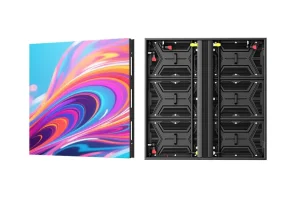
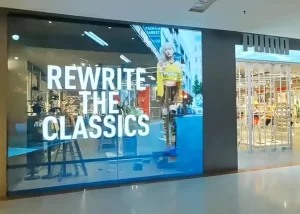
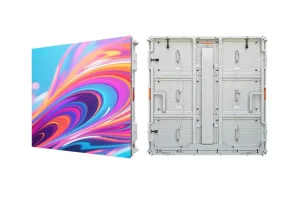
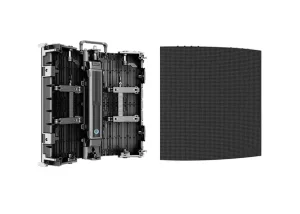
How direct-view LED displays are replacing traditional LCD video walls and static imagery to drive measurable foot-traffic conversion and brand equity in global commercial hubs.
Modern commercial retail spaces are no longer mere point-of-sale locations; they have evolved into immersive brand experience centers. Empirical retail analytics demonstrate that dynamic visual storefronts using high-brightness LED screens increase customer dwell time by up to 47% compared to static vinyl signage.
By replacing legacy LCD video walls—which suffer from distracting bezels and severe brightness degradation under high ambient sunlight—custom LED displays provide seamless, continuous canvas environments that capture pedestrian attention from distances exceeding 50 meters.
Global retail conglomerates managing multi-store deployments prioritize Total Cost of Ownership (TCO). Advanced retail LED panels operating on Common Cathode driver architecture reduce power consumption by 30% to 45% compared to traditional common anode displays.
Lower power dissipation directly translates to minimized operating temperatures, eliminating the need for noisy, power-hungry external cooling fans within retail shopfront enclosures while extending the operational lifespan of the diode encapsulation to over 100,000 hours.
Retail store design demands strict adherence to interior architectural lines. Off-the-shelf display boxes often create awkward spatial breaks and clash with interior aesthetics.
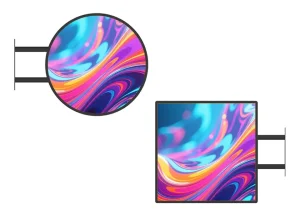
Direct OEM manufacturing allows for custom cabinet dimensions, 90-degree right-angle corner bevels, flexible soft-module curves, and ultra-thin aluminum profile enclosures. This custom approach enables digital signage to wrap organically around structural concrete pillars, drop-ceilings, and glass curtain walls.
Understanding the micro-packaging revolution that empowers close-up retail viewing distances and high-impact visual storytelling.
Traditional Surface Mounted Device (SMD) technology places individually packaged LED chips on a PCB board. In high-traffic retail environments, SMD diodes are vulnerable to physical collision from shopping carts, cleaning equipment, or customer contact.
COB technology directly encapsulates the microscopic LED flip-chips onto the PCB substrate with optical epoxy resin. This yields exceptional benefits:
Window displays are prime real estate for luxury boutiques, automotive showrooms, and department stores. Traditional solid LED screens block natural sunlight, transforming store interiors into dark, enclosed spaces.
High-Transparency Holographic Screens (IN-F Series) utilize invisible PCB technology or ultra-thin PCB strips to achieve transparency rates between 70% and 85%:
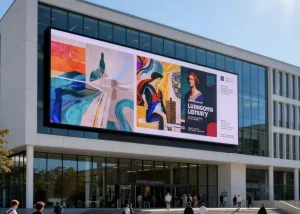
Outdoor flagship retail facades are increasingly leveraging corner-wrapping anamorphic 3D LED screens to create viral visual spectacles that convert foot traffic into organic social media marketing.
Achieving realistic 3D depth without active glasses requires exact hardware-software synergy:
How direct manufacturing control in Shenzhen provides international buyers with unmatched price-performance ratios, strict quality assurance, and engineering customization.
Our Shenzhen manufacturing ecosystem relies on fully automated, high-speed Surface Mount Technology (SMT) production lines capable of placing tens of thousands of micro-diodes per hour with micrometer accuracy.
Integrated Automated Optical Inspection (AOI) and 3D Solder Paste Inspection (SPI) systems scan every batch in real-time, detecting micro-bridging, cold solder joints, or component misalignment before module masking and waterproofing glue application.
Operational reliability in commercial retail environments demands zero component failure upon installation. Our factory quality control protocols enforce a mandatory 72-hour continuous aging test for all display modules and assembled cabinets.
This includes 24 hours of monochrome red/green/blue stress testing, 24 hours of full-white peak brightness burn-in, and 24 hours of dynamic video loop testing to identify and rectify infant component mortality.
Supply chain resilience is anchored by established partnerships with global tier-1 component vendors. We build custom retail screens using authentic components:
Optimizing pixel pitch, mounting mechanics, and brightness specifications for distinct retail touchpoints.
Primary Challenge: Competing with direct daytime sunlight while preventing heat buildup inside window display cases.
Engineering Solution: Deploy high-brightness outdoor/indoor hybrid panels (3,500–5,500 nits) or Holographic Transparent Screens (IN-F Series). Equipped with automatic optical ambient light sensors, these screens dynamically adjust brightness—saving energy at dusk while maintaining high visibility during peak noon hours.
Primary Challenge: Close viewing distance (1 to 2 meters) by queuing shoppers who expect smooth, high-resolution visuals.
Engineering Solution: Fine-pitch COB or SMD video walls ranging from P1.25 to P1.875. Featuring ultra-thin front-access magnetic servicing, these displays mount directly flush against interior drywall without requiring rear maintenance access corridors.
Primary Challenge: Transforming structural support pillars into dynamic branding assets without structural modifications.
Engineering Solution: Flexible silicone-base LED modules mounted on custom magnetic frames, or 90-degree corner aluminum cabinets. Seamless installation creates smooth cylindrical visual pillars or sharp square digital wraps throughout multi-level retail layouts.
Primary Challenge: Providing dynamic product cross-selling and omnichannel order extension near product racks.
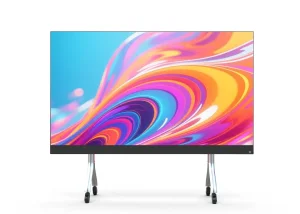
Engineering Solution: Portable, lightweight Poster LED Screens with integrated media players, Wi-Fi/5G connectivity, and optional touch-overlay panels. Units can operate standalone or link together to form unified wide-format visual backdrops for seasonal marketing campaigns.
Compare structural, visual, and operational metrics across competing commercial display formats.
| Technology Type | Typical Pixel Pitch Range | Peak Brightness (Nits) | Physical Impact Resistance | Bezel / Seam Width | Ideal Retail Placement |
|---|---|---|---|---|---|
| COB Fine-Pitch LED | P0.78 – P1.56 | 600 – 1,200 | High (Resin Sealed IP65) | 0.00 mm (100% Seamless) | POS Backdrop, Luxury Flagships, VIP Rooms |
| SMD Indoor Fixed LED | P1.53 – P3.07 | 800 – 1,500 | Medium (Requires Care) | 0.00 mm (100% Seamless) | Main Atrium Walls, Brand Pillars, Elevators |
| Holographic Transparent LED | P3.91 – P7.81 | 3,500 – 5,500 | Medium-Low (Glass Frame) | Grid Structure (>75% Translucent) | Storefront Window Glass, Atrium Railings |
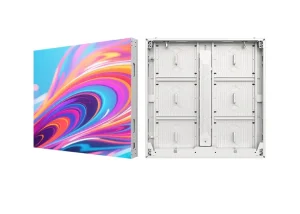
| Outdoor Aluminum 3D LED | P2.97 – P6.25 | 5,000 – 8,000+ | Extreme (IP65 Outdoor Rated) | 0.00 mm (45° Seamless Join) | Building Facades, Mall Exterior Anchors |
| Legacy LCD Video Wall | N/A (Fixed Pixel Density) | 450 – 700 | Low (Fragile Surface Glass) | 0.88 mm – 3.5 mm Bezels | Obsolete for Premium Retail Storefronts |
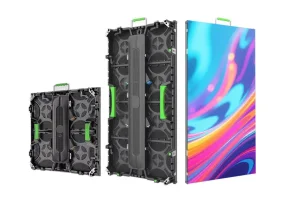
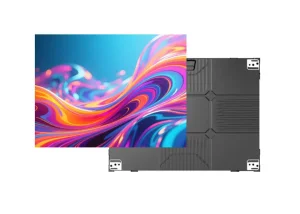
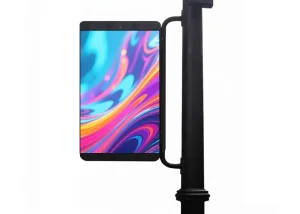
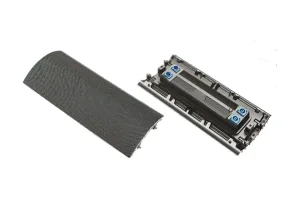
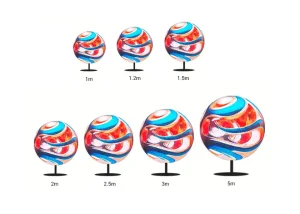
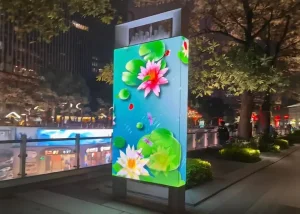
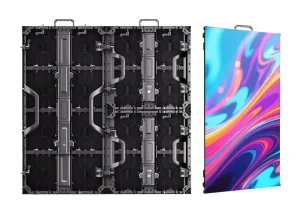
Select specialized hardware engineered for unique architectural shapes, high-durability outdoor signage, and versatile event rental.
Expert answers addressing technical specifications, installation mechanics, and OEM customization protocols.
The optimal pixel pitch is primarily determined by the average minimum viewing distance of store visitors. A reliable engineering formula is: Minimum Viewing Distance (in meters) ≈ Pixel Pitch (in mm). For example, if shoppers stand 1.5 meters away from a POS cashier wall, a P1.25 or P1.56 fine-pitch screen ensures invisible diode spacing. For storefront windows viewed from 3 to 5 meters away across a shopping corridor, a P2.5 to P3.91 display yields ideal visual clarity while reducing hardware expenditure.
SMD (Surface Mounted Device) soldered diodes are cost-effective and suitable for high-mounted or out-of-reach display areas. COB (Chip-on-Board) encapsulates raw LED chips directly under a smooth epoxy resin layer. COB provides superior impact resistance (anti-collision), dustproofing, moisture protection, and static defense. COB is strongly recommended for low-height retail installations where customers may touch or bump into the video wall.
Yes. Our screens integrate with modern asynchronous cloud control systems (such as NovaStar Taurus Series / Colorlight Cloud). Marketing teams can control, update, schedule, and sync video content across hundreds of global store locations simultaneously using a centralized web portal or smartphone app, backed by real-time hardware status monitoring and automated diagnostic alerts.
Retail stores rarely have space for rear service corridors behind screen structures. Our indoor retail cabinets feature magnetic front-service LED modules. Using a specialized vacuum extraction tool, technicians can remove any individual LED module, power supply unit, or receiving card from the front of the display within 10 seconds, streamlining maintenance and protecting surrounding millwork.
For seamless compliance across North American and European commercial real estate environments, our production lines adhere to international standards. All exported LED displays carry full CE, FCC, RoHS, and ETL compliance certificates, verifying electromagnetic compatibility (EMC Class A/B) and electrical safety compliance for commercial installations.