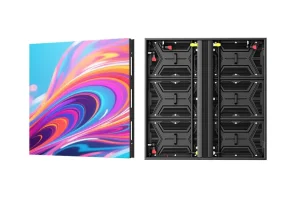
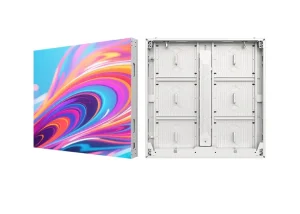
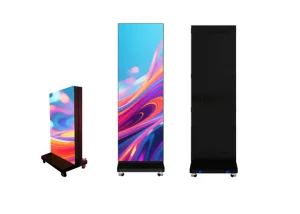
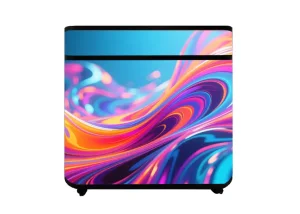
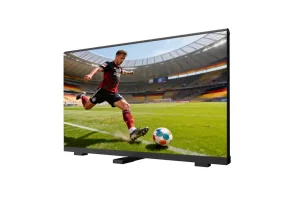
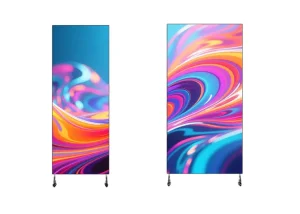
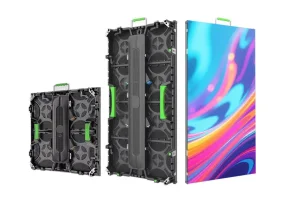
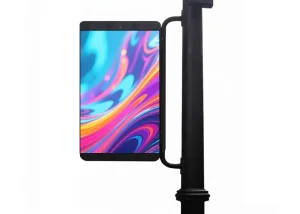
Explore our flagship, enterprise-grade LED display systems built with high refresh rates, low power consumption, and full FCC/UL safety standards for immediate deployment across North American markets.
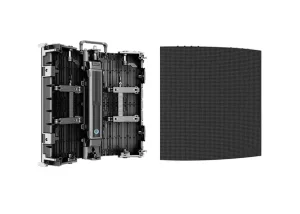
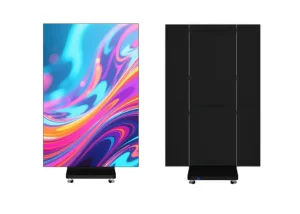
The North American market for professional LED displays is undergoing a fundamental structural transition. Driven by the convergence of 8K video processing, MicroLED encapsulation, and dynamic content management systems, US business enterprises are moving away from traditional LCD video walls toward ultra-high-definition, seamless LED installations.
In major metropolitan markets across New York, Los Angeles, and Chicago, Digital Out-of-Home (DOOH) advertising demands extreme weatherproofing, high dynamic range (HDR10+), and automatic environmental dimming. Modern US advertisers require custom LED billboards capable of retaining visual fidelity under direct noon sunlight while conserving energy during nocturnal hours.
Government agencies, defense contractors, and corporate headquarters are rapidly adopting Chip-on-Board (COB) fine-pitch displays for 24/7 mission-critical operations. The elimination of pixel moiré, coupled with anti-glare optical coatings, renders these displays essential for real-time analytics, data visualizers, and boardrooms across the US.
Hollywood soundstages and broadcast networks are replacing green screens with curved LED volumes featuring low-latency receiving cards, high frame rates (120fps+), and frame multiplication capabilities. Custom USA LED screen manufacturing now demands strict color calibration matching DCI-P3 standards.
To optimize procurement decisions for North American system integrators, understanding the physical encapsulation and electrical topology of modern LED modules is critical. The table below outlines key technical differentiators designed for long-term ROI and structural stability.
| Technology Feature | SMD (Surface Mounted Device) | GOB (Glue-on-Board) | COB (Chip-on-Board / Flip-Chip) |
|---|---|---|---|
| Encapsulation Method | Individual LED lamp packages soldered to PCB surface | SMD LED board coated with transparent epoxy protective layer | Bare MicroLED chips directly bonded to substrate & epoxy encapsulated |
| Pixel Pitch Range | P1.5mm – P10.0mm | P1.2mm – P3.9mm | P0.4mm – P1.5mm |
| Impact Resistance (Protection Grade) | Standard (Vulnerable to lamp knock-offs during maintenance) | High (Anti-collision, moisture-proof, dust-proof) | Ultra-High (IP65 Surface, Wear-resistant) |
| Thermal Dissipation Efficiency | Moderate thermal resistance via lead pins | Moderate (Epoxy layer retains partial internal thermal energy) | Exceptional (Direct heat sink conductivity via flip-chip) |
| Contrast Ratio & Optical View | 3,000:1 (Reflective lamp housing visible at acute angles) | 5,000:1 (Semi-matte protective finish) | 10,000:1 (Deep black matte matrix surface) |
| Energy Topology | Common Anode (Standard) | Common Anode / Optional Common Cathode | Common Cathode (Cold LED design, -40% heat output) |
Custom USA LED Display systems manufactured with Common Cathode technology separate Red, Green, and Blue LED chip power lines. Because RGB LEDs operate on different optimal voltages (Red ~2.8V, Green/Blue ~3.8V), standard Common Anode configurations waste excess energy as heat across voltage drops. Common Cathode delivers exact voltage directly to each diode, resulting in up to 40% lower operational temperature and preventing color shift across continuous multi-year deployments.
Exporting commercial LED displays into North America demands strict adherence to federal, state, and municipal regulations. Importing non-compliant display equipment risks severe penalties, project delays, or insurance claim denials during building inspections.
All custom LED display driver boards, switching power units, and high-frequency data transmission cables are engineered to prevent radio frequency interference (RFI). Class A compliance ensures non-interfering commercial deployment, while Class B rated displays permit installation within residential and mixed-use urban real estate without disrupting local wireless networks.
Underwriters Laboratories (UL) certification remains a mandatory requirement for electrical sign inspections across US cities. Our export displays utilize UL-certified flame-retardant PC materials, high-grade silicon wiring, and auto-shutoff thermal cutoffs, ensuring total fire safety compliance during continuous 24/7 operation.
For US government, military, and federal infrastructure contracts, control system hardware must comply with National Defense Authorization Act (NDAA) guidelines. We integrate fully authorized, encrypted processing solutions (such as Novastar Starline/Armor series) isolated from unverified third-party hardware.
Different climatic regions and commercial environments across North America require highly specialized hardware configurations. Our OEM/ODM manufacturing capability ensures your display system matches the precise mechanical and electrical constraints of the site location.
Built for college sports arenas (NCAA) and professional stadiums (NFL, MLB, NBA). Features impact-resistant soft rubber masks, top foam protection cushions, ultra-high refresh rates (up to 7,680Hz) to prevent flicker on 4K broadcast cameras, and dual-power redundant backup loops.
Engineered for harsh US climate zones—from sub-zero winter freeze in Minnesota to extreme summer heat in Nevada. Includes IP65/IP67 fully sealed die-cast aluminum cabinets, conformal protective coating, and integrated Smart Diagnostic Sensors reporting status via cellular network connection.
Transparent LED visual screens with up to 80% optical transparency designed for Fifth Avenue storefronts and shopping centers. Ultra-lightweight structures allow natural daylight penetration while delivering high-brightness motion imagery visible from street level.
Selecting an optimal LED screen configuration involves balancing visual performance against long-term maintenance overhead. Procurement executives should apply the following mathematical criteria when drafting project requests:
To determine the exact pixel pitch (P) required for comfortable visual clarity without pixelation, apply the industry standard minimum viewing rule:
Example: A P2.5 screen maintains complete optical continuity for viewers situated 2.5 to 6.25 meters away from the display surface.
Energy efficiency dictates operational expenditures over a standard 100,000-hour LED lifespan. Standard LED displays consume roughly 800W/m² peak power, whereas Common Cathode cold-screen architecture caps peak power at 450W/m².
Over 5 years of continuous outdoor operation across US energy markets ($0.18/kWh average), energy savings frequently offset up to 30% of the initial capital hardware cost.
We provide seamless end-to-end OEM and ODM support for US AV distributors, general contractors, and rental agencies, guaranteeing zero operational downtime and direct factory expertise.
Our engineering team designs custom CNC aluminum, magnesium alloy, or curved die-cast structural cabinets tailored to site-specific architectural blueprints. Pre-assembled module structures significantly reduce on-site labor and rigging costs during installation.
Every commercial shipment includes a 3% to 5% spare batch (including matching batch LED modules, receiving cards, ICs, power supplies, and ribbon cables). All products carry a comprehensive 3-Year Factory Warranty with optional 5-year extended warranty packages.
We collaborate with tier-1 international freight forwarders to handle door-to-door delivery (DDP) across all continental US ports. Our 24/7 technical team provides real-time Novastar/Colorlight remote setup, pixel-level batch calibration, and maintenance training.
As display technology evolves, manufacturers must continuously push optical and semiconductor boundaries. Below is our engineering commitment to upcoming technical milestones designed for global commercial markets.
Transitioning to ultra-fine pitch MicroLED displays utilizing monolithic transfer technologies, delivering native 8K display walls within standard boardroom wall dimensions.
Integration of edge-AI processing chips directly onto receiving cards, automatically monitoring individual pixel temperature, ambient brightness, and driving current to extend display lifespan past 120,000 hours.
Pioneering transparent, ultra-light flexible holographic film screens with invisible circuit paths, creating glasses-free 3D spatial visual media integrated directly into architectural glass structures.
Answers to critical questions asked by North American AV integrators, electrical engineers, and procurement teams during equipment evaluation.
Discover our high-precision rental panels, COB fine-pitch screens, holographic transparent glass systems, and smart city infrastructure solutions manufactured for international deployment.