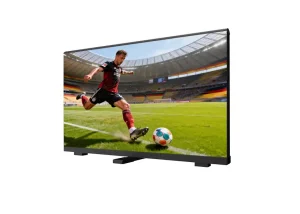
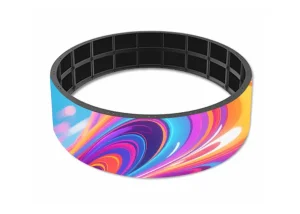
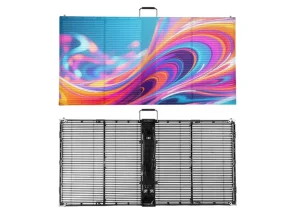
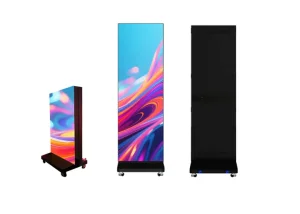
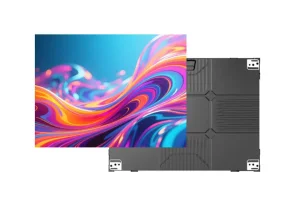
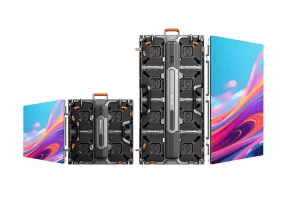
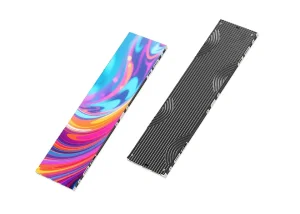
Explore our flagship OEM/ODM visual displays engineered at our Shenzhen SMT facility, delivering exceptional MTBF, low thermal footprint, and native 4K/8K resolution architectures.
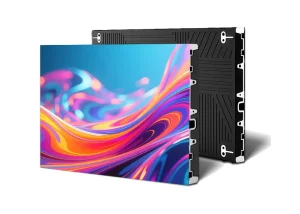
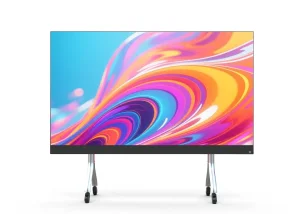
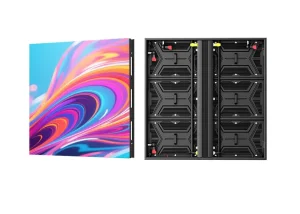
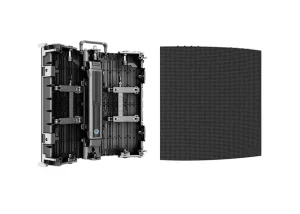

In the contemporary digital convergence era, Fine Pitch LED screens have transitioned from luxury display peripherals to core visualization backbones across high-stakes industrial, military, broadcast, and enterprise sectors.
Modern defense, transportation, and utility grids demand uninterrupted visual integrity. Fine pitch displays engineered with sub-millimeter pixel pitches (P0.78, P0.93, P1.25) eliminate visual moiré and optical fatigue during 24/7/365 operations.
Film studios and national broadcasters are rapidly phasing out green screens in favor of in-camera visual effects (ICVFX) powered by fine-pitch LED volumes. High refresh rates and color fidelity ensure seamless multi-camera rendering.
Replacing traditional projection and low-contrast LCD video walls, fine pitch All-in-One (AIO) LED displays bring ultra-slim, bezel-free 4K/8K canvases directly into Fortune 500 conference rooms, academic auditoriums, and design suites.
Surgical operating suites and tele-radiology diagnostic rooms demand hyper-accurate luminance calibration. Our micro-pitch COB displays meet rigorous medical visualization requirements with DICOM Part 14 grayscale compliance.
Global flagship stores leverage fine-pitch visualization to create immersive architectural statements that mirror luxury branding. Seamless 90° right-angle chamfers and custom convex curves elevate experiential shopping.
Urban planning authorities and GIS institutes integrate big data arrays into multi-layer spatial maps. The sub-millimeter pitch preserves single-pixel topological contour lines without aliasing or jagged geometric distortion.
Understanding the micro-packaging paradigm is fundamental for wholesale buyers, integrators, and AV consultants choosing the optimal display architecture for their multi-year investment.
| Evaluation Parameter | Surface Mounted Device (SMD) | Flip-Chip Chip-on-Board (COB) | Micro-LED in Package (MIP) |
|---|---|---|---|
| Typical Pixel Pitch Domain | P1.25 – P2.5 mm | P0.4 – P1.25 mm | P0.6 – P1.5 mm |
| Physical Protection Rating | Front IP30 (Fragile LED pins) | Front IP65 (Full resin encapsulation) | Front IP54 (Individual encapsulation) |
| Pixel Failure Rate (PPM) | < 30 – 50 PPM per year | < 5 PPM per year (>10x more reliable) | < 10 PPM per year |
| Surface Thermal Dissipation | High thermal resistance via lead frame | Direct PCB bonding; 30% lower $T_j$ | Balanced direct thermal path |
| Contrast Ratio & Black Matrix | 3,000:1 – 5,000:1 | 10,000:1 – 20,000:1 (Pure optical black) | 8,000:1 – 12,000:1 |
| Surface Impact & Anti-Collision | Vulnerable to accidental edge bumps | High anti-collision (Resists 10kg/cm²) | Moderate impact resistance |
| Maintenance Workflow | Hot-air soldering rework station | Factory module swap or vacuum puller | Single-pixel/mini-unit reworkable |
In conventional common-anode fine pitch screens, Red, Green, and Blue LED chips share a unified 3.8V or 4.2V power supply. Because Red diodes require only ~2.1V to operate, excessive electrical potential is dissipated purely as waste thermal energy. JINGRUNS' proprietary fine pitch screens employ dual-rail Common-Cathode driver ICs: supplying 2.8V to Red diodes and 3.8V to Green and Blue diodes. This directly reduces overall energy consumption by 32% to 44%, lowers cabinet operating temperatures by 12°C to 18°C, and drastically eliminates color-shift caused by thermally degraded driver ICs.
Procuring fine-pitch LED display systems across continents requires unyielding compliance documentation, flawless electromagnetic compatibility, and a rock-solid localized maintenance SLA.
Fine-pitch displays utilize high-frequency switching driver ICs that can cause substantial electromagnetic noise. Unlike low-tier screens that struggle with Class A (commercial), our cabinets achieve residential-grade Class B compliance.
Every structural and electrical material complies with stringent global fire-retardant standards. All internal PCB boards, potting gels, and power cables adhere to UL94-V0 self-extinguishing safety metrics.
The single greatest operational headache for commercial LED deployments is chromatic mismatch during module replacement. JINGRUNS retains 3% to 5% spare raw LED wafer bins in climate-controlled storage for every single batch order.
As semiconductor lithography and optical science advance, fine-pitch LED display architecture is undergoing unprecedented evolution. Here is how our engineering research is shaping next-generation deployments.
By transitioning from flip-chip mini-LEDs to true sub-30μm MicroLED dies, our upcoming P0.38 and P0.25 lines offer higher native resolution density than high-end OLED panels, with zero risk of organic pixel burn-in or differential aging.
Future control infrastructure integrates on-cabinet edge-AI tensor chips that analyze incoming video frames in real time. Dynamic sub-pixel compensation optimizes sharpness, reduces low-bitrate compression blocking, and elevates standard SDR to HDR10+.
Our upcoming chassis lines prioritize low environmental footprints and minimal site preparation. Precision die-cast magnesium alloy reduces individual cabinet weight to just 4.2 kg, cutting shipping carbon footprints and installation times.
Selecting an excessively small pixel pitch results in redundant capital expenditures, while an overly coarse pitch yields visible pixelation. Use these industry-standard optical formulas to guide your architectural specifications.
Based on 20/20 human vision resolving 1 arcminute (1/60th degree):
For example, with a P1.25 display, individual pixels become completely indistinguishable to the normal human eye at an observer distance of 1.25 meters (~4.1 feet).
For executive presentations and surveillance monitoring without eye fatigue:
For a P1.56 conference screen, the primary viewing row should be placed between 3.1 and 3.9 meters from the display face for balanced immersion.
To display an uncompressed 3840 × 2160 native 4K feed without scaling:
At P0.9375mm, native 4K is achieved in a compact 3.6m × 2.025m footprint (163-inch diagonal), fitting standard 2.8m ceiling heights seamlessly.
In-depth, candid answers addressing structural engineering, controller protocols, supply chain logistics, and warranty terms for overseas buyers.
From perimeter stadium displays and transparent retail glass facades to flexible curved architectures, explore our specialized display engineering catalog.