Direct factory wholesale catalog featuring indoor high-contrast video walls, IP65 outdoor billboards, HD commercial panels, and specialized display structures.
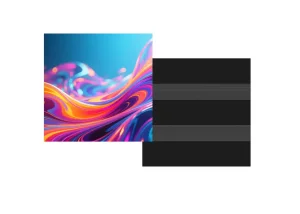
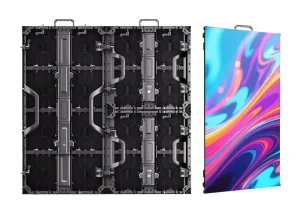
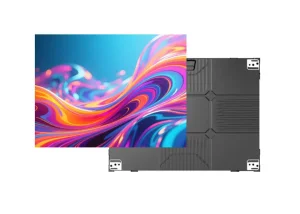
Analyzing the paradigm shift from traditional LCD video walls to seamless, ultra-high-definition full-color LED arrays across global markets.
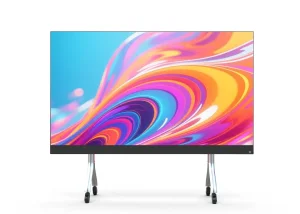
The enterprise AV sector is experiencing rapid expansion in micro-fine pitch displays (P0.7, P0.9, P1.2). Direct-view LED walls are actively replacing legacy rear-projection and LCD tiled walls due to zero-bezel continuity, higher contrast ratios, and operational lifespans exceeding 100,000 hours.
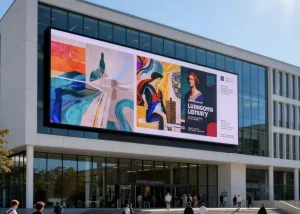
Digital Out-Of-Home (DOOH) networks are transitioning toward 3D naked-eye anamorphic displays and high-transparency mesh walls. Urban developments require dynamic LED displays that integrate natively into building facades without compromising interior lighting or structural weight limits.
Film studios and live broadcasting facilities are phasing out green screens in favor of ultra-high refresh rate (>7680Hz) LED volumes. High-frame-rate rendering, wide color gamuts (DCI-P3), and low-latency driver ICs are now baseline prerequisites for professional broadcast procurement.
Unpacking the supply-chain density, high-speed SMT automation, and rigorous optical testing metrics that make Chinese LED manufacturing the global standard.
Shenzhen’s LED ecosystem houses upstream wafer production, IC driver encapsulation, high-precision SMT (Surface Mount Technology) lines, die-casting cabinet factories, and testing facilities within a 30-kilometer radius. This geographic density reduces component lead times by up to 60% compared to decentralized manufacturing hubs.
Top-tier Chinese exporters implement fully automated AOI (Automated Optical Inspection) systems alongside multi-stage stress testing. Every module undergoes a minimum of 72 hours of continuous thermal, vibration, and high-humidity burn-in testing prior to export shipping, keeping dead pixel rates strictly below 0.0001%.
Mass raw material purchasing contracts with chipmakers like Nationstar, Kinglight, and Epistar enable OEM suppliers to offer wholesale pricing margins that directly benefit global distributors, AV rental companies, and engineering contractors without compromising component fidelity.
Evaluating mechanical durability, optical performance, repairability, and procurement costs across primary LED packaging technologies.
| Technology Parameter | SMD (Surface Mount Device) | GOB (Glue on Board) | COB (Chip on Board) |
|---|---|---|---|
| Packaging Method | Discreet LED lamp beads soldered to PCB surface | Standard SMD modules coated with transparent epoxy protective layer | Bare LED chips directly bonded to PCB & encapsulated with epoxy resin |
| Pitch Feasibility | P1.5 – P10.0 (Optimal for standard resolution) | P1.2 – P2.5 (Ideal for high-impact commercial environments) | P0.4 – P1.2 (Ultra-fine micro pitch) |
| Physical Protection Level | Standard (Vulnerable to lamp knock-offs) | High (Anti-collision, anti-water, dustproof IP65 front) | Maximum (Complete surface encapsulation, splash/dust proof) |
| Heat Dissipation & Efficiency | Moderate thermal resistance through bracket pins | Moderate; epoxy layer traps minor heat inside module | Superior; heat dissipates directly through PCB board |
| Contrast & Optical Uniformity | Standard mask contrast; viewing angle ~140°/140° | Matte epoxy resin finish reduces glare; viewing angle ~160°/160° | Deep Black Uniformity; wide viewing angle up to 170°/170° |
| On-Site Repairability | Easy (Single lamp bead replacement using standard soldering iron) | Moderate (Requires special tools to strip resin layer for soldering) | Factory Return Recommended (Requires precision re-bonding stations) |
| Relative Wholesale Cost Factor | Baseline Cost Index (1.0x) | Cost Index (1.25x – 1.35x) | Cost Index (1.6x – 2.2x) |
Configuring pixel pitches, cabinet materials, and structural engineering to match specific industry operational environments.
Deployment Specs: COB/SMD P0.93 to P1.56, Dual Power/Data Redundancy, 16-bit Grayscale.
Control rooms demand seamless, zero-latency video rendering capable of operating 24/7/365. Redundant signal architecture ensures uninterrupted visualization for critical infrastructure management, traffic surveillance, and defense operations.
Deployment Specs: Transparent LED (70%+ Translucency) or High-Brightness Front-Access Indoor Modules.
Retail display solutions focus on maintaining visual openness while delivering eye-catching store designs. Front-access magnetic modules allow wall-mounted installations without requiring rear maintenance access corridors.
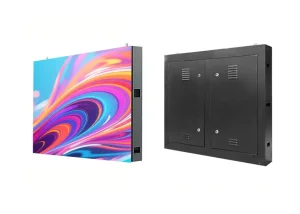
Deployment Specs: IP65 Outer Seal, Aluminum Cabinet, 6,500 – 10,000 Nits Brightness, Automatic Light Sensors.
Outdoor sports arenas and highway digital signage require weatherproof enclosures capable of resisting rainstorms, high humidity, wind loading, and direct solar washout.
Deployment Specs: Quick-Lock Fastening Cabinets, Modular HUB Designs, Integrated Corner Protectors, 7680Hz Refresh Rate.
Rental applications demand lightweight die-cast aluminum frames engineered for rapid assembly and tear-down, paired with high-frequency IC drivers to eliminate camera scan lines during live television broadcasts.
Essential parameters to specify when submitting Requests for Quotation (RFQs) to wholesale LED suppliers.
Select your pixel pitch based on the human eye resolution limit. The rule of thumb for optimal viewing distance is:
Optimal Distance (Meters) = Pixel Pitch (mm) × 1.5 to 2.0
For instance, a P2.5 display reaches visual continuity when viewed from 3.75 meters or farther.
Specify high-end PWM (Pulse Width Modulation) driver ICs (such as Macroblock MBI5252 or ICN2053) for installations exposed to photography or recording. Standard drivers (1920Hz) exhibit visible scan lines under camera lenses, whereas high-grade drivers (3840Hz – 7680Hz) deliver smooth image capture.
Evaluate Maximum Power (W/m²) vs. Average Power (W/m²). Modern common-cathode LED technology directs separate voltage feeds to Red, Green, and Blue chips, reducing power consumption and operational heat production by up to 30% compared to traditional common-anode architecture.
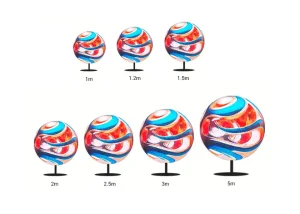
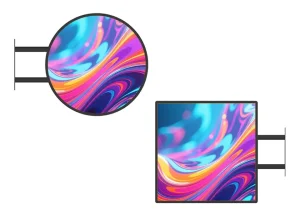
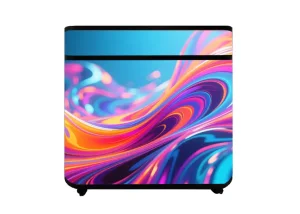
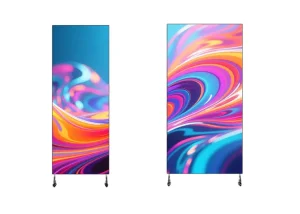
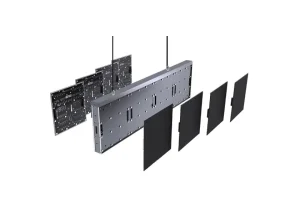
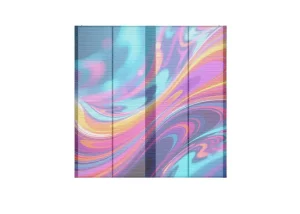
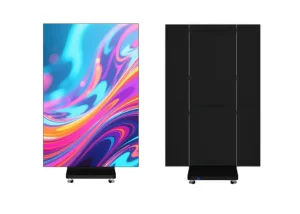
Explore ultra-thin double-sided posters, see-through transparent arrays, 3D curved cabinets, and portable multi-fold displays directly from our production lines.
In-depth responses covering quality standards, freight arrangements, factory audits, and long-term technical support.
For standard indoor/outdoor rental or fixed cabinets (e.g., P2.5, P3.91, P4.81), standard production lead time is typically 12 to 15 business days following deposit confirmation. Specialized fine-pitch COB arrays or custom creative display structures (spheres, 3D curved cabinets) take approximately 20 to 25 business days. This timeframe includes the full 72-hour continuous electrical and optical burn-in aging process.
High-quality suppliers enforce strict LED lamp binning protocols. All LED beads for a single order are batch-sourced from identical production wafers (same wavelength, brightness, and voltage bins). Additionally, full-screen pixel-level brightness and chroma calibration (using systems like NovaStar NovaLCT and CalICO) is performed before shipment to guarantee color uniformity across all cabinet modules.
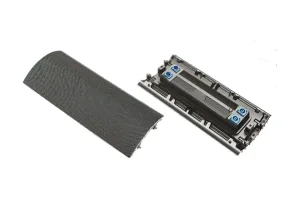
We recommend ordering a spare parts batch equivalent to 2% to 5% of the total screen area. Key spare components include spare LED modules, receiving cards, power supply units, ribbon cables, and individual LED lamp beads. Having batch-matched spare modules on-site ensures any future maintenance matches the exact brightness and color calibration of the primary display wall.
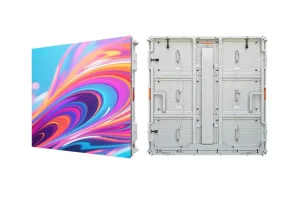
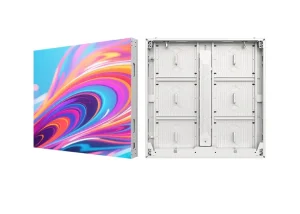
Front-access cabinets feature magnetic module mounting or front vacuum extraction tools, allowing engineers to replace modules, power units, and control cards directly from the front side. This design is essential for wall-mounted installations lacking a rear service hallway. Rear-access cabinets use traditional screw fasteners, requiring a maintenance corridor behind the display, making them ideal for outdoor steel frame structures or standing rental stages.
Export-grade display shipments use multi-layer protective packaging: modules and cabinets are wrapped in anti-static ESD bags, fitted with custom-cut EPE pearl foam shock absorbers, and packed into heavy-duty plywood wooden cases (non-fumigation) for fixed sea freight. Rental products are shipped directly in flight cases equipped with heavy-duty rubber wheels and internal foam padding to support mobile event deployments.