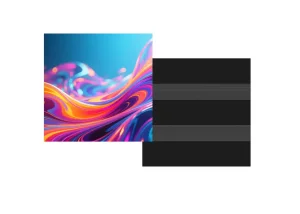
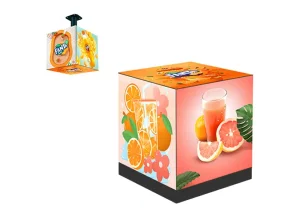
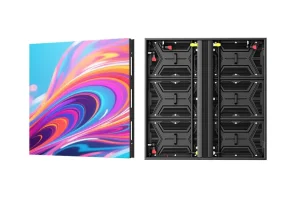
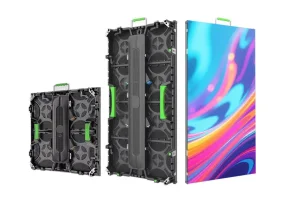
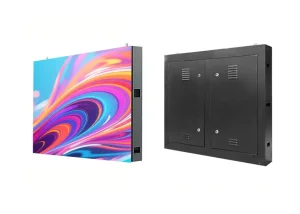
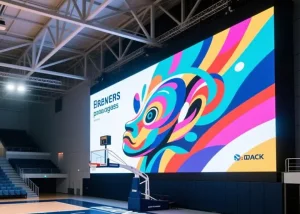
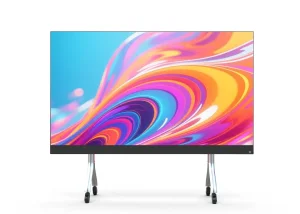
Factory-direct OEM/ODM display products engineered for indoor, outdoor, commercial advertising, and creative architectural installations.
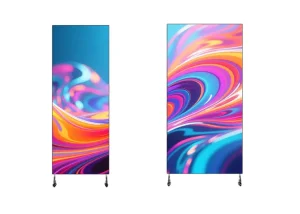
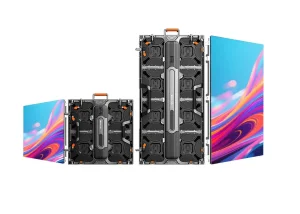
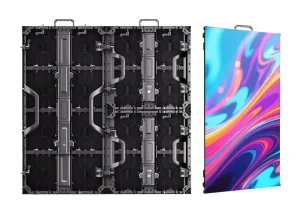
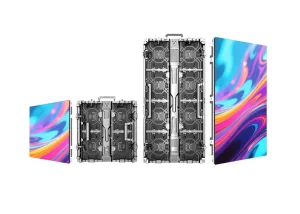
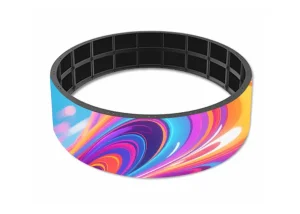
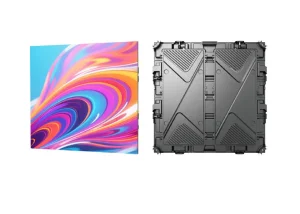
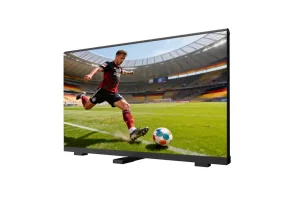
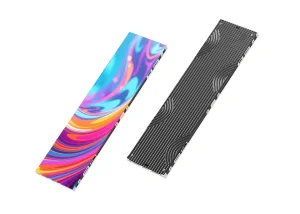
An engineering report on how transparent LED mesh technologies replace traditional cabinet screens, lowering structural load while maximizing transparency and visual impact.
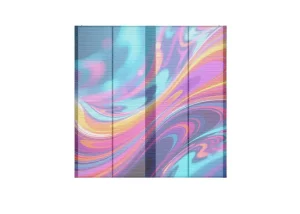
The global commercial display market is undergoing a structural transition. As architects, municipal planners, and real estate developers demand digital signage solutions that seamlessly integrate with modern glass curtain walls without blocking interior daylight, LED Curtain Displays (also recognized as LED mesh displays, transparent strip screens, or media facade grids) have emerged as the definitive benchmark. Unlike traditional cabinet-style outdoor LED billboards that impose massive structural weight (often exceeding 45–60 kg/m²) and create complete light blockages, modern LED curtain displays utilize a hollowed-out strip architecture that offers transparency rates between 40% and 80%, while maintaining ultra-high brightness levels exceeding 10,000 nits.
LED curtain displays drastically simplify building permits and structural calculations. By allowing wind to pass through the hollow strip gaps, the overall wind resistance coefficient is reduced by up to 60%. This eliminates the need for expensive heavy-duty steel framing support, reducing total structural procurement costs by 35% to 50% compared to conventional outdoor LED cabinets.
Ranging from 40% to 80% light penetration, allowing natural sunlight into building interiors while keeping retail glass displays completely see-through from inside.
Hollowed strip configuration dissipates extreme wind loads, making LED curtains suitable for high-rise skyscraper facades, typhoons, and coastal installations.
Utilizing high-efficiency common cathode IC drivers and natural heat dissipation, energy consumption drops to as low as 120W/m² average power draw.
The advancement of SMD (Surface Mount Device) encapsulation and GOB (Glue-on-Board) surface treatments has elevated the operational lifespan of curtain screens to over 100,000 continuous hours. Key technology trends shaping global B2B procurement include:
Quantifying total cost of ownership (TCO), energy savings, structural engineering costs, and ROI metrics for enterprise display deployment.
Traditional outdoor LED video walls weigh 45–65 kg per square meter, requiring massive steel substructures. LED Curtain Displays average only 12–18 kg/m². On a 500m² building facade installation, this saves over 20 metric tons of steel framework and lowers installation labor costs by up to 40%.
Because solid LED screens generate heat traps behind window facades, external HVAC cooling units are typically mandated. The open air-permeable structure of LED curtain displays relies entirely on natural ambient convection, completely eliminating HVAC power expenditures.
How JINGRUNS leverages Shenzhen's complete LED display industrial ecosystem to guarantee component quality, rapid scaling, and competitive factory-direct pricing.
As a leading wholesale LED curtain display factory and global exporter headquartered in Bao'an District, Shenzhen, China—the world's epicenter for optoelectronic innovation—JINGRUNS operates automated Industry 4.0 production facilities equipped with fully integrated SMT (Surface Mount Technology) assembly lines. Our factory direct model eliminates intermediary trading markup while delivering strict quality control from raw LED chip encapsulation to final system burn-in testing.
Precision automated SMT lines operating at micro-step accuracies guarantee flawless LED pixel placement on flexible or rigid strip PCBA substrates.
Every manufactured curtain strip undergoes 72 hours of continuous high-temperature and waterproof soak testing before shipment to guarantee zero dead pixels.
Custom cabinet dimensions, specific pixel pitch matrixes, personalized logo silkscreening, and bespoke flight-case packaging tailored for regional distributors.
To comply with European and North American engineering standards (CE, RoHS, FCC, ETL), JINGRUNS selects only tier-1 raw materials: Gold-wire Nationstar / Kinglight LEDs, Mean Well power supplies, NovaStar / Colorlight control cards, and UV-resistant polycarbonate PC modules engineered for anti-yellowing performance under harsh weather exposures.
Compare physical, optical, and electrical characteristics across typical architectural LED curtain and mesh display pitches.
| Pixel Pitch (mm) | Transparency Rate (%) | Brightness (Nits) | IP Protection Rating | Weight (kg/m²) | Optimal Viewing Distance | Primary Application |
|---|---|---|---|---|---|---|
| P3.91 / P7.81 | 45% – 55% | 4,500 – 5,500 nits | IP65 (Indoor/Outdoor) | 11.5 kg | 4 meters + | High-End Retail Glass Windows, Flagship Stores |
| P10.4 / P10.4 | 55% – 65% | 6,500 – 7,500 nits | IP67 Weatherproof | 13.0 kg | 10 meters + | Building Facades, Shopping Mall Glass Walls |
| P15.625 / P15.625 | 65% – 75% | 8,000 – 10,000 nits | IP68 Submersible | 14.5 kg | 15 meters + | High-Rise Skyscraper Advertising, Stadiums |
| P31.25 / P31.25 | 75% – 85% | 10,000+ nits | IP68 Full Silicone Seal | 12.0 kg | 30 meters + | Ultra-Large Architectural Landmark Media Facades |
JINGRUNS structural engineers provide customized CAD drawings, wind load simulation reports, and power distribution schematics for any large-scale media facade tender worldwide.
From skyscraper facades to touring concert backdrops, explore how LED curtain displays adapt to diverse commercial environments.
Mounted directly behind or on glass curtain wall frameworks, transparent LED curtains turn entire office towers into iconic digital landmarks while maintaining indoor office natural lighting and unobstructed views for tenants.
Concert production managers utilize lightweight flexible LED mesh displays because they fold or roll into compact flight cases. Quick-lock rigging mechanisms enable rapid assembly and tear-down within short event schedules.
P3.91 high-resolution transparent screens installed inside store windows create striking 3D volumetric visual effects, dynamic branding animations, and interactive video campaigns without blocking street-level sightlines into retail interiors.
Atrium skylights, passenger concourses, and terminal glass walkways utilize transparent displays for flight schedule updates, passenger announcements, and high-impact revenue advertising without disrupting open spatial design.
Our engineering commitment to international compliance, rigorous component testing, and dedicated long-term technical support.
Full component coverage including power supplies, receiving cards, and LED strip modules for 36 months, backed by free replacement parts dispatch.
1-on-1 remote engineering assistance, controller software setup, pixel mapping configuration, and lifetime maintenance training for project technicians.
Strict adherence to ISO9001 quality management, ISO14001 environmental standards, and rigorous CE, RoHS, FCC, and ETL export compliance checks.
Answers to common engineering, logistics, and technical queries from international buyers and system integrators.
While both display types offer transparency, LED Curtain Displays (LED Mesh/Strip Displays) are specifically designed for large-scale outdoor media facades and high-rise glass walls. They feature hollowed-out aluminum or PC strip bars with higher transparency (up to 80%), extreme weatherproofing (IP67/IP68), higher brightness (up to 10,000+ nits), and extreme wind resistance. Standard indoor transparent LED screens use delicate glass-backed PCBA strips with lower brightness (1,000–3,500 nits) designed primarily for controlled indoor retail storefronts.
LED curtain displays feature an open hollowed strip geometry. Wind passes directly through the gaps between the LED bars rather than striking a solid surface. This reduces wind load drag forces by 50% to 65% compared to solid cabinets, allowing safe operation on high-rise building facades even during severe storm conditions.
Yes. JINGRUNS LED curtain displays feature modular dual-access (front and rear) hot-swappable strip bars. If an individual LED strip requires maintenance, technicians can release quick-lock fasteners and replace only that single strip from either inside the building window or outside on a maintenance ladder, reducing downtime to minutes.
Pixel pitch selection depends on viewing distance:
• P3.91 - P7.81: Ideal for close viewing distances of 4 to 10 meters (e.g., lower retail store glass windows).
• P10.4 - P15.625: Ideal for viewing distances of 10 to 25 meters (e.g., mid-rise commercial building facades).
• P31.25+: Recommended for massive skyscraper landmarks viewed from distances over 30 to 100+ meters away.
Standard lead time for customized LED curtain screen production is typically 15 to 22 business days depending on screen dimensions and specific customization (such as custom frame colors, curved cabinet shapes, or specialized control systems). Sample testing units can be dispatched within 7 to 10 business days.
Our displays natively support industry-standard control hardware including NovaStar (e.g., Taurus Series multimedia players, Armor receiving cards), Colorlight, and Linsn. Synchronous HDMI/DP inputs as well as cloud-based asynchronous wireless 4G/5G/Wi-Fi content publishing systems are fully supported.
Explore our full line of indoor, outdoor, 3D, fine pitch, poster, and creative custom-shaped LED displays.