Energy Efficiency & Eco-Engineering Whitepaper

Wholesale LED Display Energy Consumption Suppliers & Exporter

An authoritative industrial evaluation of common cathode architecture, dynamic power scaling, macro thermal management, and lifecycle TCO optimization for global B2B procurement networks.

Featured Commercial Energy-Efficient LED Systems

Explore our high-performance display configurations engineered with advanced thermodynamic management and dynamic current modulation.
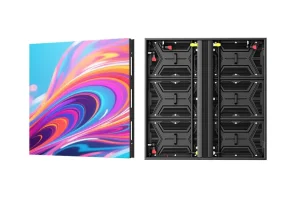
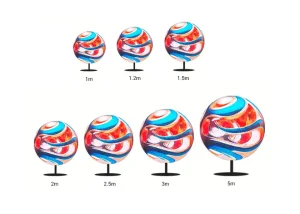
China Outdoor 3D LED Display Manufacturer
China Outdoor 3D LED Display Manufacturer | LED Screen Factory Exporters
View Product Details
Wholesale Sphere LED Display Prices
Wholesale Sphere LED Display Prices | Direct from Manufacturer Supplier
View Product Details
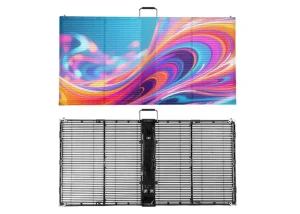
Wholesale Outdoor rental transparent LED display screen
Wholesale Outdoor rental transparent LED display screen Supplier
View Product Details
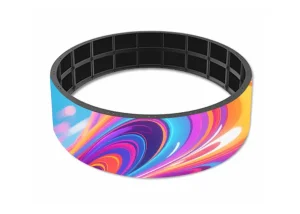
China Custom LED Curved Screen Manufacturers
China Custom LED Curved Screen Manufacturers | Flexible Display Solutions
View Product Details
Wholesale P1.25 Indoor Ultra-Thin Fixed LED Display
Wholesale P1.25 Indoor Ultra‑Thin Fixed LED Display | IN-A Series
View Product Details
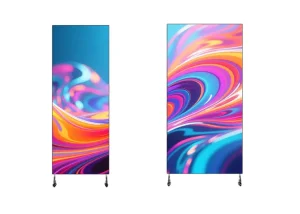
Custom Full HD LED Poster Screen
Custom Full HD LED Poster Screen | Ultra-Fine Detail Visual Display
View Product Details
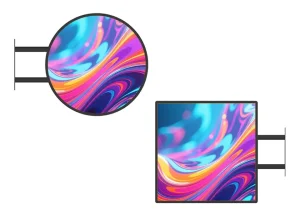
Custom Retail Store LED Display
Custom Retail Store LED Display | High Brightness & Waterproof Logo Screen
View Product Details
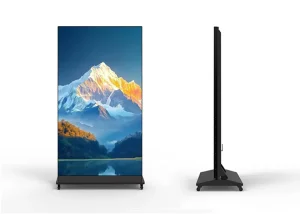
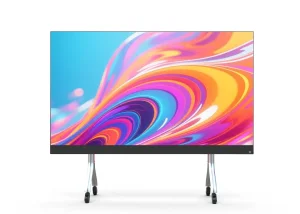
Wholesale GOB Slim Stand Led Digital Display
Wholesale GOB Slim Stand Led Digital Display | Fixed Video Wall Poster
View Product Details

Global Macro Trends in Industrial LED Power Economics

The global commercial visual media landscape is confronting an operational paradigm shift. As municipal authorities, corporate enterprise accounts, and Digital Out-of-Home (DOOH) operators scale large-format digital displays, the total cost of ownership (TCO) is no longer dictated solely by initial capital expenditure (CapEx). Energy consumption, thermal management overhead, and evolving carbon compliance directives now govern procurement logic worldwide.

Regulatory Imperative for International Buyers

Major markets are enforcing rigorous power restrictions. The European Union’s Eco-design Directive (ErP) together with Energy Star 8.0 guidelines in North America mandate severe operational watt-per-square-meter ($W/m^2$) thresholds. Modern enterprise displays must balance peak luminance—often exceeding 10,000 nits for direct outdoor sunlight daylight visibility—against tight power budgets.

Key Commercial Drivers Accelerating Green LED Engineering

In wholesale B2B procurement, failure to audit power performance leads to inflated utility expenses, accelerated component degradation, and potential local ordinance violations related to urban light pollution and environmental heat emission. Industry data demonstrates that electrical utility fees over a 7-year operational deployment can exceed the original hardware purchase price by up to 140% if legacy common-anode driving architectures are selected.

-40%
Power Reduction via Common Cathode
100K
Hours Operational MTBF Lifespan
>0.95
High Efficiency Power Factor (PFC)
<45°C
Average Surface Thermal Dissipation

Engineering Physics: How Advanced LED Displays Cut Wattage

Understanding the technical distinction between Common Anode and Common Cathode power routing, driver IC duty cycles, and switching supply power factor calibration.

Common Cathode Architecture

Legacy Common Anode systems deliver a uniform 5V supply to Red, Green, and Blue LED chips simultaneously. Because Red diodes require only ~2.8V, the excess 2.2V is converted entirely into wasted heat. Common Cathode technology separates circuit power rails, supplying independent precise voltages ($V_{Red} \approx 2.8V$, $V_{Green/Blue} \approx 3.8V$), eliminating heat accumulation and lowering total power draw by up to 40%.

Dynamic Pulse Width Modulation (PWM)

High refresh rate driver ICs (>7680Hz) feature automated energy-saving sleep modes. When rendering dark visual content or lower grayscale values, non-active LED pixels enter microsecond idle states. This dynamic duty-cycle modulation drops average power consumption dramatically compared to continuous static driving IC configurations.

PFC Switching Power Converters

Incorporating high-grade AC-to-DC power supplies featuring Active Power Factor Correction (PFC > 0.95) converts incoming grid current into usable DC power with peak efficiency (>92%). This drastically suppresses harmonic distortion on site electrical distribution panels and avoids reactive power penalty surcharges from commercial power utilities.

Engineering Comparison: Power & Thermal Specifications

Technology Parameter Standard Common Anode (Legacy) Advanced Common Cathode (JINGRUNS Eco) Operational Savings Delta
Drive Voltage Supply (R / GB) 5.0V / 5.0V (Uniform) 2.8V (R) / 3.8V (GB) (Split Rail) Eliminates 2.2V Excess Heat Drop on Red Diodes
Max Power Consumption ($P_{max}$) 850 W / $m^2$ 480 W / $m^2$ 43.5% Reduction in Peak Load
Average Power ($P_{avg}$) 300 - 350 W / $m^2$ 130 - 160 W / $m^2$ 53.3% Reduction in Continuous Draw
Module Operating Thermal Profile 65°C – 75°C 38°C – 44°C Extends LED Diode Lifespan by ~30,000 Hours
HVAC Cooling Requirement High (Requires Active Air Conditioning) Minimal (Passive Aluminum Convection) Saves Additional 20-30% Auxiliary Cooling Energy

Localized Application Scenarios & Engineering Adaptations

Environmental parameters, geographic temperature swings, and municipal utility constraints require tailor-made power management configurations.

High-Ambient Desert Regions (Middle East / GCC)

In extreme ambient temperatures exceeding 50°C, high power consumption causes thermal runaway, pixel color shifting, and IC failure. Low-power common-cathode displays combined with heat-dissipating cast-aluminum cabinets maintain stable junction temperatures without reliant active HVAC systems, reducing field maintenance calls by up to 60%.

Strict Urban Carbon Zones (EU / North America)

European city centers enforce strict energy caps alongside nighttime luminance reduction mandates. Equipping displays with smart light sensors and auto-scaling power control boards dynamically matches nit output to real-time ambient lux, achieving compliance with green building standards (LEED / BREEAM).

24/7 Command Control Centers & Broadcast

Ultra-fine pitch COB displays operating continuously in mission-critical environments generate localized thermal spots if driven inefficiently. Lower power dissipation prevents air degradation within closed control rooms while ensuring visual uniformity across expansive 4K/8K video walls.

Technology Roadmap: The Next Era of Display Efficiency

As LED pixel pitches shrink into sub-millimeter MicroLED ranges, energy consumption per unit pixel becomes the defining benchmark for engineering leadership.

1

Flip-Chip COB (Chip on Board) Integration

By eliminating wire-bonding interconnections, Flip-Chip packaging attaches LED chips directly to the circuit substrate. This structural refinement expands light-emitting surface area, boosting luminous efficacy (lm/W) by 25% while drastically enhancing passive heat dissipation through the PCB.

2

AI-Assisted Spatial Power Allocation

Next-generation receiving cards incorporate embedded AI microprocessors that perform frame-by-frame video content analysis. Power is instantaneously rerouted away from dark pixels to bright highlights, lowering continuous operational draw by an additional 15–20% on dynamic video playback.

3

Direct Solar & Microgrid DC Integration

High-voltage DC power distribution networks allow outdoor LED displays to interface directly with site solar PV systems and battery energy storage (BESS), bypassing inefficient double AC-to-DC conversion losses and supporting carbon-neutral digital signage infrastructure.

Frequently Asked Questions: Industrial LED Energy Efficiency

Technical answers for system integrators, AV consultants, and global procurement managers.

How is maximum power consumption ($P_{max}$) calculated versus average power consumption ($P_{avg}$)?
Maximum power consumption ($P_{max}$) represents the electrical draw when the display renders a 100% full-white test pattern at peak calibrated brightness. Average power consumption ($P_{avg}$) measures real-world video content playback, typically calculated at 33% to 40% of $P_{max}$. When calculating main electrical breaker capacity, site engineers must size wiring based on $P_{max}$, whereas operating utility expense projections should utilize $P_{avg}$.
Why does lowering LED operating thermal output directly increase diode lifespan?
LED semiconductor junction temperature ($T_j$) dictates lumen maintenance and color stability. High operational heat accelerates epoxy degradation, wire-bond embrittlement, and phosphorus decay. By utilizing common cathode driver architectures to keep junction temperatures under 45°C, thermal stress is reduced, preventing color shift and preserving light output past 100,000 operational hours.
What power factor rating should B2B buyers mandate for large-scale outdoor projects?
Procurement specifications should mandate switching power supplies with Active Power Factor Correction (PFC) rated at $\ge 0.95$. A lower power factor causes reactive current loss, higher cable heating, and potential surcharge penalties from commercial power utility operators for phase distortion.
How does screen pixel pitch impact total electrical energy consumption per square meter?
Finer pixel pitches (e.g., P0.93 to P1.25) pack significantly more physical LED diodes per square meter than coarse outdoor pitches (e.g., P6 to P10). However, fine pitch indoor displays operate at much lower luminance levels (600–1,200 nits) compared to outdoor billboards (5,000–10,000 nits). Consequently, outdoor screens draw higher total wattage per $m^2$ due to the high drive current required to overpower direct sunlight.
What financial ROI can an operator expect when upgrading from traditional display designs?
For a 100 $m^2$ outdoor billboard operating 16 hours daily at an average power cost of $0.20 per kWh, switching to an energy-saving common cathode display reduces power draw by approximately 180 kWh/day. This yields direct electrical savings of over $13,000 annually, enabling full recovery of the technology upgrade premium within 14 to 18 operational months.

Additional Professional LED Display Configurations

Select from our specialized rental, fine-pitch COB, and outdoor architectural screen lines designed for energy efficiency.
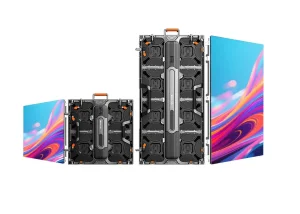
Wholesale Modular LED Screens for Events
Wholesale High-Quality Modular LED Screens for Events & Backdrops
View Product Details
Custom Indoor COB Fine Pitch HD LED Screen
Custom Indoor COB Fine Pitch HD LED Screen | Ultra-Smooth 4K Display
View Product Details
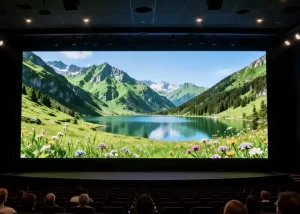
China Indoor Home-Theater COB Fine-Pitch HD Video Wall
China Indoor Home-Theater COB Fine-Pitch HD Video Wall | IN-H Series
View Product Details
Custom COB Fine Pitch LED Display Conference All-in-One Machine
Custom COB Fine Pitch LED Display & Conference All-in-One Machine
View Product Details
Custom Outdoor Double-Sided Taxi LED Advertising Screen
Custom Outdoor Double-Sided Taxi LED Advertising Screen | AL-C Series
View Product Details
Wholesale Stadium Perimeter LED Display
Wholesale Stadium Perimeter LED Display For Football Match
View Product Details
Custom Outdoor 3D advertising LED display screen
Custom Outdoor 3D advertising LED screen with aluminum panel
View Product Details
Custom Tri-Fold LED Poster Screen Display
Custom Tri-Fold LED Poster Screen Display | Indoor Digital Signage
View Product Details