Direct factory procurement for enterprise projects, system integrators, and international rental operators.
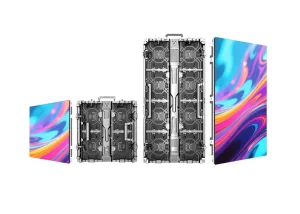
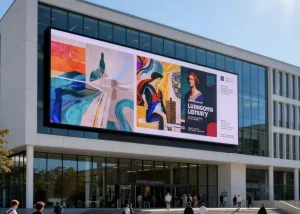
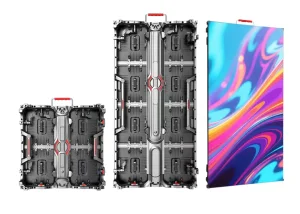
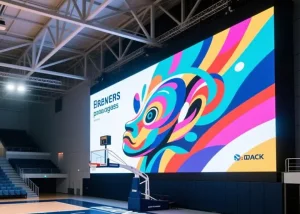
Overcoming deadweight limits, wind drag coefficients, and daylight illumination loss in modern high-rise envelope applications.
The global architectural display market has undergone a paradigm shift. Traditional solid LED cabinets—while effective for smaller, close-range billboards—present insurmountable engineering hurdles when applied across thousands of square meters of building elevation. Structural deadweight (often exceeding 45–65 kg/m²), massive wind resistance forces requiring heavy steel framework reinforcement, and complete blocking of interior daylight have pushed structural engineers toward LED Mesh Displays (also known as LED Grid Screens, Strip Mesh Walls, or Media Facades).
As a specialized wholesale manufacturer and direct-factory supplier, our engineering benchmark focuses on optimizing four key physical vectors: optical transparency (40% to 85%), structural mass reduction (8 to 14 kg/m²), aerodynamic drag reduction, and long-term IP67/IP68 environmental resilience.
By arranging light-emitting strips into open-grid configurations, LED mesh permits up to 80% natural light penetration into building interiors. Simultaneously, wind passes directly through the screen grid, dramatically lowering pressure loads on the primary structural facade.
Weighing only a fraction of conventional cabinets, LED mesh panels can be installed using slim tension cables or lightweight aluminum sub-frames. This reduces transportation costs, structural engineering budgets, and crane deployment requirements during construction.
Each LED strip is sealed utilizing solid optical-grade silicone or polyurethane encapsulation. This guarantees total immunity against moisture ingress, UV degradation, salt spray corrosion, and extreme temperature fluctuations from -40°C to +70°C.
Objective metrics derived from factory testing, structural wind tunnel evaluations, and architectural installation benchmarks.
| Performance Benchmark | Architectural LED Mesh Display | Standard Outdoor Cabinet Screen | Engineering Benefit |
|---|---|---|---|
| Structural Weight | 8.5 – 14 kg / m² | 45 – 65 kg / m² | Up to 75% mass reduction; eliminates heavy steel supporting skeletons. |
| Optical Transparency | 40% – 85% (Depending on pitch) | 0% (Opaque block) | Maintains indoor daylighting; complies with architectural glass codes. |
| Wind Drag Coefficient | 0.25 – 0.40 (Low resistance) | 1.10 – 1.30 (Full wind sail) | Safe installation on coastal skyscrapers and hurricane-prone zones. |
| Power Consumption | Avg: 120 - 220 W/m² (Peak: 450 W/m²) | Avg: 300 - 450 W/m² (Peak: 900 W/m²) | Substantial long-term operational cost reduction and lower thermal output. |
| Maintenance Architecture | Front / Rear Strip-level Hot Swapping | Cabinet / Module Level Removal | Single strip replaceable in 60 seconds without dismantling adjacent units. |
| Installation Speed | Flexible rollable/fast-lock 1000mm panels | Heavy bolt-together steel frames | Deploy large scale media facades up to 3x faster with minimal rigging. |
Factory Insight: Choosing the right pixel pitch for LED mesh depends on viewing distance and building elevation. For high-rise media facades viewed from >100 meters, pixel pitches like P31.25 or P50 deliver optimal visual density while maximizing transparency and budget efficiency. For medium-distance viewing (30–80 meters), P15.625 or P20 strikes the perfect balance between resolution and air permeability.
How international real estate developers, municipal operators, and media agencies leverage wholesale LED mesh systems.
In mature architectural markets such as North America and Western Europe, municipal zoning regulations and building codes place strict limitations on visual density, structural alterations, and light pollution. Standard outdoor LED displays often fail planning permission due to blocking natural daylight into commercial offices, exceeding facade structural weight limits, or disrupting historic building aesthetics.
Wholesale LED Mesh Displays solve these regulatory challenges. Because of their semi-transparent nature and flexible mounting hardware, they can be deployed behind glass curtain walls or directly over perforated building skins without altering the building's permanent envelope or violating light-access standards. Furthermore, energy efficiency requirements under LEED and BREEAM certifications heavily favor low-power LED mesh technology.
The Asia-Pacific region and the Middle East are experiencing unprecedented booms in urban megaprojects, multi-use skyscrapers, entertainment hubs, and stadium complexes. In regions like Dubai, Riyadh, Singapore, and Shanghai, building facades are no longer passive physical barriers; they are dynamic digital assets generating substantial advertising revenue and civic identity.
Here, LED mesh displays scale across thousands of square meters to create breathtaking "Sky-Screens" and 3D architectural canvases. Their inherent resistance to extreme ambient temperatures (up to +70°C under direct desert sunlight) and high sand/dust tolerance (IP68 sealed LED strips) make them the premier choice for regional master developers.
Why sourcing directly from Shenzhen's tier-1 LED manufacturing ecosystem delivers unmatched technical performance and cost optimization.
Our Shenzhen production facilities integrate high-speed Yamaha and Panasonic SMT assembly lines, automated optical inspection (AOI), high-temperature aging chambers, and localized potting encapsulation under one roof, guaranteeing absolute quality control.
Proximity to world-class LED chip package manufacturers (Nationstar, Kinglight), IC driver pioneers (Macroblock, Chipone), and precision aluminum extrusion mills enables rapid component sourcing, reducing lead times from months to weeks.
By processing bulk wholesale orders for global distributors, our factory achieves optimal procurement margins on gold-wire LEDs, custom PCB substrates, and power supplies—passing substantial cost savings directly to project buyers.
How ongoing R&D in Micro-LED, Photovoltaic integration, and AI driver chips is defining the future of digital architecture.
Traditional mesh displays focused primarily on coarse pitches (P15.6 – P50). Current R&D is bridging the gap by deploying Micro-LED chips onto flexible mesh substrates, achieving fine pitches like P3.9 – P7.8 while preserving 50%+ transparency. This opens up close-range architectural applications such as interior atrium displays and retail store glass windows.
The convergence of Building-Integrated Photovoltaics (BIPV) and LED mesh displays is creating self-powering media facades. By embedding transparent solar film strips between LED light bars, the facade generates clean solar energy during daylight hours, offsetting nighttime power consumption for dynamic video playback.
Combining motorized actuators with flexible LED mesh curtains allows physical movement of the display surface in response to video content. These kinetic 3D facades physically expand, contract, wave, or transform, delivering unprecedented immersive experiences for flagship retail locations and public landmarks.
Modern LED mesh systems are evolving into intelligent IoT edge nodes. Equipped with environmental sensors, ambient light meters, and camera-based crowd analysis, AI-enabled control processors automatically optimize luminance output, adjust refresh rates based on motion speed, and monitor structural strain parameters in real time.
Tailored engineering solutions designed for specific architectural environments and mechanical constraints.
Config: P15.625 / P31.25 DIP or SMD LED Mesh, Rear/Front Tension Mount.
Installed behind or directly in front of commercial tower glazing. High transparency preserves office lighting while rendering crystal-clear digital advertising to city highways below.
Config: P25 / P50 Ultra-Bright (8,000–10,000 Nits) Outdoor Strip Mesh.
Conforms to curved stadium perimeter structures. Low wind resistance protects large cantilever roofs, while extreme brightness ensures vivid daytime game promotion and sponsor branding.
Config: Soft Flexible Rollable LED Mesh Curtain, Fast-Lock Cable System.
Rolls into flight cases for effortless transport. Touring crews can hoist 500m² backdrops in under two hours, creating dynamic see-through stage lighting and 3D video effects.
Rigorous quality standards, fire safety protocols, and localized engineering support for global deployments.
Procuring wholesale equipment across international borders requires absolute compliance with local electrical, fire, and structural codes. All LED mesh products manufactured at our Shenzhen facilities undergo rigorous third-party testing and hold comprehensive certifications:
We bridge the distance between factory manufacturing and localized installation by offering end-to-end technical support services tailored for overseas distributors and engineering contractors:
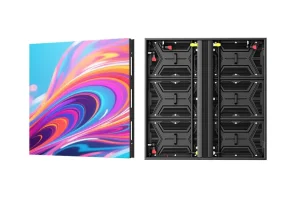
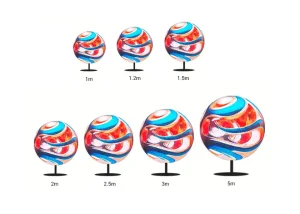
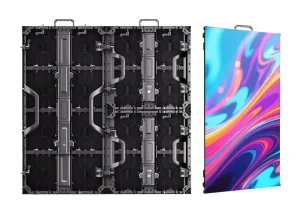
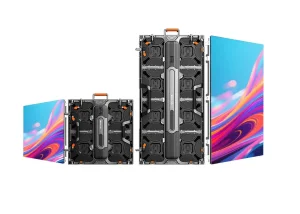
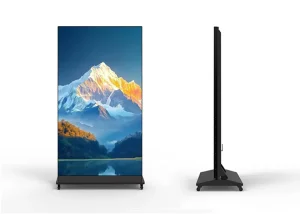
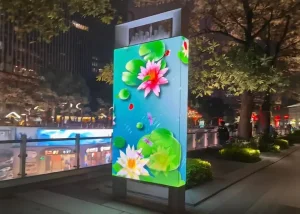
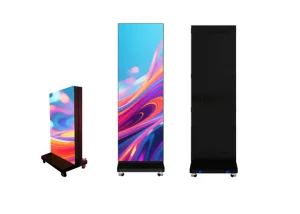
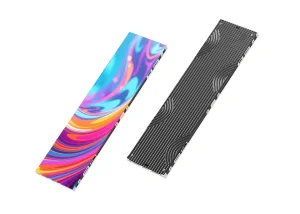
Explore our complete manufacturing series for indoor fine-pitch, outdoor 3D, spherical, and poster displays.
Essential technical and logistical insights for B2B buyers, AV integrators, and engineering decision-makers.