Explore our top-tier engineering solutions featuring in-house SMT precision, IP65 weatherproofing, fine-pitch COB encapsulation, and ultra-high refresh rate controller integration.
As global digital displays transition from standard signage to immersive architectural environments, the role of wholesale suppliers has shifted from transactional manufacturing to technical support integration.
The market is rapidly migrating from traditional Surface Mounted Devices (SMD) to Chip-on-Board (COB) and Glue-on-Board (GOB) architectures. Micro-pitch displays (<P1.0mm) demand cleanroom SMT assembly and specialized pixel calibration technical support to guarantee optical uniformity and anti-collision physical durability.
Broadcasting and film studios demand zero camera flicker, dynamic refresh rates exceeding 7,680Hz, 16-bit grayscale depth, and low-latency processing. Wholesale technical support teams now engineer synchronized genlock pipelines and HDR10+ calibration curves directly into the factory firmware.
Modern LED installations incorporate IoT telemetry modules that transmit real-time thermal profiles, voltage dips, and pixel failure counts to central NOC centers. Factory engineers deploy automated diagnostic scripts to enable predictive maintenance long before structural failures occur.
Procuring LED video walls at enterprise scale requires rigorous evaluation of engineering support capabilities. A display panel is only as reliable as the underlying signal distribution network, power supply topology, and thermal management setup. High-end suppliers must provide comprehensive structural CAD rendering, heat load calculation, power distribution engineering, and NovaStar/Colorlight control mapping prior to manufacturing sign-off.
Fortune 500 procurement teams and international system integrators evaluate manufacturing partners based on strict risk mitigation metrics, Total Cost of Ownership (TCO), and technical compliance standards.
Modern enterprise procurement extends beyond initial FOB factory pricing. Buyers analyze 5-year operational expenditure (OpEx), focusing on common-cathode LED driver architecture. Common-cathode technology delivers cold-screen operations, reducing operating power consumption by up to 35-45% compared to legacy common-anode setups while maintaining peak brightness up to 10,000 nits.
Tier-1 commercial projects require absolute compliance with international regulatory bodies. Wholesale manufacturing partners must provide validated laboratory test reports for CE, FCC Class A/B, ETL, RoHS, and EMC compliance to prevent signal interference with enterprise wireless infrastructure and guarantee electrical safety under continuous 24/7/365 operation.
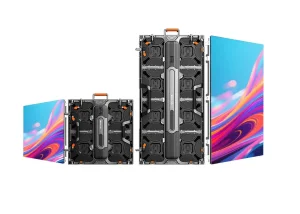
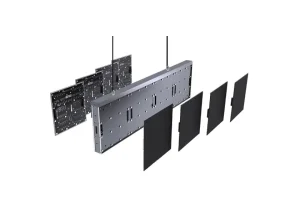
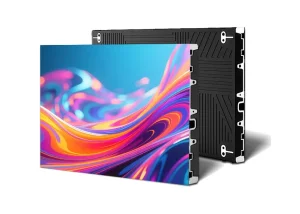
Architectural constraints in retail environments and corporate boardrooms often prevent rear cabinet access. Supply partners must design ultra-slim, die-cast aluminum cabinets featuring magnetic vacuum-assisted front serviceability. Technical documentation must clearly define module extraction procedures, pin-header alignment tolerances, and hot-swappable receiving card replacements.
A major failure mode in large-scale video wall expansion is color spectrum mismatch. Technical support suppliers maintain strict LED lamp binning protocols (WD/Luminous Intensity/Forward Voltage) and save factory calibration coefficients directly into module EEPROM chips, allowing seamless plug-and-play module swaps years after initial installation.
Situated at the epicenter of world display innovation in Bao'an, Shenzhen, our automated manufacturing facilities integrate high-speed SMT assembly, automated optical inspection (AOI), and dual-stage thermal burn-in protocols.
Fully automated Yamaha and Fuji surface mount lines place micro-LED chips down to P0.9 pitch with ±0.01mm placement accuracy, ensuring microscopic pin-header alignment and zero solder bridging.
Automated Solder Paste Inspection (SPI) followed by 3D Automated Optical Inspection (AOI) screens 100% of PCB assemblies for cold solder joints, missing components, or polarity errors before conformal coating.
Automated robotic sprayers apply anti-corrosive polyurethane coating across PCB modules, granting resistance against salt-spray corrosion, tropical humidity, and static electricity accumulation.
Every display module undergoes 24 hours of unpopulated module burn-in followed by 48 hours of full-screen video loop stress testing under elevated ambient humidity to eliminate early-life electronic failures.
| Manufacturing Milestone | Quality Control Standard | Technical Engineering Value |
|---|---|---|
| PCB Layer Architecture | 1.6mm 4-Layer to 8-Layer High-TG FR4 | Prevents thermal warping, improves power plane distribution, reduces EMI emissions. |
| LED Lamp Package Binning | 1-Bin Spectrum Sorting (Wavelength ±1nm) | Guarantees seamless color uniformity across display panels spliced over 500+ sq.m. |
| Encapsulation Protection | Micro-Glue Vacuum Coating (GOB/COB) | Protects against moisture ingress, dust accumulation, surface impact, and electrostatic discharge. |
| Cabinet Alignment Machining | CNC Die-Cast Aluminum (±0.05mm Tolerance) | Delivers zero visual seam lines across complex curved or flat LED wall configurations. |
Our engineering teams customize display configurations to match environmental constraints, ambient light levels, structural load limits, and signal distribution topologies.
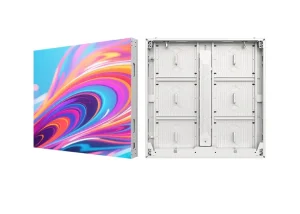
Deployment in traffic management centers, emergency operations, and security operations center (SOC) environments requires continuous 24/7 stability. Utilizing ultra-fine P0.93 to P1.56 COB screens with redundant power supply units (PSU) and dual-receiving cards ensures uninterrupted real-time video feed monitoring.
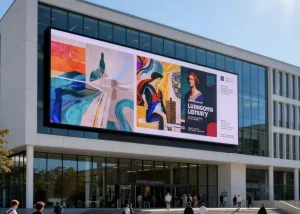
Digital Out-of-Home (DOOH) billboards face intense direct sunlight, freezing temperatures, and severe rainstorms. Outfitted with DIP or high-brightness SMD lamps generating up to 10,000 nits, IP65 aluminum cabinets, and automatic ambient light dimming sensors, these screens operate reliably under extreme weather.
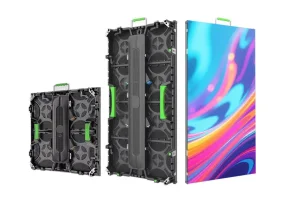
Concerts, exhibitions, and rental operators demand ultra-fast setup and teardown capabilities. Our rental screen cabinets feature quick-locking latches, carbon-fiber frame corner protectors, flight-case packaging, and 7,680Hz refresh rates designed to prevent moiré patterns on live television broadcast cameras.
Large-scale worship spaces require high-contrast video walls to display lyrics, camera feeds, and immersive visual backgrounds under bright indoor stage lighting. Silent convection cooling without internal fans ensures zero acoustic interference with sensitive room microphones.
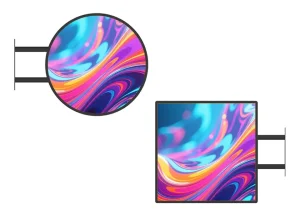
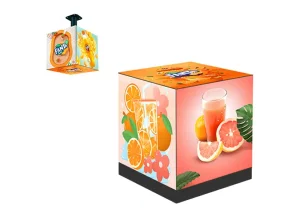
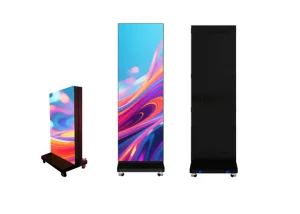
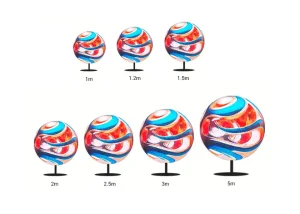
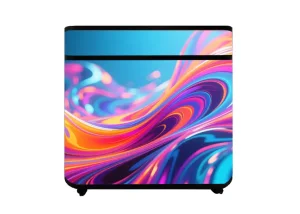
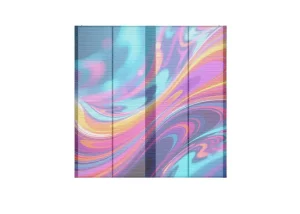
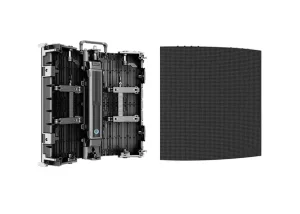
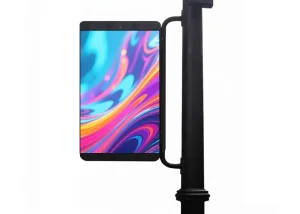
High-end retail displays incorporate custom geometric forms, fine-pitch indoor posters, transparent glass displays, and dynamic LED cubes. Seamless integration with cloud-based Content Management Systems (CMS) allows worldwide marketing management from a centralized dashboard.
Virtual production stages replace traditional green screens with ultra-fine pitch LED walls. Integrated with camera tracking tech, wide color gamut (99% DCI-P3), and low-latency processing, actors interact with realistic 3D environments in real time.
A failure in a high-profile display wall damages brand reputation. Our factory-backed technical support structure covers every phase from pre-installation simulation to long-term component lifecycle support.
Cad structural drawings, power load calculations, optical viewing distance analysis, and signal redundancy scheme design tailored to architectural site constraints.
Remote or on-site engineer dispatch for cabinet alignment, structural frame inspection, NovaStar/Colorlight system mapping, and high-resolution RCFG/RCG file creation.
Direct 1-on-1 technical training for client AV teams covering software operations, content scheduling, vacuum tool module replacement, IC soldering repair, and emergency bypass workflows.
Comprehensive 3-year factory warranty backed by a mandatory 3% to 5% spare module, receiving card, and power supply inventory reserve sourced from the exact same manufacturing batch.
Expert responses from our senior LED video wall engineers addressing critical procurement and technical support inquiries.
A practical engineering rule of thumb is that the minimum comfortable viewing distance in meters roughly equals the pixel pitch in millimeters (e.g., P2.0mm = 2.0 meters minimum viewing distance). For optimal visual immersion and seamless 4K image display without visual pixelation, calculate the viewing distance at 2 to 3 times the pitch value. Boardrooms and control rooms where viewers sit within 1.5 to 3 meters typically mandate fine pitch displays from P0.93mm to P1.56mm.
Camera flickering and rolling black lines occur when camera shutter speeds desynchronize with display refresh rates. To guarantee broadcast-grade capture, we utilize high-drive PWM ICs (such as ICN2153 or MBI5252) configured for refresh rates of 3,840Hz to 7,680Hz, alongside high grayscale output at low brightness levels. System calibration also includes genlock synchronization with camera frame references.
Front-access displays allow technical teams to remove modules, receiving cards, and power supplies directly from the front of the screen using specialized magnetic vacuum suction tools. This is essential for wall-mounted installations where rear access is impossible. Rear access displays require a dedicated maintenance walkway (typically 60-80cm deep) behind the structure, commonly deployed in outdoor billboards or freestanding stage rentals.
Traditional common-anode LED displays supply a uniform voltage (typically 5V) to Red, Green, and Blue LED chips simultaneously, causing excess power to dissipate as heat because Red chips require lower operating voltage (~2.8V). Common-cathode systems supply independent, optimized voltages directly to Red (2.8V) and Green/Blue (3.8V) diodes. This precise power distribution reduces power usage by up to 45% and lowers screen surface temperature by 10°C to 15°C.
All wholesale orders include a 3-year standard factory warranty. In addition to spare parts replacement for non-human damage, we provide 1-on-1 engineer video training, lifetime free software update support, remote access system troubleshooting, and full access to our structural and electrical engineering design library.
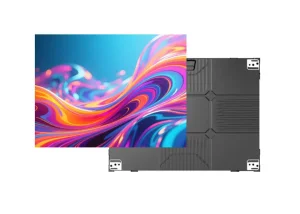
Discover custom geometric forms, high-resolution COB displays, and mobile poster units backed by full factory technical warranty support.
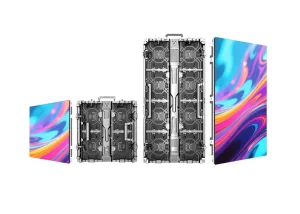
Partner directly with our Shenzhen engineering hub. Share your architectural drawings, target resolution, and installation site constraints to receive complete CAD drawings, power consumption models, and factory-direct wholesale pricing within 24 hours.