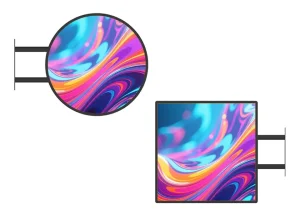
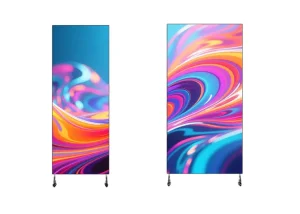
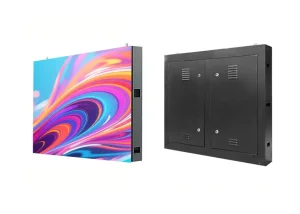
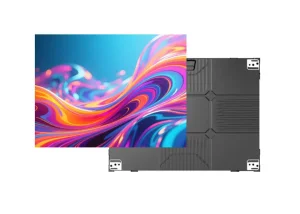
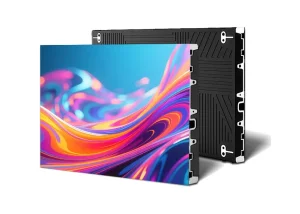
Engineered with industrial-grade driver ICs, redundant power supplies, and thermal management architectures to minimize field failures.

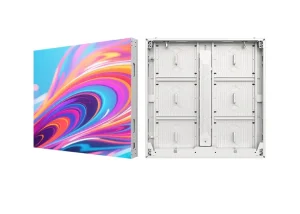
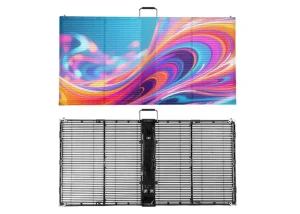
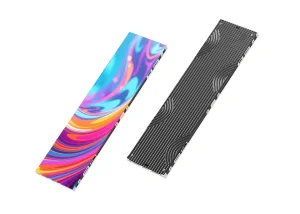
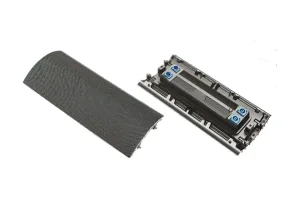
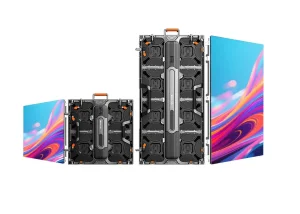
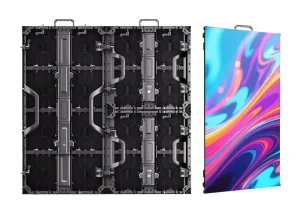

In high-stakes commercial environments—from DOOH advertising networks to mission-critical command centers—unplanned LED display downtime causes immediate revenue loss, contractual penalty risks, and severe brand erosion.
As fine-pixel pitch deployments (P0.93 to P1.875) rapidly replace traditional LCD video walls and direct-view displays, the mechanical and electronic complexity of LED video walls has increased exponentially. A single 4K LED assembly contains over 8.2 million individual RGB surface-mount diodes (SMD) or Micro-COB chips, tens of thousands of constant-current driver ICs, and complex high-frequency data distribution pipelines.
For global procurement managers, AV integrators, and wholesale distributors, evaluating a manufacturer requires looking beyond initial FOB pricing. The true Total Cost of Ownership (TCO) hinges on factory engineering quality, circuit protection design, and the speed of field diagnostics. When troubleshooting wholesale LED displays, engineers must address failures at four interconnected layers: Power Transmission, Signal Integrity, Component Interconnects, and Thermal/Environmental Dynamics.
Factory-engineered diagnostic flows for quick identification of hardware failures, logic errors, and physical degradation.
| Symptom Category | Observed Failure Mode | Root Cause Analysis | Factory-Level Diagnostic Procedure | Severity Level |
|---|---|---|---|---|
| Power Infrastructure | Entire Panel / Line Dark | Switching Power Supply (SMPS) failure, PFC thermal shutdown, open DC output fuse, AC input spike. | Measure DC bus voltage output (4.2V–5.0V). Test continuity across primary input relays and line filters. | Critical |
| Data Distribution | Garbled Text / Vertical Lines | Receiver card configuration file (.RCFG) corruption, LVDS ribbon cable noise, shift register IC failure. | Reload golden calibration file via NovaStar/Colorlight software. Swap ribbon cables; probe CLK and LAT signals. | Moderate |
| Component Level | Single Dead Pixel / Color Cast | SMD LED die open-circuit, micro-crack in solder joint, driver IC (e.g., MBI5153) channel failure. | Perform diode test with multimeter. Check constant-current output pin voltage on the driving IC. | Low-Moderate |
| Thermal & Moisture | Caterpillar Effect / Glow Lines | Moisture ingress causing leakage currents across PCB traces, ghosting cancellation circuit failure. | Run high-temperature dehumidification cycle (de-moisturization aging). Inspect IP65 silicone seals. | Moderate |
| Signal Processing | Flicker under Camera Capture | Insufficient refresh rate setting, grayscale clock frequency mismatch, inadequate multiplexing ratio. | Verify driver IC supports High-GCLK (7680Hz). Adjust receiver card clock phase and PWM modulation mode. | Low |
Verify AC mains supply voltage consistency, measure DC output under full-white load (checking for voltage drop below 4.1V), and test ground isolation to prevent ground loop hum.
Verify Gigabit Ethernet link health, inspect fiber-optic transceiver status, and analyze packet loss metrics on the main controller dashboard.
Isolate module-level defects using built-in self-test (BIST) modes (Red, Green, Blue, White burn-in patterns). Locate failed column/row driver ICs via heat signatures.
Utilize high-precision optical spectrometers to calibrate seam brightness, correct batch-to-batch color shifts, and rewrite coefficients to factory EEPROM memory.
Preventing screen failures begins long before deployment. Advanced factory production lines employ strict quality control protocols during surface mount technology (SMT) assembly.
High-resolution 3D AOI systems inspect 100% of solder paste deposits, component alignment, and pin bridging post-reflow. This reduces cold solder joints—the leading cause of field pixel failure—to under 5 PPM.
Every manufactured batch undergoes rigorous high-temperature (50°C) and high-humidity (85% RH) burn-in testing under continuous full-load illumination. Component infant mortality is isolated before packaging.
From traditional Surface Mount Devices (SMD) to Glue-on-Board (GOB) and Chip-on-Board (COB) technologies, advanced polymer encapsulation provides impact resistance, dust prevention, and anti-static protection.
Managing operational risks across international commercial projects requires standardized sourcing protocols, certified component selections, and structured spare-parts buffer management.
Wholesale shipments must include matched-bin batch spares: 3%–5% extra module tiles, 1% receiver cards, 2% switching power supplies, and matching LED driver ICs to ensure seamless long-term maintenance.
Specifying magnetic front-service modules drastically reduces repair time. Service technicians can swap out a damaged module in under 30 seconds without dismantling structural framing.
For mission-critical command centers and live broadcasts, redundant power wiring and loop-back signal cabling prevent total screen blackout if a single PSU or cable connection fails.
Ensuring cross-border compliance, regulatory approval, and worldwide engineering support for large-scale enterprise deployments.
Global imports demand strict compliance with regional safety, electromagnetic, and environmental standards. Leading LED manufacturers certify their production lines to guarantee hassle-free customs clearance and safe site operation:
Top manufacturers back their product distribution with robust Service Level Agreements (SLAs) designed for international project execution:
How MicroLED COB, AI-driven predictive health monitoring, and smart driver ICs are reshaping display reliability over the next decade.
Chip-on-Board (COB) flip-chip packaging eliminates traditional wire bonding, reducing mechanical failure points by up to 90%. COB screens feature high surface hardness (4H), impact resistance, and superior thermal dissipation for long-term operational stability.
Modern LED control systems incorporate real-time IoT diagnostic telemetry. Smart sensors embedded within power supplies and control cards continuously monitor voltage ripple, temperature spikes, humidity levels, and pixel health—predicting component failure before downtime occurs.
Micro IC Packaging (MIP) allows sub-100μm LED chips to be individually tested before assembly, lowering production repair costs. Combined with common-cathode power architectures, system power consumption is reduced by up to 40%, lowering operating temperatures and extending overall screen lifespan.
Direct technical answers to common questions raised by enterprise procurement teams, AV integrators, and field service engineers.
Explore our full range of indoor, fine-pitch, COB, and specialized creative display solutions engineered for international markets.