Explore our premium factory-direct solutions engineered for extreme outdoor durability, rental events, and high-impact visual commercial installations.

Decoding the Strategic Requirements of Modern B2B LED Screen Buyers Across Technical, Financial, and Operational Vectors.
The global market for outdoor LED displays has undergone a fundamental shift from simple billboard hardware acquisition to complex enterprise digital infrastructure deployment. Commercial real estate developers, Out-of-Home (DOOH) media conglomerates, sports stadium operators, and municipal smart-city planners no longer search merely for lower unit prices. Instead, user intent analysis of B2B procurement searches indicates an overwhelming demand for Total Cost of Ownership (TCO) optimization, structural reliability, energy conservation, and operational lifecycle extension.
When enterprise procurement teams evaluate wholesale outdoor LED screen suppliers and factories, their decision-making metrics center on five critical pillars:
Outdoor displays operating 16 to 24 hours daily generate substantial electrical bills. Modern buyers mandate Common Cathode driver IC architectures that reduce thermal output by 30% and electricity consumption by up to 40% without compromising 6,000–10,000 nits daylight visibility.
Outdoor deployment demands true IP65/IP67 front and rear ingress protection. Industrial clients require certified resistance against typhoons, salt-fog corrosion in coastal installs, sandstorms, and extreme ambient thermal cycles (-40°C to +60°C).
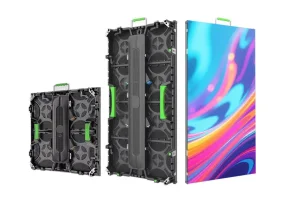
Minimizing Mean Time To Repair (MTTR) is critical. Top-tier engineering specs necessitate Dual-Power & Dual-Data Redundancy coupled with Front and Rear Magnetic Serviceability for single-module replacement in under 60 seconds.
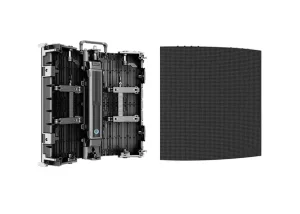
Furthermore, semantic intent analysis reveals that direct factory sourcing from key manufacturing hubs like Shenzhen, China, allows global systems integrators to bypass intermediary markups, achieve bespoke physical customizations (such as curved, 90-degree right-angle, or high-transparency holographic configurations), and secure guaranteed long-term batch calibration consistency (same binning for LEDs across 5+ years).
Architectural Deployments Tailored for Specific Sector Demands and Harsh Environmental Operating Parameters.
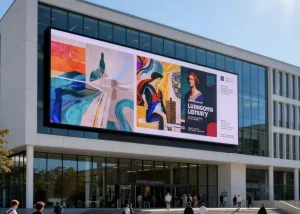
For large-format roadside billboards and high-density commercial plazas, visibility against ambient glare is paramount. Factory solutions employ SMD2727 or DIP346 LED packages delivering upwards of 8,000 to 10,000 nits. Combined with automated light-sensing dimming systems, these screens prevent night-time light pollution while maximizing daytime impression metrics for media owners.
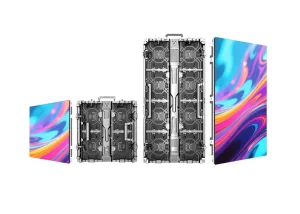
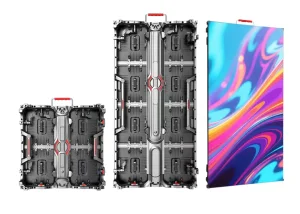
Concerts and live rentals demand structural agility. Magnesium-aluminum alloy cabinets featuring fast-locking mechanisms enable rapid assembly by limited crew members. High refresh rates (minimum 3,840Hz to 7,680Hz) are non-negotiable to eliminate scanlines under high-speed professional broadcast cameras.
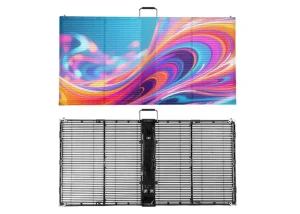
Modern glass curtain walls in retail flagships require visual solutions that do not block interior natural daylight or air vents. High-transparency mesh and holographic film LED displays achieve 70%–85% transparency while rendering 3D visual illusions without altering the host building's aesthetic integrity.
Airports, train hubs, and highway toll gantries require continuous 24/7/365 uninterrupted operation. Systems integrators rely on fine-pitch outdoor panels (P2.5–P3.91) equipped with SNMP central monitoring software that alerts operators in real-time to power supply degradation or pixel failures.
A Comprehensive Comparison Matrix for B2B Procurement Teams Evaluating Technical Benchmarks Across Outdoor Pitch Options.
| Pixel Pitch | LED Packaging | Optimal Distance | Brightness (Nits) | Refresh Rate | Ingress Rating | Primary Sector Application |
|---|---|---|---|---|---|---|
| P2.5 Outdoor | SMD1415 / GOB | ≥ 2.5 Meters | 4,500 – 5,500 | 3,840Hz – 7,680Hz | IP65 Front / IP54 Rear | Luxury Retail Storefronts, Transit Concourses |
| P3.91 Outdoor | SMD1919 / SMD2121 | ≥ 4.0 Meters | 5,000 – 6,500 | 3,840Hz – 7,680Hz | IP65 Front / IP65 Rear | Rental Events, Stage Backdrops, Plazas |
| P4.81 Outdoor | SMD2727 | ≥ 5.0 Meters | 6,000 – 7,500 | 3,840Hz | IP65 Front / IP65 Rear | Fixed Commercial Billboards, Sports Arenas |
| P6.25 Outdoor | SMD2727 / SMD3535 | ≥ 6.5 Meters | 6,500 – 8,000 | 1,920Hz – 3,840Hz | IP66 Front / IP65 Rear | Highway Advertising, Building Facades |
| P8.0 Outdoor | SMD3535 / DIP346 | ≥ 8.0 Meters | 7,500 – 9,000 | 1,920Hz – 3,840Hz | IP66 Front / IP66 Rear | Extreme Sun Exposure DOOH Networks |
| P10.0 Outdoor | DIP346 High-Bright | ≥ 10.0 Meters | 8,500 – 10,000+ | 1,920Hz | IP67 Front / IP65 Rear | Large Scale High-Altitude Digital Billboards |
Next-Generation Advances Shaping the Landscape of Large-Scale Outdoor Optoelectronics.
While Surface Mounted Device (SMD) encapsulation remains the dominant technology for outdoor screens, Chip-on-Board (COB) and Glue-on-Board (GOB) architectures are accelerating rapidly. GOB applies a transparent epoxy shield over SMD arrays, elevating impact resistance, anti-collision properties, and moisture sealing to near industrial absolute levels. Micro-COB technology eliminates wire bonding altogether, driving pixel pitch down to sub-1.5mm outdoors while radically expanding contrast ratios and thermal dissipation efficiency.
Future outdoor display ecosystems are integrating embedded IoT diagnostic edge chips. Coupled with artificial intelligence algorithms, these screens continuously adjust color gamuts and brightness based on real-time meteorological data and solar trajectory. Furthermore, predictive calibration auto-corrects individual diode color degradation over time, guaranteeing visual uniformity across vast video walls without requiring manual camera calibration visits from field technicians.
With global ESG (Environmental, Social, and Governance) compliance becoming a mandate for corporate procurement, leading LED screen manufacturers are redesigning cabinet chassis using 100% recyclable die-cast aluminum alloys. Flame-retardant VO-grade PCB substrates and lead-free automated SMT assembly lines ensure components meet stringent global circular economy standards.
How Enterprise Sourcing Directors Evaluate Chinese OEM/ODM Manufacturers to Minimize Supply Chain Risk.
Selecting a reliable manufacturing partner in major industrial manufacturing hubs (such as Shenzhen, Guangdong) requires detailed auditing beyond promotional brochures. Enterprise buyers should execute a structured multi-stage factory assessment prior to issuing Purchase Orders (POs):
Ensuring Seamless International Import, Safety Compliance, and On-Site Engineering Execution.
Direct-from-factory exports must meet strict regional electrical safety standards. Ensure products are certified under CE-EMC, CE-LVD, FCC Class A/B, RoHS, ETL, and UL 48 (Electric Sign Systems) for friction-free customs clearance and local utility interconnects.
Professional suppliers include a standardized 3%–5% spare parts redundancy kit with bulk wholesale shipments. This includes extra LED module cards, receiving cards, power supply units (PSUs), IC chips, and structural fast-connectors to guarantee zero display downtime.
Leading suppliers provide 24/7 multi-lingual technical support, remote NovaStar/Colorlight system setup, direct engineering dispatch for major stadium commissioning, and comprehensive 3-to-5-year factory warranties.
In-Depth Answers to Critical B2B Procurement and Engineering Inquiries.
Common Cathode technology supplies power independently to the Red, Green, and Blue diodes using exact precise voltages (e.g., ~2.8V for Red, ~3.8V for Green/Blue). Traditional Common Anode supplies a uniform 5V to all diodes, dissipating excess energy as heat. Common Cathode designs run up to 20°C cooler, consume up to 40% less electrical power, and significantly extend LED component lifespan.
A standard rule of thumb for minimum viewing distance is: Minimum Distance (in meters) = Pixel Pitch (in mm). For example, a P3.91 display delivers clear visuals from ~4 meters away, whereas a P10 billboard requires ~10 meters. For optimal image resolution without visible pixelation, multiply the pixel pitch by 2 to 2.5 times.
Refresh rate determines how many times per second the screen redrows its display image. Low refresh rates (e.g., 1,920Hz) cause flickering lines and visual artifacts when captured by broadcast video camera shutters. High refresh rates (3,840Hz to 7,680Hz) guarantee smooth, broadcast-grade visuals essential for stadium displays, live concerts, and XR virtual production environments.
Standard outdoor screens require an absolute minimum of IP65 (Ingress Protection 65) for front modules to prevent rain penetration and dust contamination. For coastal installations subject to high humidity and salt air, specify IP66 or IP67 cabinets featuring conformal anti-corrosion coating on all PCB components and sealed die-cast aluminum enclosures.
OEM/ODM manufacturers provide complete customized production based on client technical requirements. This includes custom cabinet sizes (e.g., 500x500mm or 500x1000mm), client logo silk-screening, custom flight-case branding, tailored module PCB layouts, specialized bracket geometry, and custom firmware/software configurations.
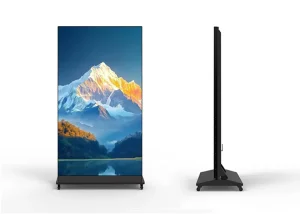
Advanced Commercial Displays, COB All-in-One Machines, and Creative Digital Signage Solutions.