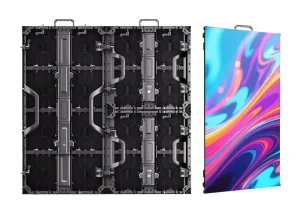
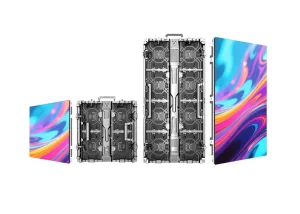
Explore our top-tier LED display systems engineered with high refresh rates, ultra-fine pixel pitches, and robust industrial packaging for demanding global installations.
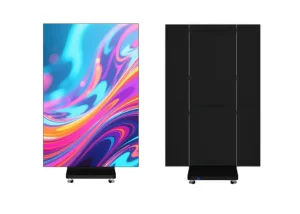
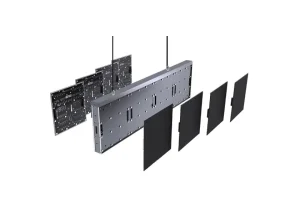
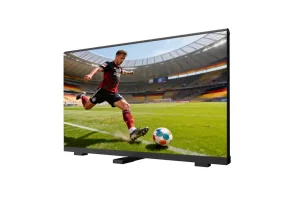
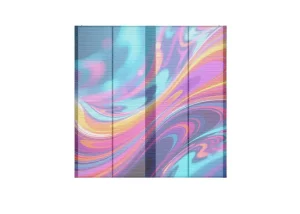
In the contemporary digital display landscape, the P1.25 fine-pitch LED display represents the sweet spot where spatial physics, high-density semiconductor packaging, and enterprise visual communication intersect. As command centers, broadcast environments, corporate boardrooms, and luxury retail hubs transition from traditional LCD video walls to seamless light-emitting diode (LED) matrixes, direct-view fine-pitch screens have become the benchmark standard. Operating at an exact center-to-center diode spacing of 1.25 millimeters, this technology eliminates visual seams while offering native high-definition image replication at exceptionally close viewing distances.
When procuring from a wholesale P1.25 LED display manufacturer or specialized factory, commercial system integrators and B2B buyers must navigate complex technological paradigms. The industry is currently undergoing a structural transformation from legacy Surface Mount Devices (SMD) to advanced Chip-on-Board (COB) and Glue-on-Board (GOB) architectures. Understanding these structural advancements is essential to optimizing Total Cost of Ownership (TCO), mitigating thermal degradation, and maximizing visual performance across multi-year operational lifecycles.
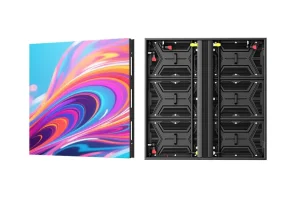
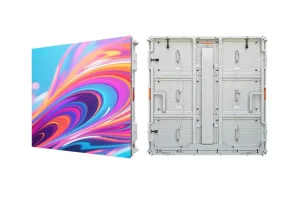
Built using standardized cabinet dimensions (such as 600x337.5mm or 640x360mm) that allow effortless 16:9 1080p, 4K, and 8K video wall assembly without pixel distortion.
Advanced power distribution delivers targeted voltage to RGB chips independently, cutting power consumption by 30-45% and dropping module temperatures by up to 15°C.
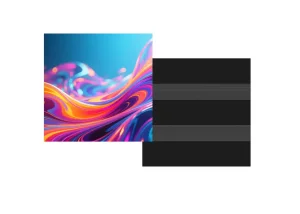
Direct wire-free bonding to the PCB substrate delivers IP65 surface protection, 10,000:1 ultra-high contrast ratios, and immunity to physical impacts or moisture.
To evaluate manufacturing options effectively, procurement executives must analyze how diode mounting methodologies affect durability, optical performance, and long-term maintenance costs:
When requesting quotes from OEM LED factories, ensure specs differentiate between Formal-Chip COB and Flip-Chip COB. Flip-Chip design increases light-emitting surface area by 35% while eliminating wire-breakage failure modes caused by thermal expansion cycles.
Direct comparative breakdown of P1.25 fine-pitch LED display configurations across major packaging methodologies for engineering procurement teams.
| Engineering Parameter | P1.25 Standard SMD | P1.25 Enhanced GOB | P1.25 Premium Flip-Chip COB |
|---|---|---|---|
| Pixel Pitch & Density | 1.25mm / 640,000 dots/m² | 1.25mm / 640,000 dots/m² | 1.25mm / 640,000 dots/m² |
| Encapsulation Method | SMD 1010 (Wire Bonding) | SMD + Epoxy Resin Seal | Direct Wire-free Flip-Chip |
| Surface Protection Rating | IP30 (Front / Rear) | IP65 (Front face anti-impact) | IP65 (Front face anti-scratch/water) |
| Contrast Ratio | 3,000:1 - 5,000:1 | 5,000:1 - 8,000:1 | 10,000:1 - 20,000:1 (Deep Black) |
| Driver Architecture | Common Anode Constant Current | Common Anode / Cathode | Common Cathode Dynamic Power |
| Refresh Rate Options | 1920Hz - 3840Hz | 3840Hz - 7680Hz | 3840Hz - 7680Hz (Broadcast Grade) |
| Operating Temperature | -10°C to +45°C | -20°C to +50°C | -30°C to +60°C (Superior Thermal Dissipation) |
| Dead Pixel Defect Rate | < 30 PPM initial | < 15 PPM initial | < 5 PPM (Zero catastrophic failure) |
| Main Applications | Budget Boardrooms, Retail | Rental, High-Traffic Public Display | 24/7 Command Center, XR Studio, Defense |
Purchasing agents, technical directors, and distributor network buyers looking for wholesale P1.25 LED display manufacturers evaluate suppliers based on precise commercial metrics rather than mere superficial pricing. Intent analysis across international procurement markets reveals three core buyer drivers:
Tailor-made engineering deployments leveraging P1.25 fine-pitch screen modules across critical global sectors.
24/7 non-stop monitoring environments require maximum redundancy. Solutions integrate dual-power supply backups, dual signal receiving cards, and COB surface protection against dust build-up, maintaining ultra-clear resolution for SCADA, traffic, and emergency dispatch systems.
Custom P1.25 panels featuring 7680Hz refresh rates and HDR10+ calibration offer wide color gamuts (DCI-P3 > 98%). In-camera VFX setups eliminate visual moiré while providing real-time background rendering for film production and television studios.
Replacing legacy projector systems with 135" or 162" P1.25 standard native 4K display walls. Features touch overlays, split-screen conferencing, wireless BYOD screen sharing, and integrated audio processing tailored for executive suites and conference centers.
Partnering with a tier-1 OEM LED manufacturer in Shenzhen, China provides direct access to competitive factory pricing, but international buyers require seamless localized integration. A reliable manufacturing partner provides comprehensive export compliance, certification packages, and post-installation support:
Expert technical responses to the most critical inquiries raised by global AV integrators, distributors, and procurement managers.
At a 1.25mm pixel pitch, every square meter contains exactly 640,000 pixels. When using standardized 16:9 ratio cabinets measuring 600mm x 337.5mm, a 4x4 cabinet array forms a native 1080p Full HD screen (1920x1080 resolution). Expanding this matrix to an 8x8 cabinet configuration (measuring 4.8m x 2.7m / 218 inches diagonally) creates a true, pixel-for-pixel native 4K display (3840x2160 pixels) without requiring video scaling, stretching, or aspect ratio compression.
The standard visual acuity formula for calculating comfortable viewing distance is Pitch in mm × 1.0 to 2.5 meters. For a P1.25 display, the absolute minimum viewing distance where individual pixels merge into a continuous image is 1.25 meters (approx. 4 feet). Optimal, strain-free viewing occurs between 2.5 to 3.5 meters away, making P1.25 perfect for indoor control rooms, executive suites, and broadcast environments where audiences sit close to the display surface.
In traditional SMD P1.25 displays, each tiny 1.0x1.0mm diode package is attached to the PCB via microscopic solder joints that can crack under thermal stress or physical contact. COB technology directly mounts raw semiconductor chips onto the substrate board and coats the entire surface with an optical resin. This eliminates wire-bond points, elevates surface hardness to 4H+, protects against dust and moisture (IP65), and lowers overall pixel failure rates from ~30 PPM down to less than 5 PPM.
Standard factory production lead time for custom OEM P1.25 orders (ranging from 20 to 200 square meters) is typically 15 to 25 calendar days. This cycle includes high-speed SMT assembly, automated optical inspection (AOI), conformal coating application, and a mandatory 72-hour continuous burn-in aging test (48 hours for raw module aging + 24 hours for completed cabinet video wall aging) to eliminate early semiconductor failures prior to international shipping.
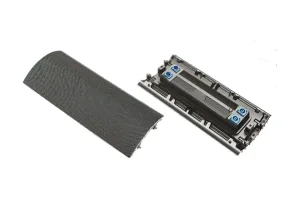
Yes. All enterprise-grade P1.25 die-cast aluminum cabinets are engineered for 100% full front maintenance. Technicians use a specialized magnetic vacuum extraction tool that adheres to the face of the P1.25 module. With a simple pull, the module detaches from the cabinet frame, allowing quick access to power supplies, internal hub boards, and receiver cards without disturbing adjacent panels or dismantling structural wall mounts.
Traditional Common Anode systems supply a uniform voltage (typically 5V) to Red, Green, and Blue LED chips simultaneously, wasting excess power as heat because Red chips require less electrical voltage (~2.8V) than Green and Blue (~3.8V). Common Cathode technology separates the electrical routing, supplying independent, optimized voltages (2.8V for Red, 3.8V for Green/Blue). This targeted distribution cuts energy consumption by up to 45% and reduces cabinet surface temperature by 10°C to 15°C, extending component longevity.
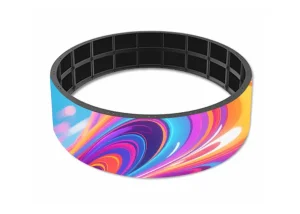
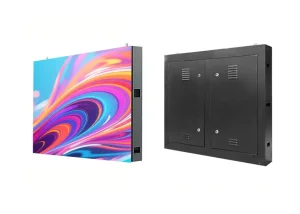
Complete your deployment ecosystem with custom 3D displays, modular event rental panels, and high-brightness outdoor signage from our Shenzhen factory lines.