Explore our industrial-grade indoor, outdoor, modular, and custom LED solutions directly engineered for global transit infrastructure, commercial hubs, and high-visibility advertising.
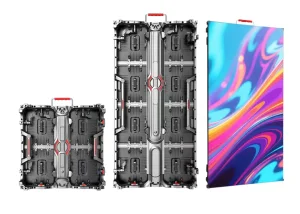
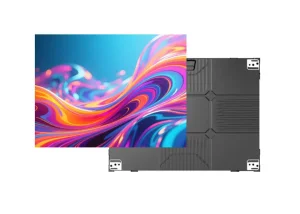
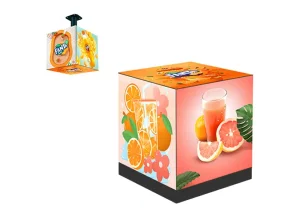
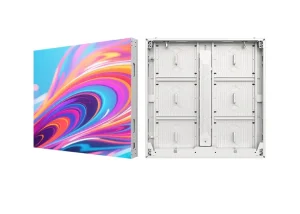
In contemporary municipal engineering and regional transport management, the Transit LED Information Display functions as the operational backbone of modern Intelligent Transportation Systems (ITS). Beyond serving as simple visual message boards, high-performance transit displays bridge central cloud-managed traffic intelligence with real-time commuter decision-making. Operating within multi-modal transit nodes—ranging from subterranean subway platforms and high-speed rail concourses to outdoor Bus Rapid Transit (BRT) networks and highway variable message gantries—these displays demand uncompromised readability, 24/7/365 hardware durability, and instant data synchronization protocols.
As a leading wholesale transit LED information display factory and exporter headquartered in Shenzhen, China's Silicon Valley of optoelectronics, our manufacturing philosophy revolves around absolute hardware resilience and deep protocol interoperability. Modern public transit operators are phasing out legacy static signage and low-contrast LCD screens in favor of dynamic solid-state LED matrices compliant with international standards such as EN 12966 (European Standard for Road Vertical Signage), NTCIP 1211 (National Transportation Communications for ITS Protocol), and ITxPT (Information Technology for Public Transport). Achieving compliance requires engineering excellence: ultra-high contrast optical masks, automated ambient light dimming, electromagnetic compatibility (EMC Class B), and wide-range operational thermal tolerance (-40°C to +75°C).
Procurement teams and system integrators must evaluate core display parameters based on ambient exposure, viewing distances, power budgets, and maintenance accessibility. The table below outlines how our factory-direct transit LED matrices outperform alternative display media in critical transportation applications:
| Engineering Metric | Industrial Transit LED Matrix | Commercial High-Brite LCD | Flip-Chip COB MicroLED | Monochrome Flip-Segment |
|---|---|---|---|---|
| Peak Calibrated Brightness | 6,500 – 10,000 Nits (Sunlight Viewable) | 1,500 – 2,500 Nits (High Degradation) | 3,000 – 4,500 Nits (Indoor Fine Pitch) | 300 – 600 Nits (Reflective Only) |
| MTBF (Mean Time Between Failures) | > 100,000 Hours | 30,000 – 50,000 Hours | > 120,000 Hours | 50,000 Hours (Mechanical Wear) |
| Operational Thermal Range | -40°C to +75°C (-40°F to 167°F) | -10°C to +50°C (Risk of Blackout) | -20°C to +60°C | -20°C to +70°C |
| Ingress & Impact Rating | IP66 Front/Rear, IK10 Vandal Proof | IP54 Enclosed (Requires HVAC) | IP65 Front Surface Protection | IP55 Mechanical Enclosure |
| Power Efficiency (W/m²) | 120W Avg (Dynamic Energy-Saving Driving) | 350W – 600W (Backlight Intensive) | 90W Avg (Cathode Architecture) | 15W (Slow Refresh Only) |
| Data Protocol Integration | GTFS-RT, NTCIP 1211, MODBUS, REST API | HDMI/DisplayPort Passthrough | Gigabit Ethernet, Fiber Optic, API | Serial RS485 Legacy |
Decades of concentrated optoelectronic R&D, vertical industrial clustering, and proprietary automated manufacturing establish China as the undeniable global nexus for transit LED hardware fabrication.
Our Shenzhen facility houses high-speed Yamaha and Fuji Surface Mount Technology (SMT) lines capable of micro-pitch component placement with ±0.01mm precision. By controlling the entire workflow—from LED chip encapsulation selection and PCB solder paste inspection (SPI) to automated optical inspection (AOI) and conformal coating application—we guarantee zero-defect manufacturing for high-stakes transit projects.
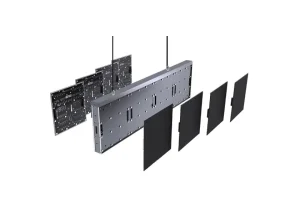
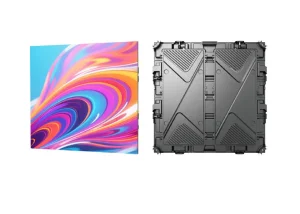
Public transportation environments subject electronics to constant physical stress, high vibration (IEC 61373 Class 1B certified), and corrosive particulate exposure. We engineer die-cast and extruded aluminum cabinets treated with electro-phoretic powder coatings. Front-access maintenance mechanics allow modules, power supplies, and receiving cards to be swapped out in under 60 seconds without disrupting structural mounting.
Transit displays operate continuously. Our factory integrates advanced Common Cathode driver IC architecture, which independently supplies precise voltages to Red, Green, and Blue LED dies. This reduces heat dissipation by up to 35%, eliminates the need for power-hungry external cabinet air conditioners, extends component lifespan, and lowers long-term utility operational costs (OPEX) for municipal transit authorities.
Every transit display batch leaves our factory only after passing a 72-hour continuous thermal stress burn-in test, vibration table testing mimicking rail-line frequency, and high-pressure IPX6/IPX9K water jet validation chamber testing. We supply full factory acceptance testing (FAT) documentation alongside CE, FCC, RoHS, and ISO9001 certifications.
The global public transportation ecosystem is undergoing a digital metamorphosis driven by urbanization, smart city initiatives, and the imperative for real-time passenger communication. Key technological trends currently influencing transit display engineering include:
Modern Passenger Information Systems are moving away from localized, static timetable feeds. Displays now feature embedded IoT Linux/Android controllers directly consuming standard General Transit Feed Specification Realtime (GTFS-RT) APIs. This enables dynamic adjustments to arrival estimates, emergency safety alerts, and vehicle occupancy levels accurate to the millisecond.
For remote bus stops and off-grid tram shelters, installing dedicated AC grid infrastructure can incur prohibitive civil works costs. Our engineering team exports ultra-low-power monochrome and multi-color LED PIS displays capable of running entirely off 24V solar-charged lithium-iron-phosphate (LiFePO4) battery systems, consuming less than 8 Watts in operational state.
Subway platform display systems are rapidly adopting Chip-on-Board (COB) fine-pitch technology (P0.93 to P1.56). COB encapsulates LED chips directly into an epoxy resin matrix, creating an ultra-smooth, glare-free, wipe-clean display face that is immune to iron dust accumulation caused by train wheel braking friction.
Integrating computer vision sensors with platform wayfinding screens allows real-time passenger load monitoring. Transit LED displays located along metro platforms dynamically guide passengers toward less crowded train cars using color-coded green, yellow, and red graphic indicators, vastly accelerating boarding times and reducing station dwell delays.
Customized transit LED hardware deployed across critical multimodal infrastructure networks worldwide.
Suspended double-sided high-contrast LED displays installed above platform edges. Built with wide viewing angles (160° H / 160° V) to ensure clear readability for passengers anywhere on the platform. Features electromagnetic shielding against high-voltage third-rail interference and conformal-coated PCBs resistant to metallic particulate buildup.
Compact, IP66-rated, high-brightness (up to 7,500 Nits) header screens fitted to bus shelter facades. Outfitted with automatic optical light sensors, these displays automatically scale brightness to match shifting sun positions, eliminating washing out in peak afternoon sun while preventing glare during nighttime operation.
Large-format, ultra-fine-pitch indoor video walls deployed in airport departure lounges and luggage retrieval concourses. Capable of displaying seamless multi-window split screens showing live departure boards, security gate wait times, localized advertising, and emergency evacuation maps simultaneously.
Overhead gantry displays engineered to EN 12966 standards, incorporating amber and full-color dual-matrix configurations. Used by arterial traffic departments to output speed limit changes, lane closure notices, weather warnings, and travel time estimates to drivers at distances exceeding 300 meters.
Global procurement teams, municipal transit authorities, and turnkey AV system integrators operate under strict total cost of ownership (TCO) constraints. Sourcing directly from an established China OEM/ODM factory guarantees both engineering flexibility and capital expenditure optimization.
When issuing Requests for Quotation (RFQs) for transit display hardware, enterprise buyers must verify the following non-negotiable manufacturing capabilities:
Our displays feature integrated SNMP/JSON telemetry boards that continuously report internal temperature, operating voltage, pixel-level defect mapping, door-open intrusion alarms, and ambient humidity back to central operations control centers (OCC).
Critical transit hubs cannot tolerate screen blackout. We offer dual loop-through signal cabling and hot-swappable dual power supply architectures. If a primary power unit fails, the secondary unit assumes 100% load instantly without image interruption.
Outdoor PIS stations are protected by high-impact IK10-rated poly-carbonate face plates treated with anti-reflective (AR) and anti-glare coatings, allowing spray paint or stickers to be removed effortlessly without scratching the underlying optics.
Our export products carry full testing verification for CE, FCC, RoHS, ETL, and EN 12966, accompanied by comprehensive installation manuals, CAD mounting schematics, spare parts kits, and 3-to-5-year limited factory warranties.
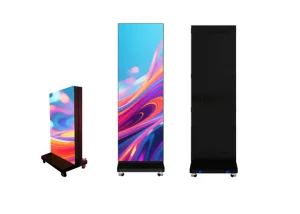
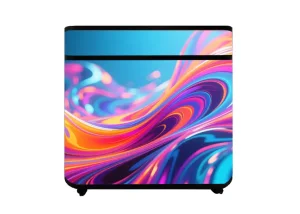
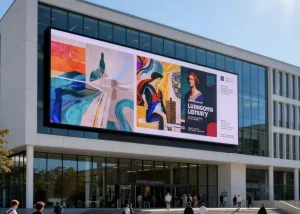
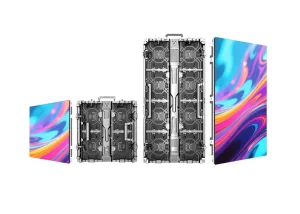
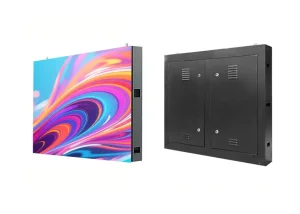
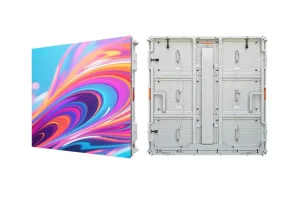
Comprehensive custom signage portfolio for commercial billboards, poster systems, ultra-thin double-sided displays, and creative architectural installations.
Direct answers from our transit LED engineering leadership regarding custom OEM capabilities, protocol integration, compliance, and international warranty terms.