
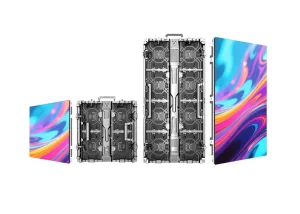
Engineered for quick setup at Tokyo Big Sight, Makuhari Messe, and Roppongi event halls with front-access maintenance and camera-ready 7680Hz drivers.
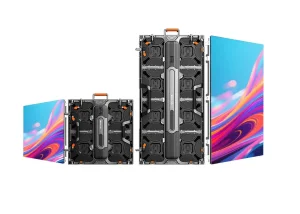
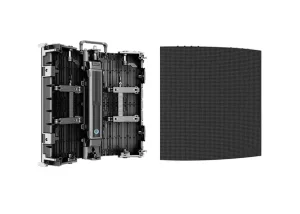
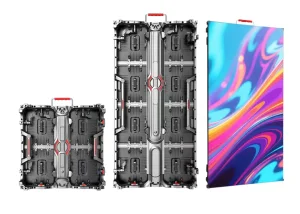
Tokyo represents one of the world's most sophisticated and demanding markets for temporary visual displays, driven by high-density MICE infrastructure, futuristic retail installations, and broadcast-grade production requirements.
Venues such as Tokyo Big Sight (Koto City), Makuhari Messe (Chiba Prefecture), Tokyo International Forum (Yurakucho), and Shibuya Stream Hall operate under extremely tight turnover windows. Event production crews frequently have less than 4 hours to load in, construct massive multi-meter video walls, calibrate color temperature for local broadcast crews, and execute flaw-free staging.
In accordance with Japan’s Building Standard Law and Fire Service Act, temporary stage structures in Tokyo must meet rigorous seismic rating standards and flame-retardant electrical requirements (PSE certification and VCCI Class A electromagnetic compatibility). Weight limitations per hanging point at traditional Tokyo venues make lightweight magnesium alloy framing imperative.
Purchasing agents and staging companies operating in Tokyo prioritize three core engineering pillars: structural rigidity under fast locks, optical consistency under 4K camera capture, and standardized module swappability without recalibrating brightness curves across batch orders.
The global rental LED screen market has evolved from heavy steel-cabinet legacy panels to modular, intelligent, high-refresh-rate systems designed for high-definition live broadcasts and XR virtual environments.
Modern live broadcast standards demand zero scan lines or flicker when shot by high-frame-rate 4K Sony and RED cinema cameras. Premium rental LED screens leverage advanced driver ICs (such as MBI5253 or ICN2055) to achieve 7680Hz refresh rates and 16-bit grayscale depth.
Traditional SMD LEDs are prone to pixel loss during frequent transportation and aggressive tear-downs. Glue-on-Board (GOB) technology applies a transparent epoxy coating over the SMD matrix, imparting impact resistance, moisture resistance, and anti-static capabilities essential for rental fleets.
Architectural flexibility is highly prized in Tokyo creative direction. Modern rental cabinets integrate high-precision rotary locks enabling -10° concave to +10° convex curving, creating seamless 90° right-angle columns and immersive wrap-around visual environments.
Shenzhen produces over 85% of the world's optoelectronic video displays. Procurement direct from specialized Shenzhen OEM factories delivers unmatched speed, custom engineering, and financial efficiency.
Direct ownership of high-speed Surface Mount Technology (SMT) lines allows factories to maintain absolute control over LED chip placement accuracy, solder joint integrity, and batch binning. This ensures uniform color spectrum matching across thousands of panels.
Quality-focused manufacturers execute automated 72-hour continuous thermal and brightness aging tests—including high-humidity chamber testing—to eliminate early component failures prior to international air or ocean freight shipping to Japan.
By eliminating third-party trading markups, Tokyo event agencies save 30% to 40% on total procurement costs. Furthermore, direct factory engineers can customize power supplies (100V Japanese standard compatibility) and flight case footprints within 10 business days.
Different Tokyo districts demand specific engineering solutions, ranging from silent indoor fine-pitch panels for executive summits in Marunouchi to ultra-bright IP65 outdoor rigs for Odaiba waterfront festivals.
Virtual production studios in Tokyo's creative hubs utilize P1.5 to P2.5 fine-pitch LED screens with ultra-low latency NovaStar StarPack or Brompton Tessera SX40 processing. Key parameters include 10-bit HDR10 color rendering, high frame rates, and anti-reflective matte masks to prevent moiré patterns under camera lenses.
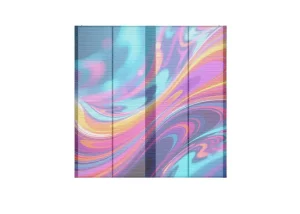
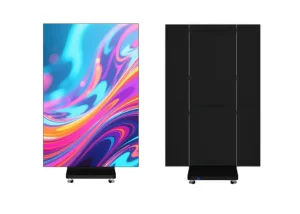
High-end fashion activations require fast-assembly, sleek visual solutions like Tri-Fold LED Posters and high-transparency see-through displays (up to 75% transparency). These panels allow ambient light to permeate glass store facades while projecting vibrant dynamic advertisements.
Coastal outdoor deployments must withstand sudden coastal gusts and high humidity. IP65 front and rear waterproof cabinets equipped with 5,500 to 7,500 nits high-brightness LEDs ensure full daytime sun readability while maintaining structural integrity against coastal wind shear.
Trade show exhibition booths require modular tiles (500x500mm and 500x1000mm) that can be seamlessly mixed within a single video wall. Fast-locking mechanisms allow single-operator installation, drastically cutting labor setup fees in Japanese unionized venue settings.
Selecting the correct pixel pitch and mechanical framing prevents over-spending while ensuring crystal-clear visual performance for targeted viewing distances.
| Model Series | Pixel Pitch (mm) | Optimal Viewing Distance | Brightness (Nits) | Refresh Rate | Primary Tokyo Application |
|---|---|---|---|---|---|
| Indoor Fine-Pitch Rental | P1.95 / P2.60 | 1.5m – 4.0m | 800 – 1,200 Nits | 3840Hz – 7680Hz | Corporate Summits, XR Studios, TV Broadcast |
| Indoor/Outdoor Hybrid | P2.97 / P3.91 | 3.0m – 8.0m | 3,500 – 4,500 Nits | 3840Hz – 7680Hz | Exhibition Booths, Concert Stage Backdrops |
| High-Brightness Outdoor | P3.91 / P4.81 | 4.0m – 20.0m | 5,500 – 7,500 Nits | 3840Hz | Outdoor Festivals, Sports Arenas, Public Signage |
| Transparent Glass Rental | P3.91-7.81 | 2.0m – 10.0m | 4,000 – 5,500 Nits | 3840Hz | Luxury Retail Windows, Auto Show Glass Walls |
| Creative Angle / Curve | P2.60 / P2.97 | 2.5m – 6.0m | 1,000 – 3,000 Nits | 3840Hz – 7680Hz | Curved Stage Pillars, Immersive Tunnel Display |
When purchasing for a Tokyo rental fleet, factor in: (1) Initial hardware procurement, (2) Flight case customization for Japanese standard truck dimensions (4-ton truck bed width), (3) Spare parts buffer (typically 3-5% spare modules, power supplies, and receiver cards), and (4) Energy consumption (selecting PFC power supplies reduces line current draw on venue power distros).
From initial CAD blueprint review to site delivery in Tokyo, our structured manufacturing process guarantees flawless execution.
Engineers evaluate site dimensions, hanging weight limits, power voltage specs (100V 50Hz for Tokyo grid), signal redundancy requirements, and flight case packing efficiency.
Developing dedicated PCB layouts with optimized heat dissipation traces, select high-refresh driver ICs, and precision die-cast magnesium alloy cabinet molds.
Automated high-speed SMT lines place LED lamps with 10-micron precision. Optical inspection systems automatically screen solder joint uniformity across every panel batch.
Panels undergo intensive 72-hour thermal cycling aging under maximum luminance to trigger potential early component failures, ensuring 99.99% operational reliability upon delivery.
Displays are packed into custom-molded EVA foam flight cases and air-freighted or ocean-shipped directly to Tokyo ports with complete PSE certification documentation.
Every purchase includes direct technical access to factory engineers, detailed pixel-mapping calibration files, 1-on-1 maintenance training, and a 3-year warranty.
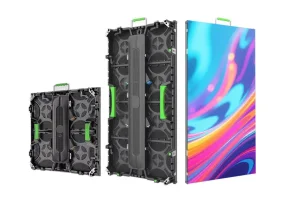
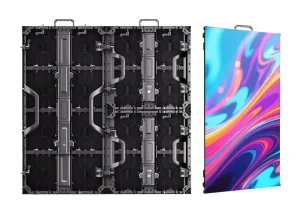
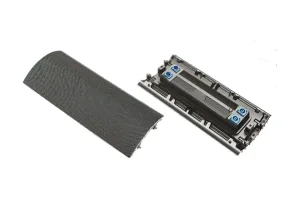
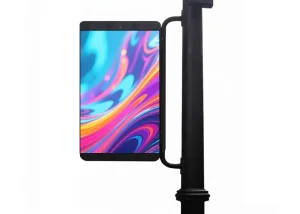
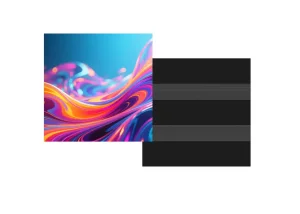
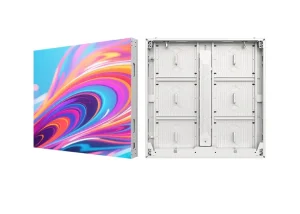
Browse our complete lineup of rental, fixed, transparent, and smart city LED display solutions supplied directly from our Shenzhen SMT facility.
Get clear technical answers directly from our factory engineering team regarding compliance, logistics, refresh rates, and warranty coverage for the Japanese market.
Contact our engineering team today to receive detailed technical datasheets, customized factory-direct quotes, and CAD layout designs within 24 hours.
Send Inquiry Now